Dive Sites
Best Places to Dive in Queensland
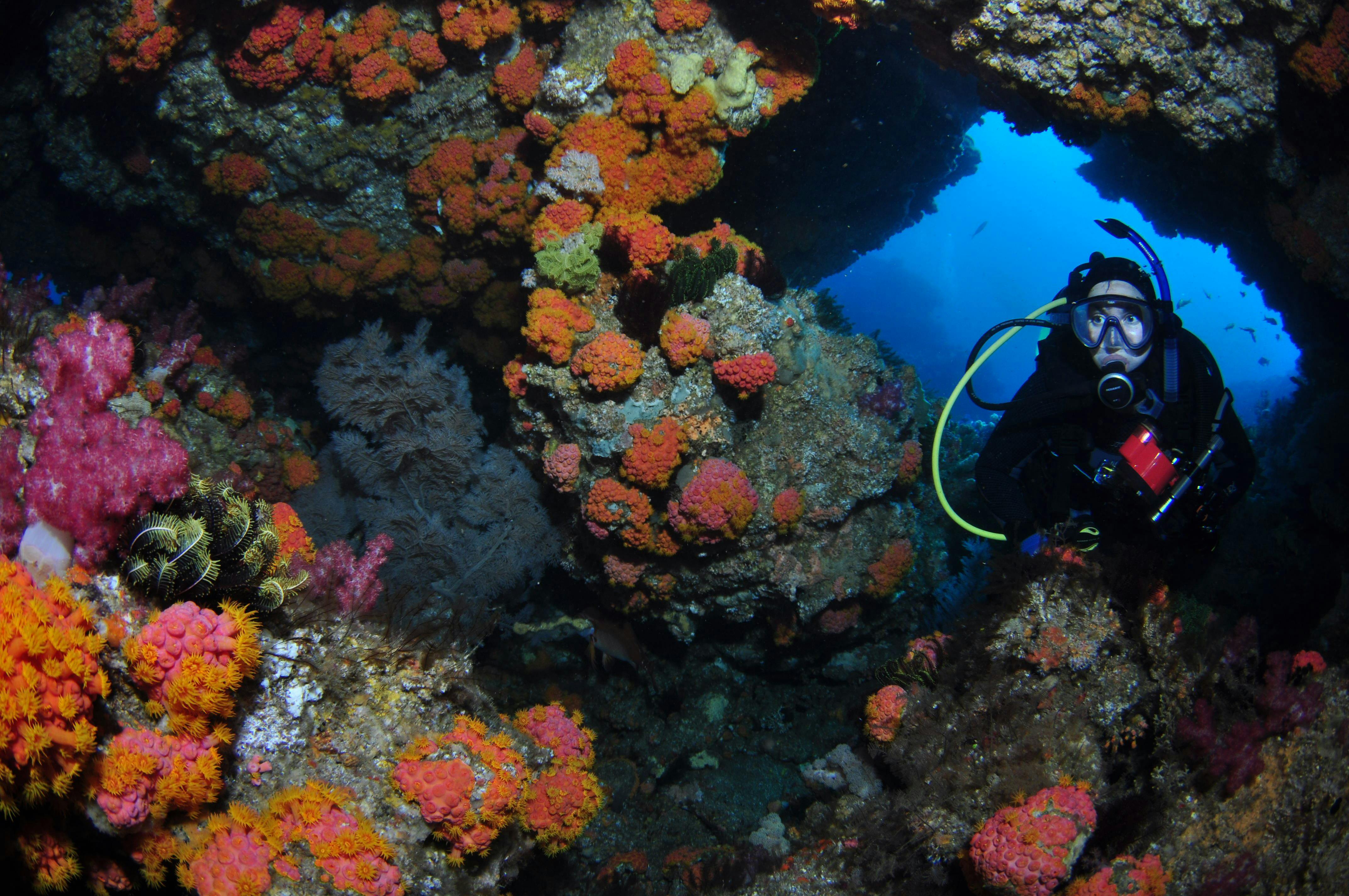
Manta rays at Manta Bommie, the SS Yongala wreck, Cod Hole's giant potato cod, Osprey Reef sharks, the Tangalooma Wrecks. Where to dive in Queensland, region by region, with conditions, signature species and best season for each.
By ScubaDownUnder Team · Published 1 May 2026
# Best Places to Dive in Queensland: A Region-by-Region Guide
> Manta rays cruising the cleaning station at [Manta Bommie](https://www.scubadownunder.com/dive-sites/manta-bommie). The wreck of the SS Yongala, regularly ranked in the world's top ten dives. The giant potato cod of Cod Hole. Sharks circling the pinnacles at Osprey Reef. Wobbegongs sleeping under the Tangalooma Wrecks at sunset. Queensland is the dive coast that everyone has heard of, and almost every diver vastly underestimates how varied it actually is. Here is where to dive in QLD, region by region, with the conditions, signature species and best season for each.
## Why Queensland is more than just the Great Barrier Reef
Mention Queensland diving and most people picture one thing: a postcard reef off Cairns. That picture is real, but it is a single slice of a 7,000 km coastline running from sub-tropical Gold Coast pinnacles in the south, through the world's largest coral-reef system, all the way to the Coral Sea seamounts where the diving turns oceanic and pelagic.
Queensland's diving falls into four distinct zones:
- **Sub-tropical south-east** (Gold Coast, Moreton Bay, Moreton Island, Stradbroke, Sunshine Coast): rocky reefs, large artificial wrecks, manta and leopard shark seasons, accessible shore diving from Brisbane and the Gold Coast. - **Southern Great Barrier Reef** (Lady Elliot Island, Lady Musgrave, Heron Island): coral reef in its most pristine form, world-class manta and turtle encounters, low diver density. - **Whitsundays and the Mackay-region islands**: protected coral reef diving from liveaboards and day boats, plus some of the best wreck and pinnacle diving in the state. - **Far-north QLD and the Coral Sea** (Townsville, Cairns, Port Douglas, the Ribbon Reefs, Osprey): the iconic Great Barrier Reef liveaboard country plus the cobalt-blue oceanic dives that put QLD on the world stage.
This guide is the umbrella page for [our QLD dive site reviews](https://www.scubadownunder.com/dive-sites). Each section below covers one region, the signature dives within it, the marine life you can expect, and which sites have full guides written. Use it to plan a Queensland holiday, a long weekend escape from Brisbane, or your next Saturday charter.
## Quick comparison: QLD dive regions at a glance {#table}
| Region | Water temp | Visibility | Signature species | Best season | Vibe | |---|---|---|---|---|---| | **Gold Coast** | 19 to 26 C | 5 to 20 m | Queensland gropers, leopard sharks, turtles | Year-round | Urban shore + boat | | **Moreton Bay** | 18 to 26 C | 3 to 12 m | Dugongs, turtles, dolphins, snapper | Sep to May | Sheltered, family-friendly | | **Moreton Island** | 18 to 26 C | 10 to 25 m | Grey nurse sharks, leopard sharks, mantas | Year-round, sharks Jun-Nov | Big-fish boat diving | | **North Stradbroke** | 19 to 26 C | 10 to 25 m | Manta rays, leopard sharks, turtles | Year-round | World-class day trips | | **Sunshine Coast** | 19 to 26 C | 10 to 20 m | Wreck life, turtles, rays | Year-round | Scuttled-warship wreck | | **Fraser Coast / Wolf Rock** | 20 to 26 C | 10 to 25 m | Grey nurse aggregations, turtles | May to Oct | Remote pinnacle | | **Southern GBR (Lady Elliot, Heron)** | 21 to 27 C | 15 to 30 m | Mantas, turtles, reef sharks | Year-round | Pristine coral cay | | **Whitsundays** | 22 to 27 C | 10 to 25 m | Coral, reef fish, mantas, turtles | Apr to Nov | Liveaboard / day-boat | | **Mackay coast and islands** | 22 to 28 C | 5 to 25 m | Reef fish, rays, batfish, sharks | Apr to Nov | Less-crowded GBR | | **Townsville: Yongala** | 23 to 28 C | 15 to 30 m | Bull sharks, eagle rays, sea snakes, giant gropers | Year-round | World-top-10 wreck | | **Cairns / Ribbon Reefs** | 23 to 29 C | 15 to 35 m | Potato cod, mantas, minke whales (Jun-Jul), sharks | Year-round | Liveaboard reef | | **Coral Sea (Osprey)** | 25 to 29 C | 30 to 50 m | Grey reef sharks, hammerheads, silvertips | Sep to Dec | Liveaboard pelagic |
## Contents
1. [Gold Coast](#gold-coast) 2. [Moreton Bay](#moreton-bay) 3. [Moreton Island](#moreton-island) 4. [North Stradbroke Island](#stradbroke) 5. [Sunshine Coast](#sunshine-coast) 6. [Fraser Coast and Wolf Rock](#fraser-coast) 7. [Southern Great Barrier Reef: Lady Elliot, Lady Musgrave, Heron](#southern-gbr) 8. [Whitsundays](#whitsundays) 9. [Mackay coast and the Cumberland Islands](#mackay) 10. [Townsville and the SS Yongala](#yongala) 11. [Cairns, Port Douglas and the Ribbon Reefs](#cairns) 12. [Coral Sea: Osprey Reef and beyond](#coral-sea) 13. [Freshwater: Mount Hypipamee Crater](#freshwater) 14. [Themed picks: best for sharks, wrecks, beginners and macro](#themed) 15. [When to dive in QLD, month-by-month](#season) 16. [Plan your dive: operators, conditions and next steps](#plan)
## Gold Coast {#gold-coast}
Often skipped in the rush north to the Great Barrier Reef, the Gold Coast has some of the best urban diving in the country. Sub-tropical reef, the country's most species-diverse seaway, and a 19th-century shipwreck inside one of Australia's busiest holiday cities.
**The flagship dives:**
- **[Gold Coast Seaway](https://www.scubadownunder.com/dive-sites/gold-coast-seaway)** (5 to 25 m, all levels). Australia's most-dived urban diver site, with over 400 recorded species along the rock walls and pylons of the entrance to the Broadwater. Seahorses, pufferfish, the resident Queensland grouper, and frequent leopard shark encounters in summer. Usually run as a slack-water drift on the incoming tide. - **[Palm Beach Reef](https://www.scubadownunder.com/dive-sites/palm-beach-reef)** (5 to 24 m, all levels). Sub-tropical rocky reef with soft corals, sponges, and pelagic visitors. A reliable Gold Coast boat dive that does not require travelling far north. - **[Kirra Reef](https://www.scubadownunder.com/dive-sites/kirra-reef)** (5 to 10 m, all levels). Shallow rubble reef famous for nudibranchs, octopus and cuttlefish. The Gold Coast's best macro site. - **[Scottish Prince shipwreck](https://www.scubadownunder.com/dive-sites/scottish-prince-shipwreck)** (5 to 10 m, all levels). The iron-hulled barque ran aground in 1887 off Main Beach. What remains is a scattered structure embedded in sand, regularly visited by turtles, rays and bait schools.
**Marine life signature:** Queensland gropers, leopard sharks (summer), turtles, eagle rays, octopus, cuttlefish, nudibranchs, Australia's most prolific sub-tropical fish list.
**Best season:** Year-round. Summer (December to March) brings warmer water, leopard sharks and tropical strays. Winter has the best visibility on the offshore boat sites.
## Moreton Bay {#moreton-bay}
The huge sheltered bay east of Brisbane has shallow, easy diving plus the country's most successful artificial-reef program. Three large purpose-sunk reef structures inside the bay create concentrated marine-life hot-spots reachable on a half-day boat trip from the city.
**The flagship dives:**
- **[Curtin Artificial Reef](https://www.scubadownunder.com/blog/curtin-artificial-reef)** (16 to 27 m, advanced). The original. A scuttled fleet of barges, tugs and pontoons in the centre of the bay, encrusted with thirty years of growth and home to barracuda, gropers, wobbegongs and rays. - **[Harry Atkinson Artificial Reef](https://www.scubadownunder.com/dive-sites/harry-atkinson-artificial-reef)** (10 to 20 m, intermediate). Younger reef, several scuttled vessels, snapper and cobia in numbers. - **[West Peel Artificial Reef](https://www.scubadownunder.com/dive-sites/west-peel-artificial-reef)** (10 to 15 m, intermediate). Newer still, pink snapper and reef fish. - **[Peel Island](https://www.scubadownunder.com/dive-sites/peel-island)** (5 to 10 m, all levels). Natural reef and seagrass with a resident dugong population, turtles and dolphins. The best Brisbane shore-day dugong encounter. - **[Horseshoe Bay (Peel Island)](https://www.scubadownunder.com/dive-sites/horseshoe-bay-peel-island)** (2 to 10 m, all levels). Sheltered, family-grade snorkel-and-shallow-dive site at the northern end of Peel. - **[The Bluff (Peel Island)](https://www.scubadownunder.com/dive-sites/the-bluff-peel-island)** (5 to 15 m, intermediate). The southern reef section with cleaner reef walls.
**Marine life signature:** Dugongs (Peel Island, exceptional), turtles, dolphins, wobbegongs, snapper, sweetlip, eagle rays, schooling pelagics on the artificial reefs.
**Best season:** September to May. Winter water clarity is good, but cold east winds can make the bay choppy.
## Moreton Island {#moreton-island}
Across Moreton Bay from Brisbane, Moreton Island is QLD's south-east diving epicentre. It mixes a famous shore-diving wreck cluster (the Tangalooma Wrecks, see note below) with serious offshore boat sites at Cape Moreton including grey nurse sharks, manta rays and pelagic encounters.
**The flagship dives:**
- **[Cherubs Cave](https://www.scubadownunder.com/blog/cherubs-cave-moreton-island-dive-guide)** (14 to 30 m, advanced). A pinnacle dive on the offshore side of the island. Crayfish, black coral trees and reef fish through a series of swim-throughs and overhangs. - **[China Wall](https://www.scubadownunder.com/blog/moreton-islands-china-wall)** (16 to 32 m, intermediate). A long, dramatic vertical wall covered in soft corals, gorgonians and black coral. Reliable big-fish action. - **[Smith Rock](https://www.scubadownunder.com/blog/smith-rock)** (6 to 21 m, advanced). Painted-crayfish hot-spot with a high concentration of reef fish and the occasional grey nurse shark in season. - **[Cherubs Cave](https://www.scubadownunder.com/dive-sites/cherubs-cave)'s neighbours: [Henderson's Rock](https://www.scubadownunder.com/dive-sites/hendersons-rock)** (12 to 25 m, advanced). Grey nurse shark site (seasonal), wobbegongs and ornate crayfish. Review coming. - **[Flinders Reef](https://www.scubadownunder.com/dive-sites/flinders-reef)** (5 to 20 m, all levels). Moreton's largest reef system. Manta rays in summer, wobbegongs, turtles. Review coming. - **[Jons Cave](https://www.scubadownunder.com/dive-sites/jons-cave)** (21 to 30 m, advanced). A cave-and-canyon site for experienced divers, with crayfish and black coral gardens. Review coming. - **[The Cementco wreck](https://www.scubadownunder.com/dive-sites/the-cementco-wreck)** (18 to 28 m, advanced). The wreck of a cement carrier on the offshore reef. Big-fish wreck dive. Review coming.
**A note on the [Tangalooma Wrecks](https://www.scubadownunder.com/dive-sites/tangalooma-wrecks).** The 15-vessel sunken-ships breakwater off the western shore of Moreton Island is QLD's most-dived shore-and-snorkel site. Shallow (2 to 10 m), accessible from the Tangalooma Resort beach, packed with batfish, kingfish, wobbegongs and turtles.
**Marine life signature:** Grey nurse sharks (Henderson's, seasonal), wobbegongs, manta rays (Flinders), painted crayfish, black coral, batfish, turtles.
**Best season:** Year-round. Grey nurses peak June to November. Mantas at Flinders peak December to April.
## North Stradbroke Island {#stradbroke}
Straddie sits at the northern edge of Moreton Bay and dives like a fully tropical site even though it is technically south-east QLD. The boat dives off Point Lookout are the equal of anything in southern Queensland.
**The flagship dives:**
- **[Manta Bommie](https://www.scubadownunder.com/blog/manta-bommie)** (3 to 15 m, all levels). The cleaning station on the western edge of Point Lookout. Manta rays year-round, leopard sharks December to May, shovelnose rays, eagle rays, schooling fish. The single best beginner-grade big-animal dive in QLD. - **[Flat Rock](https://www.scubadownunder.com/blog/flat-rock)** (5 to 35 m, advanced). Straddie's marquee deeper site. Turtles, wobbegongs, leopard sharks, eagle rays, occasional grey nurses. Multi-zone dive across reef and sand.
**Marine life signature:** Manta rays (year-round, peak May to October), leopard sharks (December to May), turtles, wobbegongs, eagle rays, kingfish.
**Best season:** Year-round. May to October for the manta and grey nurse overlap. December to May for warm-water leopard sharks.
## Sunshine Coast {#sunshine-coast}
An hour and a half north of Brisbane, the Sunshine Coast's signature dive is the **ex-[HMAS Brisbane](https://www.scubadownunder.com/dive-sites/hmas-brisbane)**, the most-dived scuttled warship in Australia.
**The flagship dives:**
- **[Ex-HMAS Brisbane](https://www.scubadownunder.com/blog/exploring-a-legend-the-hmas-brisbane-wreck)** (5 to 28 m, intermediate-to-advanced). The 133 m former Royal Australian Navy guided-missile destroyer, scuttled in 2005. Cleared for divers to penetrate, with multiple skill-graded entry points. Resident gropers, turtles, schools of yellowtail, soft coral encrusting the superstructure. - **[Mudjimba Island (Old Woman Island)](https://www.scubadownunder.com/blog/mudjimba-island-old-woman-island)** (2 to 15 m, all levels). The natural-reef alternative on the same coastline. Gentle, family-grade, packed with morwong, surgeonfish, damsels and gobies.
**Marine life signature:** Wreck-fish communities, turtles, rays, schooling fish, soft corals on the wreck superstructure.
**Best season:** Year-round. Visibility is best in winter and best on the morning of the dive (the wreck stirs up sediment with current changes).
## Fraser Coast and Wolf Rock {#fraser-coast}
North of the Sunshine Coast and south of the Bundaberg gateway to the southern Great Barrier Reef, the Fraser Coast has one stand-out site that has not yet been reviewed on SDU.
**The flagship dives:**
- **[Wolf Rock](https://www.scubadownunder.com/dive-sites/wolf-rock), Rainbow Beach** (10 to 35 m, advanced). Australia's most reliable grey nurse shark aggregation site. Four volcanic pinnacles 1 km off Double Island Point host a year-round resident population of grey nurses (peak July to November), bull rays, mantas in season, and big-fish action. Boat dive only, conditions-dependent. Review coming. - **[Fraser Island](https://www.scubadownunder.com/dive-sites/fraser-island) shore sites** (5 to 18 m, all levels). Less-developed shore diving on the eastern beach. Reef fish, turtles, dolphins, occasional whale sightings on the surface in season.
**Marine life signature:** Grey nurse sharks (year-round, peak winter and spring), bull rays, leopard sharks, manta rays, turtles, dolphins.
**Best season:** May to October for grey nurses at Wolf Rock. Winter and spring offer the largest aggregations.
## Southern Great Barrier Reef: Lady Elliot, Lady Musgrave, Heron {#southern-gbr}
The southern end of the GBR is, in the opinion of many experienced divers, the best part of the reef to dive. Less-trafficked, more-pristine, with fly-in island accommodation and house-reef diving from the beach.
**The flagship destinations:**
- **[Lady Elliot Island](https://www.scubadownunder.com/dive-sites/lady-elliot-island)** (5 to 18 m, all levels). The southernmost coral cay of the Great Barrier Reef. Manta rays year-round (peak May to August), turtles, reef sharks, an extraordinary house reef walked into from the beach. Scenic light-aircraft access from Hervey Bay or Bundaberg. Reviews coming. - **[Lady Musgrave Island](https://www.scubadownunder.com/dive-sites/lady-musgrave-island)** (5 to 25 m, all levels). A coral cay inside its own lagoon, day-boat or liveaboard accessible from Bundaberg or 1770. The lagoon is one of the easiest beginner-grade reef environments in QLD. Outside the lagoon, the wall drops to 25 m+ with reef sharks and pelagics. Reviews coming. - **[Heron Island](https://www.scubadownunder.com/dive-sites/heron-island)** (5 to 25 m, all levels). Heron Bommie is one of QLD's iconic dives, a coral pinnacle teeming with turtles, eagle rays, reef fish and seasonal sharks. Resort-based diving with quality house-reef access. Reviews coming.
**Marine life signature:** Manta rays (Lady Elliot, exceptional), green and loggerhead turtles (year-round, with November to March nesting season), reef sharks, eagle rays, pristine hard coral.
**Best season:** Year-round. May to August for peak mantas at Lady Elliot. November to March for turtle nesting and warmer water.
## Whitsundays {#whitsundays}
The Whitsundays' reputation is built on sailing and snorkelling, but the diving is exceptional and underrated. Sheltered island reefs, fringing GBR sites a short steam offshore, and the bonus of one of the world's best Open Water training environments.
**The flagship dives:**
- **[Double Cone Island](https://www.scubadownunder.com/blog/double-cone-island)** (6 to 14 m, intermediate). The most-dived inshore Whitsunday site. Clownfish, wrasse, rays, easy conditions. - Bait Reef, Hardy Reef and Hook Reef are the trio of marquee outer-reef Whitsunday dives, accessed by liveaboard or fast day-boat from Airlie Beach. Reef sharks, coral pinnacles, manta encounters in season. Reviews coming. - Heart Reef and the surrounding lagoon dives also offer the iconic aerial-photo backdrop. Reviews coming.
**Marine life signature:** Hard and soft coral, reef sharks, manta rays (April to October), turtles, schooling fish, occasional minke whales in winter.
**Best season:** April to November (the dry season). Summer is wetter and stinger season requires lycra suits.
## Mackay coast and the Cumberland Islands {#mackay}
The coastline north of the Whitsundays through to Mackay is one of the least-dived stretches of the QLD coast despite holding some of the best less-crowded reef and island diving in the state. The combination of inshore reefs, island fringing reefs, and offshore GBR pinnacle dives makes the Mackay region a serious destination for divers who want to skip the crowds.
**The flagship dives:**
- **[Brampton Island Wall](https://www.scubadownunder.com/blog/brampton-island-wall-dive-guide)** (6 to 14 m, intermediate). Coral wall on the western side of Brampton with turtles, parrotfish and rays. - **[Cockermouth Island Reef](https://www.scubadownunder.com/blog/diving-cockermouth-island-reef-mackay-islands)** (3 to 12 m, intermediate). Angelfish, reef sharks, nudibranch hot-spot. - **[East Newry Island](https://www.scubadownunder.com/blog/east-newry-island)** and **[Outer Newry Island](https://www.scubadownunder.com/blog/outer-newry-island)** (3 to 16 m, beginner to intermediate). The Newry group is some of the most accessible coral diving on the Mackay coast. - **[Scawfell Island Pinnacle](https://www.scubadownunder.com/dive-sites/scawfell-island-pinnacle)** (10 to 22 m, intermediate). Trevally, cod and wrasse on a deeper inshore pinnacle. Review coming. - **[Scawfell Island Coral Gardens](https://www.scubadownunder.com/dive-sites/scawfell-island-coral-gardens)** (3 to 10 m, beginner). Beginner-grade coral garden on the same island. Review coming. - **[Keswick Island Reef](https://www.scubadownunder.com/dive-sites/keswick-island-reef) and the [Keswick Island Wreck](https://www.scubadownunder.com/dive-sites/keswick-island-wreck)** (3 to 16 m, intermediate). Island fringing reef plus a small wreck dive. Reviews coming. - **[St Bees Island Reef](https://www.scubadownunder.com/dive-sites/st-bees-island-reef)** (5 to 14 m, intermediate). Anemonefish and rays on island reef. Review coming. - **[South Cumberland Islands Bommie](https://www.scubadownunder.com/dive-sites/south-cumberland-islands-bommie)** (10 to 20 m, intermediate). Cod and trevally on an offshore pinnacle. Review coming. - **[Mackay Harbour Jetty](https://www.scubadownunder.com/dive-sites/mackay-harbour-jetty)** (2 to 5 m, beginner). The shallow shore-diving option for entry-level divers in Mackay. Review coming. - **[Round Top Island](https://www.scubadownunder.com/dive-sites/round-top-island), Mackay Coast** (3 to 10 m, beginner). Inshore beginner site with seahorses and pipefish. Review coming.
**Offshore from Mackay**, several outer-GBR pinnacle sites have been reviewed:
- **[Black Reef (Mackay)](https://www.scubadownunder.com/blog/black-reef-mackay-dive-site-guide)** (12 to 25 m, advanced). Outer-reef pinnacle. Turtles, reef sharks, coral trout. - **[Llewellyn Reef](https://www.scubadownunder.com/blog/llewellyn-reef)** (10 to 25 m, advanced). Sharks, gropers, snapper. - **[Credlin Reef](https://www.scubadownunder.com/blog/credlin-reef-a-remote-frontier-for-advanced-explorers)** (10 to 30 m, advanced). Remote outer-GBR pinnacle, sharks, barracuda, turtles. - **[Wigton Reef](https://www.scubadownunder.com/blog/wigton-reef)** (12 to 28 m, advanced). Trevally, sharks, butterflyfish. - **[Tinsmith Reef](https://www.scubadownunder.com/blog/tinsmith-reef)** (15 to 30 m, advanced). Sharks, tuna, trevally on an outer-GBR pinnacle.
**Marine life signature:** Reef sharks, turtles, batfish, coral trout, painted crayfish, anemonefish, eagle rays, occasional manta encounters.
**Best season:** April to November. Summer brings warmer water but also wetter weather and stinger season.
## Townsville and the SS Yongala {#yongala}
If a single dive site has put Queensland on the global map, it is the **SS Yongala**.
**The flagship dive:**
- **[SS Yongala wreck](https://www.scubadownunder.com/dive-sites/ss-yongala-wreck)** (14 to 28 m, intermediate-advanced). The 110 m steamship sank in a cyclone in 1911 with the loss of all 122 onboard. Re-discovered in 1958, it sits intact on a sandy bottom, 12 nautical miles off Cape Bowling Green south of Townsville. Surrounded by a marine-life concentration unmatched anywhere else in Australia: bull sharks, eagle ray squadrons, sea snakes, giant Queensland gropers, turtles, schooling jacks and trevally. The wreck is a war grave, no penetration permitted, but the exterior dive is regularly named in the world's top ten. Review coming.
The Yongala is accessed from Townsville or Ayr by day-boat (3-hour transit) or as part of multi-day liveaboards. Conditions are exposed and current is significant. Most operators require a minimum of Advanced Open Water plus 30 logged dives.
**Marine life signature:** Bull sharks, marbled rays, eagle rays, sea snakes (the Yongala's olive sea snake population is unusually dense), giant gropers, schooling jacks, mackerel, turtles, occasional manta rays.
**Best season:** Year-round. Visibility is best September to November. Stinger suits required November to May.
## Cairns, Port Douglas and the Ribbon Reefs {#cairns}
The classic Great Barrier Reef experience. Hundreds of kilometres of fringing reef, accessible from day-boats and liveaboards, plus the iconic far-northern dive sites along the Ribbon Reef chain.
**The flagship destinations:**
- **[Cod Hole](https://www.scubadownunder.com/dive-sites/cod-hole), Ribbon Reef #10** (5 to 30 m, intermediate). The famous interactive dive with the resident **giant potato cod**, six or more individuals up to 1.8 m long that approach divers fearlessly. The northernmost target of most multi-day Cairns liveaboards. Review coming. - **Pixie Pinnacle and Steve's Bommie** (10 to 35 m, intermediate). Two of the Ribbon Reef chain's most-dived bommies. Schooling fish, mantas in season, and a chance of minke whales June to July. Reviews coming. - **Norman Reef, Saxon Reef, Hastings Reef, Agincourt Reef, Opal Reef, Flynn Reef** are the day-boat workhorses out of Cairns and Port Douglas. Reef-shark encounters, soft corals, turtles, family-grade entry points and Open Water training sites in equal measure. Reviews coming. - **Minke whale encounters** (Ribbon Reefs, June to July only). Liveaboard-only experience where the dwarf minke whales actively approach drifting divers. The world's only such encounter outside Greenland.
**Marine life signature:** Potato cod, white-tip and grey reef sharks, mantas (May to October), green turtles, schools of bumphead parrotfish, dwarf minke whales (June to July), Maori wrasse.
**Best season:** Year-round. May to October is the dry season with calmer conditions. June to July for the minke encounters. Stinger suits required November to May.
## Coral Sea: Osprey Reef and beyond {#coral-sea}
Beyond the Great Barrier Reef proper sits the **Coral Sea**, a region of oceanic seamounts, vertical walls dropping into 1,000 m+ of blue water, and Queensland's most pelagic-rich diving.
**The flagship dives:**
- **[Osprey Reef](https://www.scubadownunder.com/dive-sites/osprey-reef)** (the SDU dive-site catalogue lists it as the headline Coral Sea entry, 0 to 40 m, advanced). North Horn at Osprey Reef is a famous shark-feed site with grey reef sharks, silvertips, hammerheads in season, and the occasional tiger or oceanic whitetip. Liveaboard-only. Review coming. - **Holmes Reef, Bougainville Reef** and the rest of the Coral Sea seamount chain offer similar oceanic diving with crystal visibility. Reviews coming. - **[Danger Reef](https://www.scubadownunder.com/blog/diving-danger-reef-great-barrier-reef-queensland)** (10 to 24 m, advanced). The catalogued GBR-edge site, with sharks, cod and tuna.
**Marine life signature:** Grey reef sharks, silvertips, hammerheads (October to December), oceanic whitetip occasional, big tuna, schools of barracuda, mantas, turtles.
**Best season:** September to December for hammerhead season at Osprey. Year-round otherwise, with the best visibility April to November.
## Freshwater: Mount Hypipamee Crater {#freshwater}
Queensland is not all saltwater. Inland on the Atherton Tablelands sits one of Australia's most unusual dive sites.
- **[Mount Hypipamee Crater](https://www.scubadownunder.com/dive-sites/mount-hypipamee-crater)** (20 to 125 m, advanced). A volcanic-explosion crater filled with cold, clear freshwater. Eels and freshwater species, dramatic vertical walls, and depth that pushes well into the technical-diving range. A full SPUMS-grade medical and tech-diving credentials are essential. Review coming.
## Themed picks: best for sharks, wrecks, beginners and macro {#themed}
If you are choosing a QLD dive trip by what you want to see rather than where you want to go:
### Best for grey nurse sharks
1. Wolf Rock, Rainbow Beach (most reliable QLD aggregation) 2. Henderson's Rock, Moreton Island (winter season) 3. **[Smith Rock, Moreton Island](https://www.scubadownunder.com/blog/smith-rock)** (occasional, in season) 4. **[Flat Rock, North Stradbroke](https://www.scubadownunder.com/blog/flat-rock)** (occasional)
### Best for manta rays
1. Lady Elliot Island (the most reliable mantas in Australia, year-round) 2. **[Manta Bommie, North Stradbroke](https://www.scubadownunder.com/blog/manta-bommie)** (most accessible from Brisbane) 3. Flinders Reef, Moreton Island (summer) 4. The Ribbon Reefs, Cairns liveaboards (in season)
### Best wreck dives
1. SS Yongala, Townsville (world top ten) 2. **[Ex-HMAS Brisbane, Sunshine Coast](https://www.scubadownunder.com/blog/exploring-a-legend-the-hmas-brisbane-wreck)** (best penetrable warship dive) 3. Tangalooma Wrecks, Moreton Island (best shore-dived wreck cluster) 4. **[Curtin Artificial Reef, Moreton Bay](https://www.scubadownunder.com/blog/curtin-artificial-reef)** (most-mature artificial wreck) 5. Scottish Prince, Gold Coast (historic)
### Best for beginners
1. **[Manta Bommie, North Stradbroke](https://www.scubadownunder.com/blog/manta-bommie)** (the dream first big-animal dive) 2. **[Mudjimba Island, Sunshine Coast](https://www.scubadownunder.com/blog/mudjimba-island-old-woman-island)** (sheltered, easy, shallow) 3. Lady Musgrave lagoon (calmest GBR entry-point) 4. The day-boat reef sites out of Cairns and Port Douglas (Saxon, Hastings, Norman) 5. **[East Newry Island](https://www.scubadownunder.com/blog/east-newry-island)** (entry-grade Mackay coral)
### Best macro and photography
1. Gold Coast Seaway (over 400 species recorded) 2. Kirra Reef, Gold Coast (nudibranch and cephalopod hot-spot) 3. **[Cockermouth Island Reef](https://www.scubadownunder.com/blog/diving-cockermouth-island-reef-mackay-islands)** (nudibranchs, angelfish) 4. Round Top Island, Mackay (seahorses, pipefish)
### Best for big-animal encounters
1. SS Yongala (the highest concentration of large marine fauna of any Australian dive) 2. Lady Elliot Island (mantas year-round) 3. Osprey Reef (shark feeds at North Horn) 4. **[Manta Bommie](https://www.scubadownunder.com/blog/manta-bommie)** (mantas + leopard sharks + shovelnose rays in one dive)
## When to dive in QLD, month-by-month {#season}
Queensland diving is **year-round** but the experience changes meaningfully by season. Two big modulators:
- **The dry season (April to November)** has calmer winds, clearer water, and is the peak for liveaboards and reef diving across the state. - **Stinger season (November to May)** in tropical QLD (anywhere north of Gladstone) means box jellyfish and Irukandji are present in nearshore waters. Lycra stinger suits are mandatory on day-boat trips and liveaboards through these months.
| Season | What is diving | Notes | |---|---|---| | **Summer (Dec to Feb)** | Manta and leopard shark season at Manta Bommie, Flinders Reef. Turtle nesting (Lady Elliot, Heron). | Stinger suits required north of Gladstone. Wet season storms can drop visibility. | | **Autumn (Mar to May)** | Best visibility statewide, reef sharks active, manta migration starts. | Generally the sweet spot for a QLD dive holiday. | | **Winter (Jun to Aug)** | Peak grey nurse season at Wolf Rock and Henderson's Rock. Minke whale encounters at the Ribbon Reefs (June to July). Mantas at Lady Elliot. | Cooler in the south (water 19 to 21 C), warm in the north (24 C). Best clarity of the year. | | **Spring (Sep to Nov)** | Hammerhead season at Osprey Reef. Coral spawning event (mid-November). Whale shark sightings. | Conditions improving, visibility excellent. |
A few species-specific notes:
- **Grey nurse sharks**: Wolf Rock is reliable May to October, peak July to November. - **Mantas at Lady Elliot**: Best May to August. - **Mantas at Manta Bommie**: Year-round, peak winter. - **Leopard sharks**: December to May at Stradbroke and Moreton Island. - **Hammerheads at Osprey**: October to December. - **Minke whales at Ribbon Reefs**: June to July only. - **Coral spawning**: Five to seven nights after the November full moon.
## Plan your dive: operators, conditions and next steps {#plan}
A few practical pointers before you book:
**Find an operator near your chosen region.** QLD has a large network of certified dive shops in the [SDU dive-shops directory](https://www.scubadownunder.com/dive-shops), filterable by suburb, agency and services. The major operators by region:
- **Gold Coast**: Pro Dive Gold Coast, Diveseekers - **Brisbane / Moreton Bay**: Brisbane Scuba, Scuba World, Pro Dive Brisbane - **Moreton Island**: Tangalooma Resort Dive Centre - **North Stradbroke**: Manta Lodge & Scuba Centre (Point Lookout) - **Sunshine Coast**: Sunreef Mooloolaba (the long-running [ex-HMAS Brisbane](https://www.scubadownunder.com/dive-sites/ex-hmas-brisbane) operator) - **Hervey Bay / Rainbow Beach**: Wolf Rock Dive (Rainbow Beach), Hervey Bay Dive Centre - **Bundaberg / 1770**: Lady Musgrave Experience, Bundaberg Aqua Scuba - **Lady Elliot Island**: Lady Elliot Island Eco Resort (single operator, fly-in only) - **Heron Island**: Heron Island Resort (single operator) - **Whitsundays**: Reef Dive (Airlie Beach), ScubaPro Whitsunday, plus liveaboard operators - **Mackay**: Mackay Adventure Divers, Reefers Dive Centre - **Townsville (Yongala)**: Adrenalin Snorkel and Dive, Yongala Dive - **Cairns / Port Douglas**: Pro Dive Cairns, Spirit of Freedom (liveaboard), Mike Ball Dive Expeditions (liveaboard), Quicksilver, Tusa Dive - **Coral Sea**: Liveaboard-only, via the Cairns operators
**Match the season to your target species.** A trip to Wolf Rock for grey nurses in February is the wrong season; for Lady Elliot mantas it is exactly right. Use the [month-by-month table](#season) above.
**Plan stinger suits if diving north of Gladstone November to May.** Most operators provide them but bringing your own lycra is comfortable and cheap insurance.
**Budget for travel.** Lady Elliot, Heron, the Whitsundays liveaboards and any Coral Sea liveaboard are destination trips, not weekend dives. Allow 4 to 7 days minimum.
**Live visibility**. Like NSW, QLD visibility is variable, especially after summer rain. The [SDU dive-sites directory](https://www.scubadownunder.com/dive-sites) shows recent visibility reports for tracked sites.
**If you are not yet certified**, see our [Learn to Dive guide](https://www.scubadownunder.com/learn-to-dive). Cairns is one of the most popular places in the world to do an Open Water course, but a city-based course in Brisbane or the Gold Coast may give you better long-term value if QLD is home, see [Where to Get Scuba Certified in Australia](https://www.scubadownunder.com/blog/where-to-get-scuba-certified-in-australia) and [How Much Does It Cost to Get Scuba Certified](https://www.scubadownunder.com/blog/how-much-does-it-cost-to-get-scuba-certified).
## Next steps
- Browse the full [QLD dive sites directory](https://www.scubadownunder.com/dive-sites) for every reviewed site, with conditions and live visibility. - Find a [dive shop near you](https://www.scubadownunder.com/dive-shops), filter by state and agency. - Looking south? See the companion guide, [Best Places to Dive in NSW](https://www.scubadownunder.com/blog/best-places-to-dive-in-nsw). - New to diving? Start with [Is Scuba Diving Right for Me?](https://www.scubadownunder.com/blog/is-scuba-diving-right-for-me) and the rest of the [Learn to Dive guides](https://www.scubadownunder.com/learn-to-dive).