Dive Sites
Cape Cavern - A moody, rocky playground for the seasoned Sydney diver
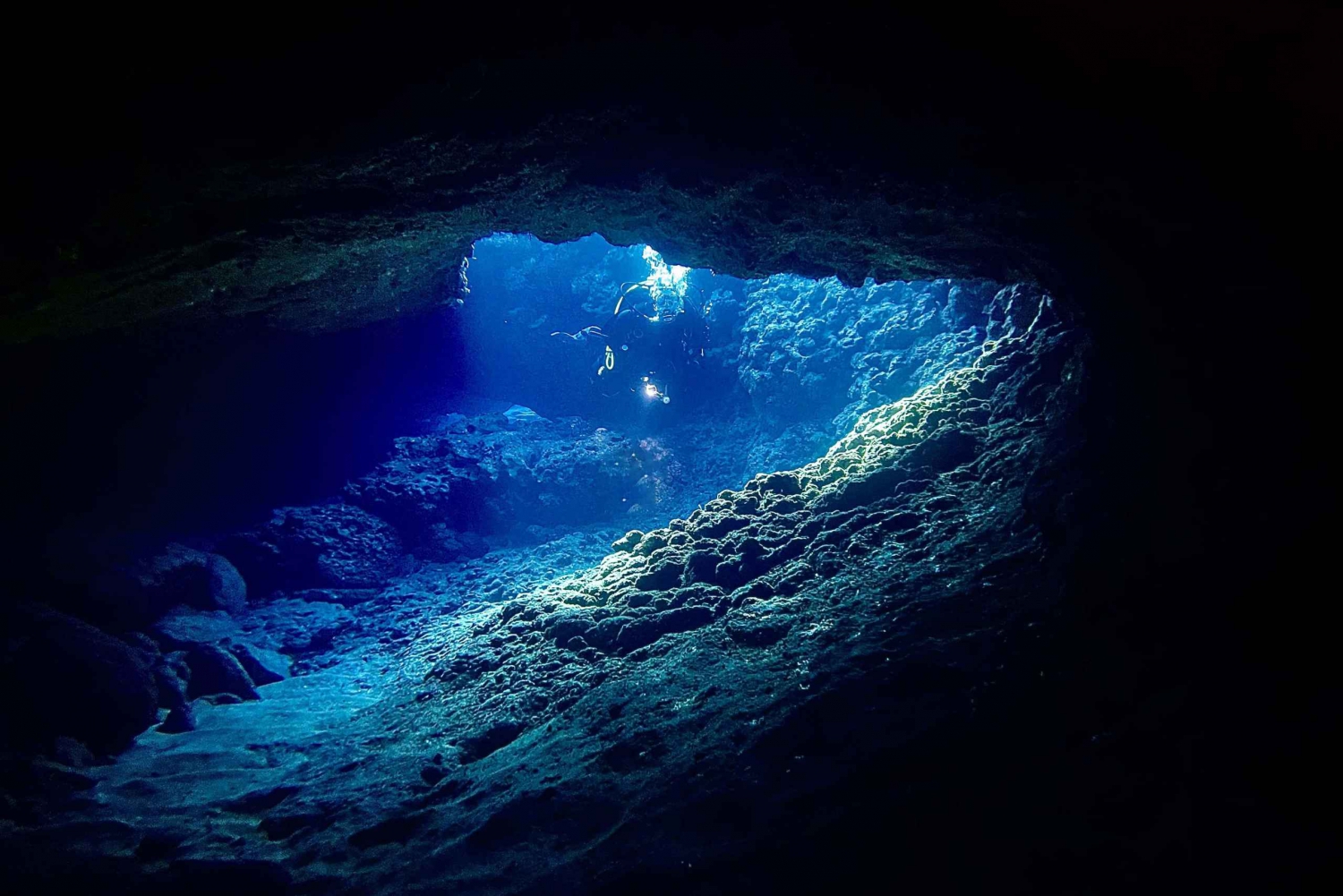
Cape Banks Caverns deliver an eerie, dramatic dive framed by towering rocky overhangs, kelp forests and winding swim-throughs. Located at the edge of Botany Bay National Park, this advanced shore dive rewards careful planning with cathedral-like tunnels, thriving sponge gardens and frequent grey nurse shark sightings.
By ScubaDownUnder Team
The Dive
Cape Banks is not your average shore dive. The entry is rough, the walk is long and there’s often swell pushing hard onto the rock ledge. But beneath the surface, it’s another world altogether.
Entry is usually made via the flat rock shelf just east of the Cape Banks memorial. Conditions must be calm, as waves surge unpredictably here. Once below, the shallows immediately drop into a boulder-strewn slope fringed with kelp and pink weed. Follow this down to about 18 metres, where you’ll find a network of ledges and caverns stretching along the seaward edge of the site.
The headline feature is a series of caverns and tunnels, some wide enough to swim through in pairs. Light streams through crevices in the rock ceiling, casting shifting rays on the silty floor. These overhangs are covered in sponges, bryozoans and sea tulips, while bullseyes and old wives swirl inside the darker sections.
Out in the open, look for schools of yellowtail scad, giant cuttlefish blending into the ledges, and the occasional grey nurse shark cruising silently just beyond the rock line. In winter and spring, it’s not uncommon to spot more than one.
Further north toward Congwong Bay, the terrain transitions to scattered bommies and low reef. This area offers easier diving but lacks the drama of the cavern zone. Some divers choose to drift back this way, letting the swell help them return.
Conditions
- Depth: 8, 22 metres - Visibility: 5, 20 metres, best in southerlies - Best time to dive: Winter and early spring, with a rising tide and light south swell - Experience level: Advanced (due to surge, navigation complexity and surface conditions)
Marine Life Highlights
- Grey nurse sharks - Giant cuttlefish - Bullseyes - Old wives - Blue groper - Port Jackson sharks - Yellowtail scad - Eastern rock lobsters - Nudibranchs and sponges galore
Hazards
Surge and swell: Sudden waves at entry and underwater surge in caverns
Difficult entry: Long walk from carpark and slippery rock shelf Silting: Finned too hard inside the caverns and you’ll be blind Navigation: Complex terrain means compass and air monitoring are essential Limited exit options: If conditions worsen, exiting can be dangerous
Facilities
Clifftop carpark Long walking trail No amenities nearby Mobile signal unreliable No tank fill or gear hire onsite
Local Tips
Dive with a local or someone who knows the site Bring a torch for the caverns Check swell forecast carefully Avoid the area in strong easterlies Pack light for the long walk
Verdict
Cape Banks Caverns is one of Sydney’s most thrilling and underappreciated shore dives. It’s not for beginners or fair-weather divers. But for those willing to brave the surge and carry gear across a windswept headland, the reward is a raw, wild dive filled with shadowy tunnels, curious sharks and a reefscape unlike any other in the city.
Sources
NSW National Parks - Cape Banks Underwater Sydney Dive Site Map Sea Life Sydney - Grey Nurse Shark Facts