Learn to Dive
Choosing Your First Mask, Snorkel and Fins
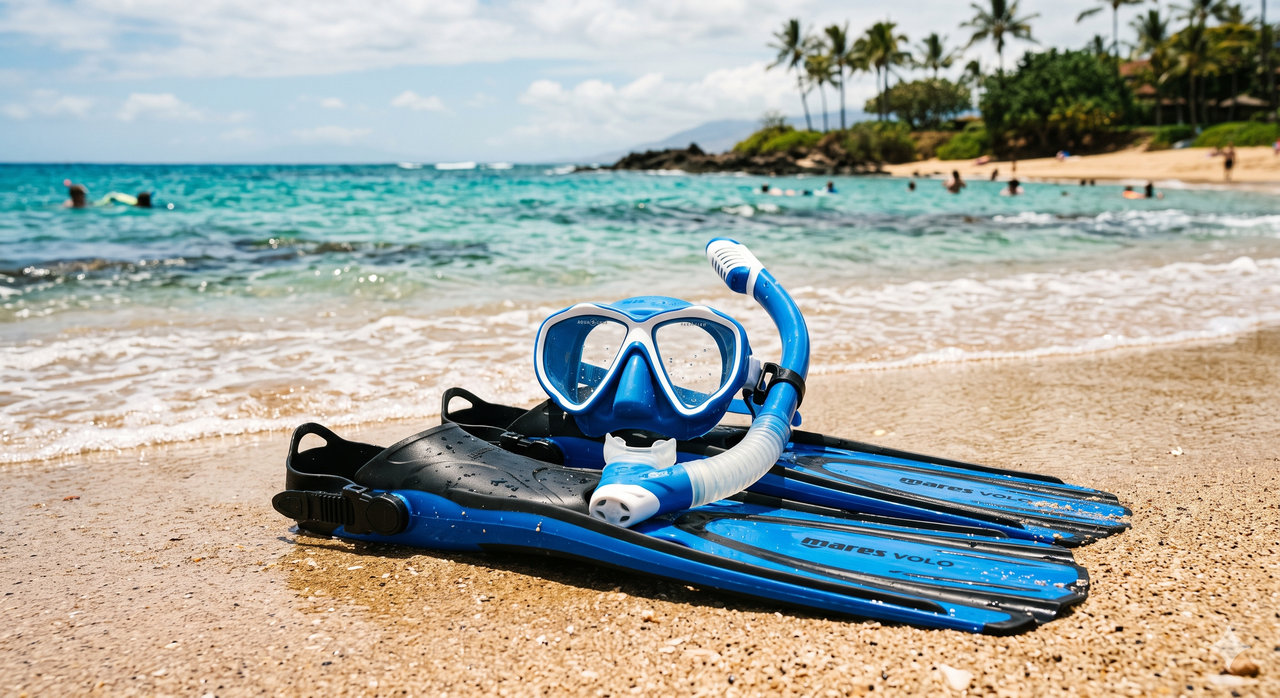
How to choose your first mask, snorkel and fins for Australian diving: shop fit tests, frameless versus framed, fin and boot choices, and budget tiers.
By ScubaDownUnder Team · Published 26 June 2026
# Choosing Your First Mask, Snorkel and Fins
Mask, snorkel and fins are the first real gear most Australian divers buy, and they are the right place to start: this is the kit that touches your body, the kit where fit is everything, and the kit that follows you from your Open Water course through every dive after it. Done properly, $250 to $450 covers all three at a quality level you will not outgrow for years.
The mistake to avoid is shopping by brand or price tag. A mask is a seal against your face, fins are an extension of your legs, and neither cares what the logo says. Here is how to choose all three like someone who has done it before. If you are still deciding what to buy versus rent overall, start with our guide to [what scuba gear to buy first](https://scubadownunder.com/blog/what-scuba-gear-to-buy-first).
## Start With the Mask: Fit Is Everything
Every face is different, and a mask skirt has to seal against yours: cheekbones, brow, upper lip, the bridge of your nose. A mask that matches your face will sit there all dive with barely a trickle. A mask that does not will leak no matter what it cost, and constant clearing is the single most common misery for new divers.
That is why the golden rule is to buy your first mask in a physical dive shop, not online. You need to try it on, and a good shop will expect you to try half the cabinet.
## The Shop Fit Test (Do This Before You Pay)
The suction test takes thirty seconds per mask and tells you nearly everything:
1. Push your hair completely off your face. Even a few strands under the skirt will break the seal and ruin the test. 2. Tilt your head back slightly and rest the mask on your face without using the strap. 3. Inhale gently through your nose and take your hands away. A well-fitting mask will stick to your face on suction alone. 4. Hold that gentle vacuum and look forward, then down. The mask should stay put for several seconds without being held. 5. Check for pressure points: the nose bridge, forehead and upper lip should feel evenly contacted, not pinched. 6. Pinch the nose pocket as if equalising. You should be able to do it easily, including imagining thick gloves on.
Repeat with at least three or four masks and rank them purely on seal and comfort. If two masks fit equally well, then and only then let price or features decide. Australian conditions add one more consideration: if you plan to dive the colder southern states, check the nose pocket works with gloves.
## Frameless vs Framed Masks
Frameless masks bond the silicone skirt directly to a single lens. The result is lower internal volume, which makes clearing easier, a wide view, and a mask that folds almost flat, perfect as a travel spare or backup. Framed masks build the lenses into a rigid frame: a little more robust on rough boat decks, often available with two separate lenses, and in some models the lenses can be swapped for prescription glass.
For a first mask, either style is fine, and fit should always win the argument. Plenty of new divers end up in a budget frameless like the Cressi F1, which we rated highly in our [Cressi F1 review](https://scubadownunder.com/gear-reviews/cressi-f1-frameless-mask). For a current shortlist across budgets, see our [best dive masks for Australia roundup](https://scubadownunder.com/gear-reviews/best-dive-masks-australia-2026).
One non-negotiable: only buy a proper dive mask with tempered glass. Swim goggles and full-face snorkel masks are not scuba equipment.
## Don't Overthink the Snorkel
The snorkel is the cheapest item on the list and the least worth agonising over. For scuba, you want simple: a basic J-shape or a semi-dry design with a splash guard, ideally with a flexible lower section that drops away from your mouth when you are on the regulator. Spend $20 to $60 and move on.
Fully dry snorkels with sealing valves are popular with surface snorkellers but add bulk and drag for divers. Most Australian training agencies require a snorkel for your course, so you do need one, even if it spends later dives clipped to your bag.
## Open-Heel vs Full-Foot Fins
This is the one choice where Australian conditions push hard in a single direction.
Full-foot fins slip on over bare feet or thin socks. They are light, cheap and efficient, and they make sense for warm-water boat diving: stepping off a Queensland liveaboard onto the reef, for example.
Open-heel fins have an adjustable strap and a roomy pocket worn over neoprene boots. They are the default choice for most Australian diving, and for good reason: a huge share of our diving involves shore entries over rock, sand and jetty steps, from Sydney's headlands to the famous jetties of South Australia. You want boots for those entries, and boots mean open-heel fins. Cold water in the southern states settles the argument; your feet will want neoprene anyway.
If you only buy one pair, buy open-heel. On blade design, beginners are best served by a conventional paddle fin of moderate stiffness: predictable, controllable and fine for every kick style you will learn. We go deeper in our guides to [choosing scuba fins](https://scubadownunder.com/blog/how-to-choose-the-right-scuba-diving-fins-a-comprehensive-guide) and the [best fins for beginners](https://scubadownunder.com/blog/best-scuba-fins-for-beginners-in-2025). Spring straps, either included or as an upgrade, are worth having: no buckles to fiddle with in cold hands.
## Boots for Rocky Entries
Boots are cheap insurance. Australian shore diving is full of barnacled rock platforms, slippery jetty ladders and hot summer car parks, and rental boots are nobody's favourite item. Look for a proper rubber sole with some stiffness for rock hopping, 3mm thickness for the tropics or 5mm if you dive the southern states, and a zip if you want easy donning.
The crucial tip: buy boots first, then size your fins with the boots on. Fin pockets vary enormously between brands, and a fin sized to your bare foot will not fit over 5mm of neoprene.
## Defog and First-Use Care
New masks come with a manufacturing residue on the lens that defog spray cannot defeat. Before your first dive, scrub the inside of the lens gently with a non-gel toothpaste, rinse, and repeat a couple of times. Some divers burn the film off with a lighter flame; it works, but it is easy to damage the skirt or lens coating, so we do not recommend it for a brand-new purchase.
After that, a routine of defog (or spit) before each dive, a freshwater rinse after, and storage out of the sun will keep a mask going for many years. Our [mask maintenance guide](https://scubadownunder.com/blog/diving-mask-maintenance) covers the full care routine.
## Budget Tiers
- Tight budget, $150 to $250 all up: a quality budget mask at $50 to $80, a simple snorkel at $25, and entry-level open-heel fins with basic boots. Entirely capable kit; you are trading refinement, not safety. - Mid-range, $250 to $450: where most new divers should aim. A mask at $80 to $130, a semi-dry snorkel, name-brand open-heel fins at $150 to $200 and solid 5mm boots. This kit lasts a decade. - Premium, $450 plus: low-volume premium masks, top-tier fins with spring straps, and zip boots with reinforced soles. Lovely, but buy here only after fit-testing; a premium mask that leaks is still a leaky mask.
Whatever the tier, check our [gear reviews](https://scubadownunder.com/gear-reviews) for tested options at Australian prices before you buy.
## FAQ
### How do I know a mask fits without getting in the water?
The shop suction test is remarkably reliable: hair off the face, mask on without the strap, gentle inhale through the nose, hands away. If it holds on suction while you look around, it will almost certainly seal at depth, where water pressure pushes the skirt onto your face even more firmly.
### How tight should the mask strap be?
Barely tight at all. The seal comes from suction and water pressure, not strap tension, and an over-tightened strap actually distorts the skirt and causes leaks, along with the classic mask-squeeze headache. The strap exists to stop the mask drifting off your face, nothing more.
### Are split fins or paddle fins better for a first purchase?
Paddle fins. They give you precise control, work with every kick style including the frog kick you will eventually want, and behave predictably in current. Split fins are easier on knees and ankles but feel vague for beginners still developing technique.
### What if I wear glasses?
You have good options. Several framed masks accept off-the-shelf prescription lenses in standard steps, which a dive shop can fit while you wait, and custom-ground lenses are available for stronger or more complex scripts. Contact lens wearers can simply dive in soft contacts with a well-sealing mask; just keep your eyes closed if you ever have to clear a flooded mask.