Learn to Dive
How Much Does It Cost to Get Scuba Certified
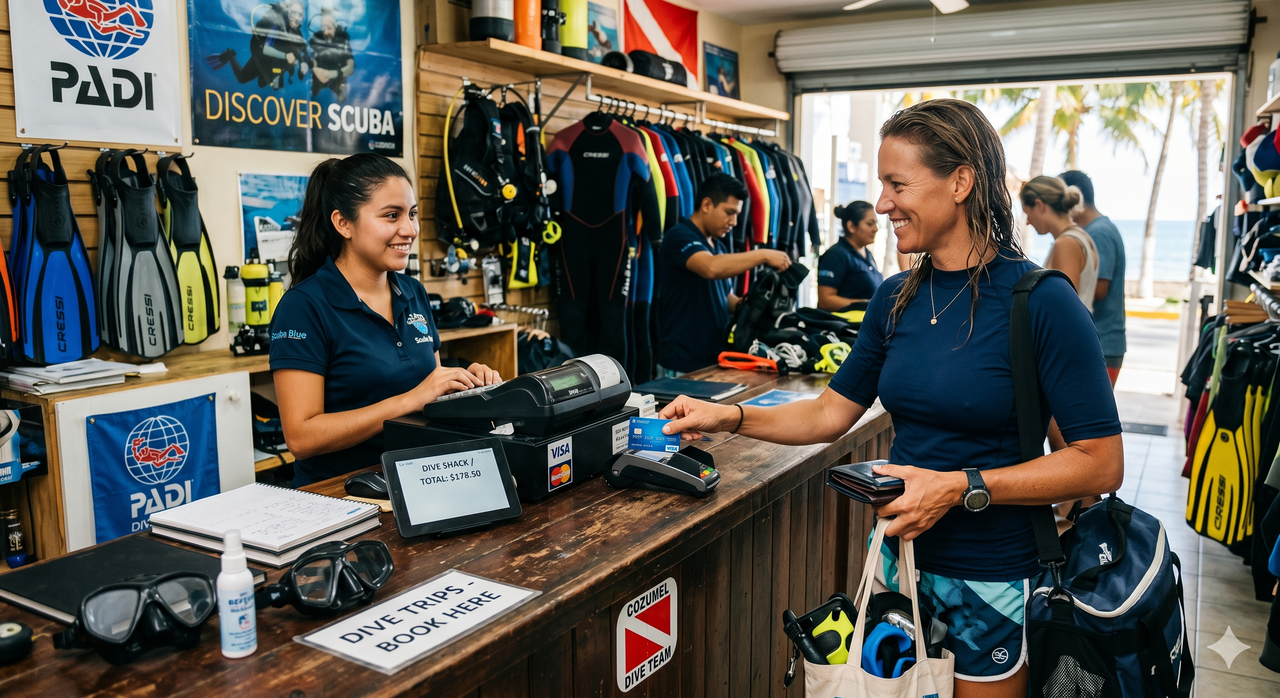
A complete 2026 breakdown of what Open Water certification really costs in Australia, all seven line items, four common course paths, and what to ask before you pay.
By ScubaDownUnder Team · Published 1 May 2026
# How Much Does It Cost to Get Scuba Certified
> Australia has some of the best dive training in the world, and the price range from one course to the next is wider than you would think. Here is a complete breakdown of what an Open Water certification actually costs in 2026, including the bits that are not in the brochure.
## Why the headline price never tells the whole story
A Cairns operator can advertise an Open Water course for $399 and a Sydney shop can quote $895 for what looks like the same certification. Both are honest prices, they just include different things. The headline number on a dive school's website is one of four to seven separate costs that make up your real total, and the cheap-on-paper option is sometimes the most expensive once you account for the rest.
This article walks through every line item, gives realistic 2026 ranges for each Australian capital, and shows you the four common course paths so you can compare apples with apples before you book.
## Contents
1. [The realistic 2026 totals](#totals) 2. [Line item 1, the course itself](#course) 3. [Line item 2, eLearning or theory materials](#elearning) 4. [Line item 3, the dive medical](#medical) 5. [Line item 4, certification fee](#cert-fee) 6. [Line item 5, gear you should own](#gear) 7. [Line item 6, hire gear and tank fills](#hire) 8. [Line item 7, accommodation and travel](#travel) 9. [The four common course paths, side by side](#paths) 10. [What to ask a dive shop before you pay](#questions) 11. [Where dive schools differ on value](#value)
## The realistic 2026 totals {#totals}
Open Water certification, all-in, depending on path:
- **Sydney / Melbourne weekend course (city-based, day trips):** $850 to $1,300 - **Cairns liveaboard course (3-day boat trip):** $950 to $1,500 - **Whitsundays liveaboard course:** $1,100 to $1,700 - **Bali or SE Asia course (for comparison):** $400 to $700, certification valid worldwide
These totals include the course, eLearning, medical, certification fee, basic personal gear (mask, snorkel, boots), and the costs you cannot avoid. They do not include flights or accommodation if you are travelling from another city.
> **The cheap-course rule of thumb:** If you see a course advertised under $500 in Australia, ask exactly what is excluded. The standard exclusions are eLearning, medical, certification fee, and personal gear. Add those back and you are usually within $100 of the typical price.
## Line item 1, the course itself {#course}
This is the price most schools advertise. It buys you instructor time, pool and confined-water sessions, four open-water training dives, hire of bulky gear (BCD, regulator, wetsuit, tank, weights), and the assessment of your skills.
Typical Australian course-only prices in 2026:
- **Sydney:** $550 to $795 - **Melbourne:** $550 to $795 - **Brisbane / Sunshine Coast:** $550 to $795 - **Perth:** $600 to $850 - **Adelaide:** $550 to $750 - **Cairns / Port Douglas (3-day liveaboard):** $750 to $1,100 - **Whitsundays liveaboard:** $850 to $1,300
City courses are usually run across two weekends. Liveaboard courses bundle the boat, dives, and accommodation into 2 to 3 nights at sea.
## Line item 2, eLearning or theory materials {#elearning}
You learn the theory either online (eLearning) or in a classroom session at the shop. The two approaches cost differently.
- **eLearning (PADI / SSI digital course):** $250 to $310 add-on - **Classroom-only theory:** usually included, no extra cost - **Blended (classroom plus take-home digital reference):** often included or $50 to $100 extra
eLearning lets you start before arriving at the shop, which is valuable for liveaboard students. The trade-off is the extra $250 to $310. Most Australian students now choose eLearning for the convenience.
For the full breakdown of what is in this module, see [What to Expect in the Theory Module](https://www.scubadownunder.com/blog/what-to-expect-in-your-theory-module-knowledge-development).
## Line item 3, the dive medical {#medical}
By Australian and New Zealand standard AS 4005.1, every Open Water student needs a dive medical clearance signed by a doctor before they get in the water. Two formats:
- **Standard self-declaration medical (RSTC form, signed by a GP):** $80 to $130. Used for fit, healthy applicants under 45 with no flagged conditions. - **Full SPUMS medical (specialist dive doctor):** $200 to $320. Required if you tick yes on any of the screening questions, or for some applicants over 45.
If you book through a dive school, they will often refer you to a local dive-aware GP. Some Cairns and Port Douglas operators have an in-house doctor who does the medical for around $80 on the morning of day 1.
For the medical screening criteria and what conditions trigger a full SPUMS referral, see [Scuba Diving Medicals, What Disqualifies You](https://www.scubadownunder.com/blog/scuba-diving-medicals-what-disqualifies-you).
## Line item 4, certification fee {#cert-fee}
The agency charges a fee to issue your card and add you to their database. Most schools include this in the course price but a few add it on top.
- **PADI:** $75 to $95 - **SSI:** $0 to $50 (often free if your shop is SSI-affiliated) - **NAUI:** $60 to $80 - **RAID:** $40 to $70 - **SDI:** $60 to $80
If a school's website FAQ says "course price excludes certification fee," budget another $80 on top.
## Line item 5, gear you should own {#gear}
A mask that does not leak is the single biggest difference between a comfortable Dive 1 and a miserable Dive 1. Hire masks rotate through hundreds of faces and rarely seal as well as one fitted to you.
Realistic Australian retail prices for the three pieces of personal gear you should own from the start:
- **Mask:** $50 to $150 - **Snorkel:** $25 to $60 - **Boots:** $50 to $110 - **Combo packs (mask, snorkel, boots):** $120 to $230
For a full breakdown of what is worth buying for the course versus what to hire, read [Gear You'll Use in Your Course](https://www.scubadownunder.com/blog/gear-youll-use-in-your-course).
## Line item 6, hire gear and tank fills {#hire}
Course prices include the hire gear (BCD, regulator, wetsuit, tank, weights) for the course itself. After certification, expect:
- **Daily hire of full kit (BCD, regs, wetsuit, tank, weights):** $80 to $130 - **Tank fill, air:** $10 to $15 - **Tank fill, Nitrox 32%:** $15 to $25
If you continue diving, the maths shifts toward owning your own kit after about 25 to 40 dives.
## Line item 7, accommodation and travel {#travel}
For a city-based course you do not need to add anything, you sleep at home and drive to the shop. For a liveaboard or destination course, the bundled price already covers accommodation and meals on the boat.
Where it does matter, flights and pre or post-trip accommodation:
- **Sydney to Cairns return flight:** $200 to $500 (peak: $700+) - **Cairns hotel night, mid-range:** $150 to $250 - **Whitsundays bus and accommodation pre or post-boat:** $200 to $450 typical bundle
If you are a Sydney resident weighing a Cairns course against a local one, the realistic comparison is $1,300 (Sydney) versus $2,000+ (Cairns including travel). The flight cost is what closes the gap. The diving is genuinely better in Cairns and arguably worth the difference.
## The four common course paths, side by side {#paths}
### Path A, city weekend course
Sydney, Melbourne, Brisbane, Perth, Adelaide.
- Course: $700 - eLearning: $290 - Medical: $100 - Certification fee: $80 (if not bundled) - Mask, snorkel, boots: $200 - **Total: roughly $1,370** - Time: two weekends, 4 days elapsed
### Path B, Cairns liveaboard
- Course (incl. boat, food, accommodation on boat): $950 - eLearning: $290 - Medical: $100 (or onboard, $80) - Certification fee: $80 (if not bundled) - Mask, snorkel, boots: $200 - **Total: roughly $1,620 not counting flights** - Time: 3-day liveaboard, 4 days total
### Path C, Bali (or other SE Asia), for comparison
- Course (incl. all materials and certification): $450 - Medical: not always required by Indonesian operators (still recommended) - Personal gear: $200 - **Total: roughly $650 plus flights and accommodation** - Time: 3 to 4 days
### Path D, refresher or referral course
If you have done your eLearning and pool sessions in your home city and only need the open-water dives elsewhere (a "referral"), you can split the course:
- Theory and pool in Sydney or Melbourne: roughly $450 - Open-water referral in Cairns: roughly $650 - **Total: roughly $1,100 plus separate gear, medical, and certification costs**
Useful if you want to do the dives somewhere warm without committing to a full liveaboard.
## What to ask a dive shop before you pay {#questions}
A short script that saves disputes later. Email or message the shop and ask:
1. What is the all-in price for a complete Open Water certification, including eLearning, medical referral, and certification fee? 2. Is hire of all course gear included? 3. Are there extra costs for additional dives if I need to repeat one? 4. What is your weather and cancellation policy if dives are postponed? 5. Is the medical done in-house, or do I need to go to a separate GP?
A reputable shop will answer these clearly within an email. If they cannot or will not, that is the answer.
## Where dive schools differ on value {#value}
The cheapest course on price is rarely the worst value, but the cheapest course is sometimes a budget operation with cramped boats and 6:1 student-to-instructor ratios. Things that genuinely raise the value (and the price) of a course:
- **Smaller groups, max 4:1 student-to-instructor.** More skill attention. - **Real two-day open-water dive program (not four dives crammed into one).** More time, less stress. - **Quality hire gear, not the oldest stock in the rental cupboard.** A leaky regulator on Dive 2 is no fun. - **Shore-based options for shy or anxious students.** A pier dive is gentler than a giant-stride boat entry on Dive 1. - **Liveaboard for the open-water dives if your goal is reef diving.** Same total price, much better dive sites.
For how to decide between agencies (PADI, SSI, NAUI, RAID, SDI), see [PADI vs SSI vs NAUI](https://www.scubadownunder.com/blog/padi-vs-ssi-vs-naui-which-scuba-certification-agency-is-right-for-you). For where to do your course, see [Where to Get Scuba Certified in Australia](https://www.scubadownunder.com/blog/where-to-get-scuba-certified-in-australia).
## Next steps
- Read [How Long Does It Take to Get Scuba Certified](https://www.scubadownunder.com/blog/how-long-does-it-take-to-get-scuba-certified) for the time-budget side of the same decision. - Browse [Where to Get Scuba Certified in Australia](https://www.scubadownunder.com/blog/where-to-get-scuba-certified-in-australia) for shop directories by state. - If you are on the fence, do a [Discover Scuba Diving session](https://www.scubadownunder.com/blog/discover-scuba-diving-try-before-you-commit) for $150 to $300 first. Many shops credit it against a future Open Water course.