Learn to Dive
Is Advanced Open Water Worth It?
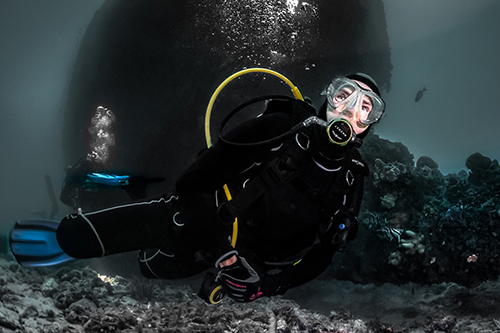
An honest cost-benefit look at Advanced Open Water: the 30 metre unlock, which Australian dive sites require it, when to do it and when to wait.
By ScubaDownUnder Team · Published 24 June 2026
# Is Advanced Open Water Worth It?
Advanced Open Water is the most second-guessed course in recreational diving. Sceptics call it card collecting: five dives, no exam, a few hundred dollars, and a qualification you can start the weekend after Open Water. Fans call it the fastest confidence boost in the sport. Both camps have a point, so here is the honest cost-benefit version, Australian edition.
## What AOW Actually Is (and Is Not)
The course is five adventure dives, usually run across two days. Each adventure dive is effectively the first dive of a PADI specialty course. Two are compulsory: a deep dive beyond 18 metres and an underwater navigation dive. You pick the remaining three from a menu that typically includes wreck, night, drift, peak performance buoyancy, search and recovery, and underwater photography. There is no exam and no pool time, just a short knowledge review for each dive and an instructor watching you put it into practice in open water.
What it is not is a mastery test. Nobody fails AOW for imperfect buoyancy. It is structured experience under professional supervision, and that is the correct lens for deciding whether it is worth your money.
## What the Adventure Dives Are Actually Like
Each adventure dive follows the same rhythm: a short knowledge review, a briefing, then a dive with one or two specific tasks woven into it. On the deep dive you might compare colours at depth and at the surface, or watch your instructor demonstrate how a depth-rated object behaves under pressure. The navigation dive has you running compass headings, square patterns and distance estimates. A peak performance buoyancy dive is essentially a supervised hour of hovering, trim and fine-tuning your weights, and most divers say it pays for itself in air consumption alone. Wreck and night adventure dives are guided introductions: enough to know whether you want the full specialty, not enough to claim the skill. None of it is hard. All of it is the kind of deliberate practice you would struggle to set up on your own.
## The 30 Metre Unlock
Open Water qualifies you to 18 metres. AOW extends that to 30. On paper these limits are training recommendations, but in practice they function as gatekeeping: reputable Australian operators check your certification card, and often your logbook, before putting you on deeper sites. The phrase "AOW minimum" appears in trip descriptions all over the country.
That matters because a striking number of Australia's bucket-list dives sit in the 18 to 30 metre band, especially the wrecks:
- The [ex-HMAS Brisbane](https://scubadownunder.com/blog/ex-hmas-brisbane) off the Sunshine Coast has its decks around the high teens and a seabed near 27 metres. - The [SS Yongala](https://scubadownunder.com/blog/the-majesty-of-the-deep-unveiling-the-ss-yongala-wreck) near Townsville, regularly called Australia's best dive, lies between roughly 14 and 28 metres in open water with current. - The [HMAS Adelaide](https://scubadownunder.com/blog/hmas-adelaide-terrigal-wreck-dive-guide) at Terrigal and the [HMAS Swan](https://scubadownunder.com/blog/hmas-swan-wreck) at Dunsborough both reach about 30 metres at the sand. - Sites like [Fish Rock Cave](https://scubadownunder.com/blog/fish-rock-cave) at South West Rocks reward exactly the depth comfort and navigation skills the course builds.
Browse the [dive sites index](https://scubadownunder.com/dive-sites) and count how many entries note depths past 18 metres. The value calculation changes quickly.
## The Core That Earns Its Keep
Strip away the elective dives and the course still justifies itself on the two compulsory ones. The deep dive is your first structured visit past 18 metres: shorter no-decompression windows, closer gas monitoring, and usually your first taste of [nitrogen narcosis](https://scubadownunder.com/blog/nitrogen-narcosis-what-it-is-and-how-to-recognise-it) with an instructor beside you, which is precisely where you want to meet it.
The navigation dive is the sleeper hit. Compass headings, distance estimation and natural navigation sound dry, but they are what turn you from a passenger trailing a guide into a diver who knows where the boat is. Divers who can navigate relax more, breathe less and enjoy dives that would otherwise feel disorienting.
## When Should You Do It?
There are two honest schools of thought.
**Straight after Open Water.** Everything is fresh, you stay in the learning groove, and combination packages (common in Cairns and the tropics) are cost-effective. You also get your early depth experience under supervision rather than improvising it later.
**After 10 to 20 dives.** You arrive with context. Once basic skills are automatic, the adventure dives teach far more, and you will have a much better idea of which three electives you actually want.
Our take: if you have easy local diving available, log a relaxed handful of dives first, build the habits in our [safety tips for new divers](https://scubadownunder.com/blog/essential-safety-tips-new-divers), and book AOW when buoyancy no longer occupies your whole brain. If most of your diving will happen on holiday at deeper destinations, do the combination course and take the supervised depth progression up front.
## The Case Against
Fair is fair, so here are the real counter-arguments:
- **Five dives is experience, not expertise.** You can hold an Advanced card with nine dives in your life. The title oversells what you are. - **You may not need 30 metres.** If your diving is jetties, reef flats and shore sites, much of Australia's best shallow diving never asks for more than 12 metres, and the unlock can sit unused for years. - **The same money buys dives.** The $350 to $600 course fee covers six to ten guided dives in most cities, and unstructured time in the water is also how divers improve. - **Adventure dives are introductions.** One wreck adventure dive does not make you a wreck diver; the [full specialty course](https://scubadownunder.com/blog/padi-wreck-diver-course-australia) is where those skills are actually taught.
## The Case For
- The card is checked at the gateways. Yongala, the big ex-navy wrecks and plenty of charters simply will not take Open Water divers. - The deep and navigation cores reduce genuine risk and genuinely improve your diving. - Extending your depth range with a professional next to you is worth paying for once. - There is no exam and no stress; it is a fun weekend that makes you a more useful buddy.
## Cost and Time in Australia
Expect roughly $350 to $600 for the standalone course, gear included at most shops, across two days and five dives. E-learning covers the knowledge reviews in an evening or two beforehand. Tropical operators often bundle Open Water and Advanced into a four to five day package at a useful discount, and some run AOW across liveaboard trips so your adventure dives happen on premium sites rather than the training reef.
Two buying tips. First, ask which electives the shop actually runs, because menus on websites are aspirational and the real options depend on local sites and season. Second, compare what is included: some quotes cover gear, boat fees and certification processing, others quietly do not, and the cheapest headline price is not always the cheapest course.
## The Verdict
For most Australian divers, yes, AOW is worth it, eventually if not immediately. This country keeps an unusual share of its best diving below 18 metres, and the course is the key that opens it. Delay it without guilt if money is tight and your local diving is shallow; the card will mean more with some dives behind it. But if the wrecks and the deeper boat sites are calling, book the weekend, pick your three electives with intent, and go see what the fuss is about. The [full list of sites](https://scubadownunder.com/dive-sites) will be waiting.