Marine Life
Starfish Uncovered
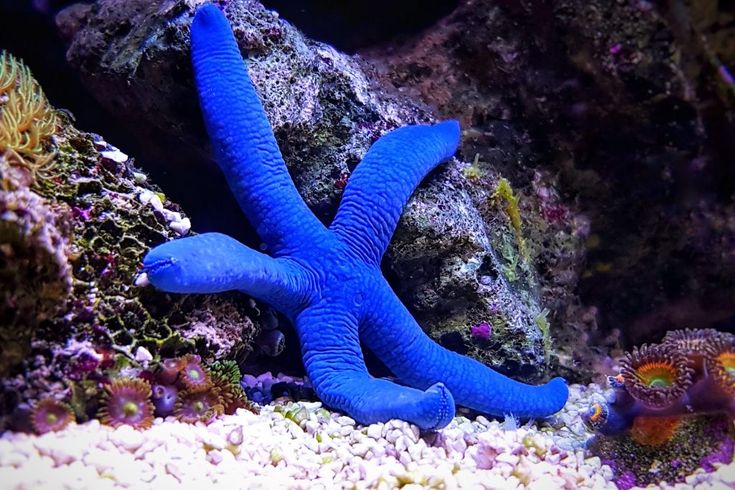
Hydraulic locomotion, external digestion, remarkable regeneration, and a decentralised nervous system define the essential reef predator.
By ScubaDownUnder Team · Published 22 November 2025
The Complexity of the Asteroid: Deconstructing the Sea Star
To the casual observer, the sea star (Class Asteroidea) appears as little more than a colourful, static garden ornament on the seafloor. Yet, beneath their often spiny or leathery epidermis lies a marvel of echinoderm engineering: a hydraulic locomotion system, a decentralised nervous network, and an astonishing ability to regenerate and digest prey externally.
We know that to truly appreciate the health of a temperate reef, one must first understand its foundational fauna. This post moves beyond identifying the common species and delves into the intricate life and often-overlooked ecological importance of the sea stars found in Australian waters.
A Primer on Asteroidea
Sea stars belong to the Phylum Echinodermata (meaning 'spiny skin'), which also includes sea urchins, sea cucumbers, and brittle stars. Unlike most animals, they exhibit pentaradial symmetry in their adult form, body parts arranged around a central axis, typically in five (or multiples of five) rays or arms.
The Water Vascular System: Hydraulic Power
The defining feature of the sea star is its unique method of movement and feeding: the Water Vascular System (WVS).
1. Water Intake: Water enters the system through the madreporite, a small, porous plate (often mistaken for an abnormality) located on the aboral (upper) surface, usually offset from the central disc. 2. Internal Channels: The water travels down the stone canal to the circular ring canal in the central disc, which feeds into the radial canals running down each arm. 3. Tube Feet: Along the radial canals, water pressure is regulated within hundreds of tiny, muscular, sac-like structures called ampullae. When an ampulla contracts, it forces fluid into the adjacent tube foot (podium), extending it. Suction cups at the tip allow the tube foot to grip the substrate.
This WVS enables slow, controlled movement across surfaces, allowing the sea star to travel great distances to find food and shelter, often moving at a stately pace of $10\text{ cm}$ per minute.
A Decentralised Nervous System
Perhaps the most challenging concept to grasp is the sea star’s decentralised nervous system. There is no "brain" in the conventional sense.
* A simple nerve ring encircles the central disc. * Nerve cords extend down each arm. * The tip of each arm houses a tiny ocellus (eyespot), a rudimentary photoreceptor that can detect light and dark, but not detailed images.
This structure allows each arm to act semi-independently, coordinating movement and sensory input without a single central command unit, a crucial factor in their response to injury.
Life Cycle: The Bipinnaria and the Transition
The sea star life cycle involves a dramatic and often lengthy transformation.
* Reproduction: Most sea stars reproduce sexually by broadcast spawning, releasing vast quantities of eggs and sperm into the water column. Timing is often cued by water temperature and lunar cycles. * Larval Stage: The resulting larva is a free-swimming, bilaterally symmetrical organism called the bipinnaria (and later, the brachiolaria). This stage is critical for dispersal, allowing species to spread across vast marine areas. The bipinnaria stage can last from a few weeks to several months, depending on the species and environmental conditions. * Metamorphosis: The larva settles onto the substrate and undergoes a rapid, radical metamorphosis, losing its bilateral symmetry and developing the distinctive radial symmetry, transitioning to the benthic juvenile stage. This transition is highly vulnerable, making larval survival a major factor in population dynamics.
Interesting Facts
1. The Power of External Digestion
Sea stars are fearsome predators, especially of bivalves (mussels, clams) and snails. Their feeding mechanism is truly remarkable:
* The sea star uses its tube feet to exert a steady, strong pull on the shells of its prey. The tensile strength of the tube feet can overcome the adductor muscle of a mussel with a sustained force. * Once a minute gap is created (less than 0.1mm is sufficient), the sea star actually everts its stomach (the cardiac stomach) out through its mouth (located on the underside) and slips it into the shell cavity. * It then digests the soft tissues of the prey *outside* its body, absorbing the pre-digested nutrients before retracting its stomach.
2. Astonishing Regeneration and Autotomy
The ability to regrow lost limbs (regeneration) is perhaps the most famous sea star trait. However, the related behaviour of deliberately shedding a limb (autotomy) is equally fascinating.
* Autotomy: When threatened by a predator, a sea star can intentionally detach an arm, leaving the predator with the limb while the main body escapes. * Asexual Reproduction: In some species, such as the genus *Linckia*, a severed arm, provided it contains a piece of the central nerve ring, can regenerate an entire new body. This form of asexual reproduction is called fission.
Habitat and Conditions in NSW Waters
In the temperate waters of New South Wales, sea stars are found in virtually every benthic habitat, from intertidal zones to the deep continental shelf.
Where to Find Them and Preferred Conditions
* Topology and Cover: The greatest diversity is found in rocky reef environments, the same boulder fields, vertical walls, and kelp forests that we love to explore. Species prefer a solid substrate to grip with their tube feet, and the crevices and overhangs provide shelter from strong surge. * Common Sightings: Look for them at the sand-reef interface, where they can ambush prey that live in both habitats.
Key Australian Species
The Eleven-Armed Sea Star (*Coscinasterias muricata*): - Description: Highly common on NSW reefs. Characterised by having 8 to 14 arms (usually 11). Colours range from deep blue to grey-green. - Ecological Role: This is an important keystone predator, known to aggressively predate on other echinoderms, including smaller sea stars and sometimes sea urchins, helping maintain reef balance.
The Biscuit Sea Star (*Goniaster tessellatus*): - Description: A distinctive, flat, almost pentagonal star with short, thick arms, resembling a decorated biscuit. Its plates are very rigid. - Habitat: Less common than the Eleven-Arm, often found in deeper water or on more exposed, rocky bottoms. A prized find for its striking, geometric symmetry.
The Crown-of-Thorns Sea Star (*Acanthaster planci*): - Relevance: While rare in southern temperate zones, its presence and biology are crucial. This large, multi-armed species (up to 21 arms) is a dedicated corallivore (coral eater). - Note: Although its notorious outbreaks are primarily a Great Barrier Reef concern, understanding its predatory impact is essential when discussing the role of sea stars as predators in any ecosystem.
The Military Sea Star (*Astrostole rodolphi*): - Description: Robust and large, often yellow, orange, or grey. - Habitat: A cold-water species, often found on deeper, exposed reefs, but common in the waters south of Sydney and into Tasmania.
A formidable predator. The next time you spot a sea star on a dive, take a moment. You are looking at an organism that effectively walks on water pressure, hunts by ejecting its own stomach, and can regrow from a fragment. They are silent, slow-moving, and often overlooked, but the health and structure of our temperate reefs rely heavily on their slow, steady predatory presence.