Marine Life
The Majestic Bull Ray: A Hidden Giant of the Coastal Seafloor
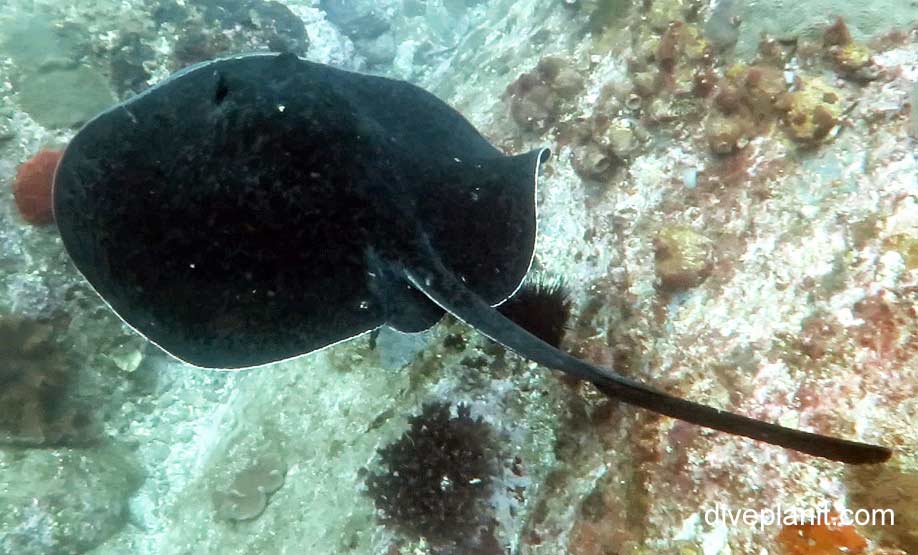
Exploring the biology, behaviour, and diving encounters with the remarkable bull ray
By ScubaDownUnder Team · Published 9 November 2025
The Majestic Bull Ray: A Hidden Giant of the Coastal Seafloor
There is something quietly astonishing about the bull ray. Sleek, broad, and commanding, it glides along sandy seafloors and estuarine channels like a living shadow. Often overlooked in favour of its flashier cousins such as the manta and eagle rays, the bull ray (*Aetomylaeus bovinus*) is one of the most powerful and least understood of all rays. It is a creature of both strength and subtlety, thriving in warm temperate waters from the Mediterranean to the Indo Pacific, including Australia’s eastern coastline.
Distribution and Habitat
Bull rays are found throughout the subtropical and temperate zones of the Indian and Pacific Oceans. In Australia, they frequent the coastal shallows of New South Wales, Queensland, and Western Australia, with occasional sightings along the southern coastlines. Preferring sandy bottoms near reefs, bays, and river mouths, bull rays are often seen resting motionless, half buried in sediment with only their eyes and spiracles exposed. These habitats offer both protection from predators and access to their preferred diet of benthic shellfish and crustaceans.
They are benthic specialists, using electroreception to detect prey buried beneath the substrate. While many divers encounter them in just a few metres of water, larger individuals are known to venture down to sixty metres, particularly along deeper reef drop offs where currents carry a steady flow of nutrient rich water.
Biology and Anatomy
Bull rays belong to the eagle ray family (*Myliobatidae*), characterised by wing like pectoral fins and long whip like tails. They can reach widths exceeding two and a half metres and weigh over one hundred kilograms. Their name derives not from aggression but from the blunt muscular shape of their heads, which resemble a bull’s forehead.
Their bodies are perfectly adapted for life close to the seabed. Flattened discs generate lift, allowing them to fly through the water with minimal effort. Their spiracles, positioned behind the eyes, draw in water for respiration while buried. The underside reveals a complex mouth structure with powerful dental plates capable of crushing shells. Each tooth is fused into ridged pavements, forming an industrial grade grinder.
Like many rays, bull rays possess a venomous spine near the base of the tail. It is a defensive weapon, not an offensive one, used only when threatened. Recorded injuries are exceedingly rare and almost always the result of accidental contact.
Lifecycle and Reproduction
Bull rays are ovoviviparous, meaning females retain fertilised eggs within their bodies until live pups are born. Gestation may last close to a year, a remarkable investment in the marine world. Litters are small, often fewer than eight pups, each emerging fully formed and ready to fend for themselves.
Young bull rays tend to inhabit shallower nursery grounds, often near seagrass beds or sandy lagoons where predation risk is lower. Their growth is slow, with maturity reached between seven and ten years of age. This slow reproduction rate makes them highly vulnerable to overfishing and habitat degradation, leading to population declines in several regions.
Diving with Bull Rays
Encountering a bull ray while diving is unforgettable. Their size alone can take the breath away, yet their demeanour is serene and almost regal. The key to a meaningful interaction lies in restraint. Divers should maintain a respectful distance of at least five metres and avoid approaching from above or behind.
Bull rays respond poorly to sudden movement or direct pursuit. Instead, approach slowly from the side and settle neutrally buoyant on the sand. Once comfortable, the ray will often circle back, curious rather than fearful. They sometimes engage in a gentle glide past divers, revealing the intricate muscle definition of their wings and the faint ripple of their tail.
Photographers should avoid strobes at close range, as bull rays are sensitive to flashes. Early morning and late afternoon dives provide the best natural lighting, as the low sun casts dramatic shadows across the sandy bottom.
Prime dive sites for bull rays include:
* Clovelly and Gordons Bay (NSW): Shallow reefs where rays are known to patrol regularly. * Jervis Bay: Nursery grounds with frequent juvenile sightings. * Rottnest Island (WA): Deeper reef channels offering encounters with mature specimens.
Feeding Behaviour
Bull rays are natural excavators. They feed by hovering above the sand and expelling jets of water from their spiracles to expose buried prey. Once revealed, the ray lowers itself, crushing molluscs, crabs, and small fish between its powerful dental plates.
Interestingly, they leave distinct feeding depressions, shallow craters that can persist for days, making them an important bioturbator species. These disturbances aerate the sediment and create feeding opportunities for smaller organisms, contributing to the overall health of the benthic ecosystem.
Conservation and Threats
Despite their size, bull rays remain highly susceptible to human activity. Coastal development, sedimentation, and net entanglement pose significant risks. In some regions, they are targeted for their meat and cartilage, while in others they fall victim to bycatch.
They are currently listed as Endangered by the IUCN in certain regions due to population fragmentation and slow reproductive rates. Australia’s coastal management and protected marine areas offer some refuge, yet data on local population trends remain limited. Citizen science initiatives such as the Great Australian Shark Count and eOceans dive logs play a critical role in filling these knowledge gaps.
Amazing Facts
* Flight of muscle: Bull rays can accelerate rapidly when startled, reaching bursts of over fifteen knots. * Brainpower: They exhibit problem solving behaviour and have been observed manipulating rocks to access buried prey. * Navigation: Their magnetic sense is so refined they can return to the same reef structures across vast coastal distances. * Longevity: Individuals may live for more than twenty five years, though reliable age data is scarce. * Silent engineers: Their feeding activity helps maintain sediment oxygen levels, benefiting seagrass and invertebrate populations.
A Balanced Perspective
To dive with a bull ray is to witness the balance of grace and power that defines the marine world. These animals do not court attention, nor do they invite fear. They are reminders of the subtle complexity that lies beneath the waves, ancient survivors shaped by millions of years of evolution, yet now dependent on our restraint and respect.
Their presence signals a healthy, functioning ecosystem. Losing them would not only diminish the biodiversity of our coasts but erase a living link between past and present. For divers, scientists, and conservationists alike, the bull ray stands as a symbol of the quiet wonders still gliding just beyond the surf.
Sources:
* Aetomylaeus bovinus * Wiki– Aetomylaeus bovinus * Australian Bull Ray * Australian Bull Stingray