Marine Life
The Sand-Dwellers of Cabbage Tree Bay: A Deep Dive into the Eastern Fiddler Ray
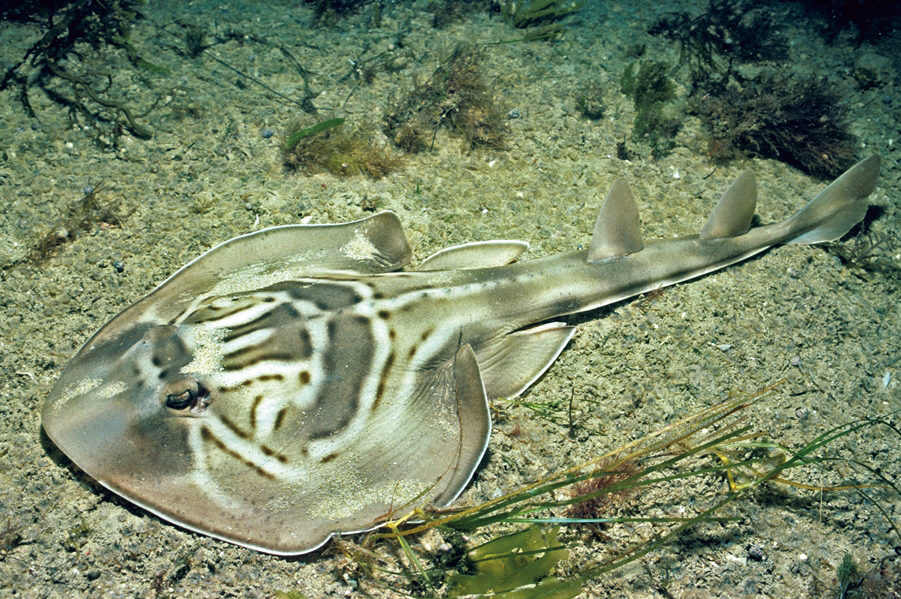
Dive into Shelly Beach’s sandy "ecotone" to discover the Eastern Fiddler Ray: a geometric evolutionary marvel and docile resident of Sydney’s thriving Cabbage Tree Bay.
By ScubaDownUnder Team · Published 8 February 2026
The Sand-Dwellers of Cabbage Tree Bay: A Deep Dive into the Eastern Fiddler Ray
G’day, divers! You’ve reached Scubadownunder, and today we’re trading the dramatic, adrenaline fuelled drop-offs for a sophisticated, sandy stroll through one of Sydney’s most iconic underwater nurseries. If you’ve dipped a fin into the Cabbage Tree Bay Marine Reserve lately, you’ll know it’s not just the Blue Groper *Achoerodus viridis* (shout out to Gus!) stealing the limelight. Recently, the undulating sandy patches of Shelly Beach have been carpeted with one of the most geometrically aesthetic elasmobranchs in our temperate waters: the Eastern Fiddler Ray.
For the seasoned diver, Shelly Beach can sometimes feel like "Old Faithful" it’s reliable, accessible, and always there. But to the trained eye of a marine biologist, the current influx of Fiddler Rays (*Trygonorrhina fasciata*) offers a masterclass in benthic ecology and evolutionary adaptation. Grab a brew, put your feet up, and let’s off-gas while we dissect why these "Banjo Sharks" are currently the undisputed kings of the Manly shallows.
The Shelly Beach Stage: Topology and Logistics
Before we dive into the nitty-gritty of ray biology, let’s talk about the theatre of operations. Shelly Beach is a rare geographical gem a west-facing beach on the East Coast of Australia. This orientation provides a natural buffer against the unruly Tasman Sea swells that batter the exposed side of the Manly peninsula.
Entry, Exit, and Underwater Navigation The most straightforward entry is the classic "beach walk-in" from the shore. However, for those of us who prefer a bit more scenery (and a bit less sand in our boots), the "Bower entry" near the Fairy Bower pool is the way to go. This requires navigating the surge through the rocks, best done with a giant stride or a timed rock entry and following the reef line along the northern headland.
As you navigate toward the centre of the bay, you’ll notice a distinct transition in the topology. You move from the rugged, kelp-heavy (*Ecklonia radiata*) rocky reef into vast, rippling sand flats and intermittent seagrass meadows (*Posidonia australis*). It is in this "ecotone", the transitional zone between two biological communities, where the Fiddler Rays congregate.
* Depth & Visibility: You’re looking at a maximum depth of about 12 metres near the point, but the Fiddler Ray action is consistently in the 3 to 8-metre range. * Conditions: Visibility averages a respectable 8–10 metres, though it can hit a crystalline 15+ metres after a few days of light Westerlies, which flatten the sea and push the surface "muck" offshore. * Amenities: If you’re low on air, Dive Centre Manly is just a short hop away on Pittwater Road. They are the local authorities on tank refills and gear servicing, and they usually have the most up-to-date "sand-map" of where the biggest aggregations are hiding.
A Symphony of Sightings: More Than Just Rays
While the Fiddlers are the stars of this post, a recent logbook entry reminds us that Cabbage Tree Bay is a high-density apartment block of biodiversity. On a single circumnavigation of the bay, it’s not uncommon to stumble across some of the coast's most charismatic heavyweights.
The Resident Shapeshifter Just on the edge of the kelp line, keep your eyes peeled for the Australian Giant Cuttlefish (*Sepia apama*). Seeing one of these cephalopods mid-hunt is a masterclass in biological engineering. Their ability to change not just their colour but the very texture of their skin to match the surrounding reef is nothing short of sorcery. If you see one hovering near a Fiddler Ray, you’re witnessing two completely different evolutionary paths to the same goal: total benthic invisibility.
The Secretive Scavenger If you’re poking your torch into the darker crevices or scanning the muddy fringes of the seagrass, you might spot the elusive Estuary Catfish (often called the Yellow Catfish locally). With its intricate whiskers, or barbels, this species is a sensory powerhouse, feeling for vibrations in the silt. Just remember the diver’s golden rule: look, don't touch. Those dorsal and pectoral spines carry a nasty sting that’ll ruin your post-dive fish and chips faster than a leaking regulator.
The Genesis of a Masterpiece: Evolution and Taxonomy
To the uninitiated, the Eastern Fiddler Ray looks like a guitar that’s been sat on by a giant. To the biologist, it is a fascinating evolutionary bridge.
The Lineage The "genesis" of the Fiddler Ray lies within the order Rhinopristiformes. These are not "true" sharks, nor are they "classic" stingrays in the sense of the massive Bull Rays (*Bathytoshia brevicaudata*) we often see gliding through the deeper sections of the bay. Instead, they belong to the shovelnose ray lineage.
Evolutionarily, they represent a transition. They possess the flattened, discoid anterior (front half) of a ray, which allows for perfect camouflage against the substrate, but they retain the muscular, shark-like posterior and heterocercal-style caudal fin. This dual-design makes them surprisingly efficient swimmers when they decide to leave the bottom, though they lack the pelvic fin propulsion seen in some of their more agile cousins.
The genus name *Trygonorrhina* is a linguistic nod to their physiology, derived from the Greek *trygon* (meaning stingray) and *rhinos* (meaning nose). While the word "stingray" is baked into their name, they are remarkably benign. They possess a small, blunt dorsal spine, but unlike the barbed, venomous tail of a Dasyatid ray, the Fiddler’s spine is more of a deterrent than a weapon.
The "Fiddle" Pattern: Nature’s QR Code The most striking feature is the intricate, dark-edged triangular pattern behind the eyes. No two rays are identical; their markings are as unique as a human fingerprint. In the scientific community, we theorise these patterns serve as disruptive camouflage. When sunlight filters through the surface ripples at Shelly Beach, it creates "caustics", dancing lines of light. The "fiddle" pattern breaks up the animal’s outline against the dappled light and shifting sands, rendering them virtually invisible to overhead predators like Great White sharks or Orcas.
Lifecycle: From Internal Hatching to Benthic Hunter
The reproductive strategy of the Fiddler Ray is a testament to the "quality over quantity" approach. Unlike many of our local Port Jackson sharks, which lay corkscrew-shaped "mermaid’s purses" in the reef crevices, Fiddler Rays are ovoviviparous.
The Nursery Phase The embryos develop inside eggs within the mother's uterus, but here’s the twist: they hatch internally. The pups are nourished initially by a yolk sac and later by "uterine milk" (histotroph) secreted by the mother. When the mother eventually gives birth to live young, usually in the shallow, protected waters of bays like Shelly, the pups are fully formed and ready to hunt.
A typical litter consists of only 4 to 6 pups, each measuring about 25cm in length. Because they are born in such small numbers, the survival of every pup is critical for the population's health. This is why marine reserves like Cabbage Tree Bay are so vital; they provide a "safe room" for these neonates to grow without the threat of commercial trawling or recreational fishing pressure.
Maturity and Longevity Fiddler Rays are slow burners. They don't reach sexual maturity until they are roughly 7 to 9 years old. A fully grown adult can reach lengths of 1.2 metres, though the ones we typically see at Shelly hover around the 80cm to 1-metre mark. Their slow growth and low reproductive rate make them particularly vulnerable to environmental shifts, which is why seeing such a healthy "carpet" of them right now is a fantastic indicator of the reserve's success.
Why the Current Aggregation?
If you’ve been diving Shelly lately and thought, "I can't move without hitting a ray," you aren't imagining it. There are two primary drivers for this current population boom: Mating Aggregations and Seasonal Productivity.
The Mating Game Late summer and autumn are peak times for elasmobranch socialising. These aggregations aren't just random; they are highly structured. You’ll often find several males trailing a single large female. These "trains" can be seen moving slowly across the sand flats. The males use their claspers (external reproductive organs) to fertilise the female, a process that, while looking a bit rough to the casual observer, is a natural part of their annual cycle.
The Benthic Pantry Shelly Beach is essentially a massive, all-you-can-eat buffet. These rays are benthic feeders, utilising their highly sensitive snouts and "cruncher" plates, pavement-like teeth designed for crushing rather than piercing.
The sand at Shelly is teeming with life: crustaceans, molluscs, and polychaete worms. During the warmer months, the East Australian Current (EAC) brings in nutrient-rich water that spikes the productivity of these invertebrates. The rays use their pectoral fins to "waft" sand away, uncovering buried treasure.
Expert Observation: Next time you’re down there, look for "feeding pits", circular depressions in the sand. If the edges are sharp, the ray has just left. If they are smoothed over, the tide has started to reclaim the hole.
Lesser-Known Facts for the Seasoned Pro
For those of you who have logged a thousand dives and think you’ve seen it all, here are a few "biologist-tier" facts to impress your buddy on the surface interval:
1. The Spiracle Secret: If you watch a buried Fiddler Ray, you’ll see two holes behind the eyes pumping rhythmically. These are spiracles. Most sharks need to move to push water over their gills (ram ventilation), but the Fiddler can sit perfectly still. Because its mouth is on the bottom, it can't "inhale" water without getting a mouthful of sand. Instead, it draws clean water from above through the spiracles, allowing it to breathe while remaining completely submerged in the substrate. 2. Electro-reception (Ampullae of Lorenzini): Like all elasmobranchs, Fiddler Rays possess a "sixth sense." Their snouts are dotted with tiny pores called Ampullae of Lorenzini. These pores lead to jelly-filled canals that detect the faint electrical fields produced by the muscle contractions of a crab buried 10cm under the sand. They are, quite literally, living metal detectors. 3. The "Social" Ray: Most rays are solitary, but Eastern Fiddlers exhibit a high degree of social tolerance. It is not uncommon at Shelly to see three or four individuals overlapping on a single sandy patch. While we don't call it "friendship," it is a fascinating lack of territoriality that allows them to thrive in high-density areas.
Conditions and Etiquette: How to Dive with the "Banjo"
To see the Fiddler Rays at their most active, aim for a high tide with a gentle Northerly swell. High tide provides more "vertical room" in the shallows, allowing the rays to move closer to the shoreline seagrass beds where the juvenile crustaceans hide.
The "Stealth" Approach Fiddler Rays are often called the "Labradors of the sea" because of their docile nature. However, they are still wild animals. To get the best photographs or observations:
* Neutral Buoyancy is Key: If you’re heavy and crashing into the sand, you’ll spook them before you even see them. * Stay Low: Approach from the side, not from above. A shadow passing over a ray triggers its "shark overhead" instinct, and it will bolt. * Watch the Pectoral Fins: If the ray starts to "flutter" the edges of its fins, it’s getting nervous. Back off a metre and let it settle.
A note on ethics: Please refrain from touching or "riding" the rays. Not only does it strip away their protective mucous coating, leaving them vulnerable to infections, but it’s also a breach of the Marine Reserve regulations. Let’s keep the "downunder" in Scubadownunder respectful!
History and Environmental Context
The abundance we see today at Shelly Beach wasn't always a given. Before Cabbage Tree Bay was declared a "No Take" Marine Reserve in 2002, the area was heavily pressured. The recovery of the Fiddler Ray population is a success story for local conservation efforts.
As you walk back up the ramp toward the carpark, take a look at the statue of the diver at the entrance. It serves as a reminder that we are just visitors in this liquid world. The rays have been here for millions of years, navigating these same sands since long before the first timber was laid for the Manly Corso.
What’s Next on the Logbook?
Shelly Beach remains one of the world's premier shore dives, proving that you don't always need a boat and a 30-metre wall to see world-class marine life. The Eastern Fiddler Ray is a geometric marvel, a quiet hunter, and a testament to the beauty of Australia’s temperate reefs.
I hope this deep dive has given you a bit more appreciation for the "flat mates" you see on your Sunday morning splash.