Apeks XTX200: Australian Diver Review
Apeks XTX200 regulator review: DST first stage, cold-water rated, Diver Changeable Exhaust, EAN40 ready, AU$899, vs Scubapro and Aqua Lung.
Where to Buy
Affiliate links — we may earn from qualified purchases
The Apeks XTX200 is the regulator to buy if you dive cold and warm water through the same year, want a single set that handles both, and you cross-shop Apeks against Scubapro and Aqua Lung on technical merit rather than dealer relationships. It is the flagship of the Apeks XTX recreational lineup, sits at around AU$899 for the first-and-second-stage set or around AU$1,250 packaged with the XTX40 octopus, and brings cold-water rating, EAN40 compatibility and the configurable Diver Changeable Exhaust as standard. The question this review answers is whether the Apeks engineering pedigree justifies looking past the more-prevalent Scubapro and Aqua Lung options in the Australian market.
## Overview: Apeks XTX200
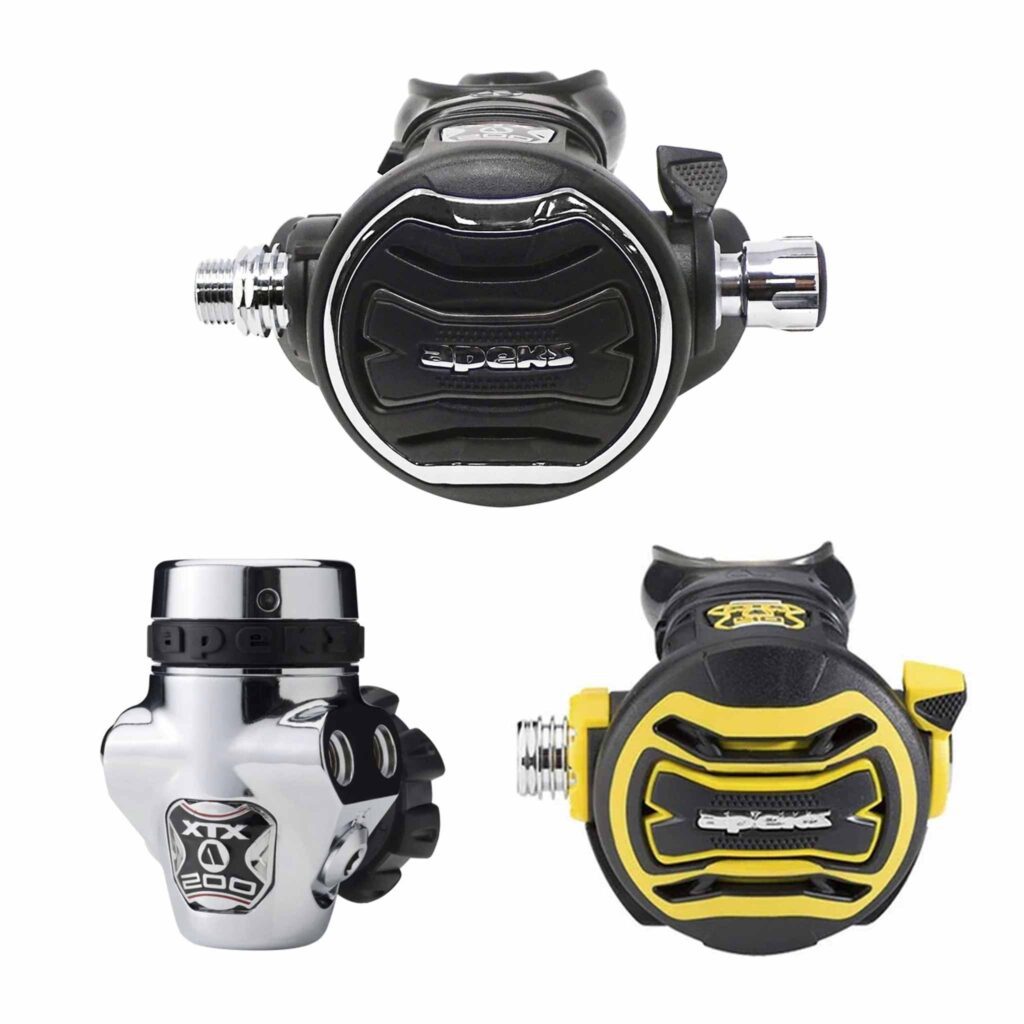
Apeks is the cold-water specialist of the major regulator brands. The company is British, has been owned by Aqua Lung since 1998, and the XTX line targets divers who need a reg that breathes the same in 4°C Tasmanian water as in 28°C Coral Sea water. The XTX200 is the top of the XTX recreational range, sitting above the XTX40 (budget recreational) and the XTX50 (mid-range), and below the MTX-R tech/cold-water flagship and the MTX-RC technical configuration. The first stage is the DST (Diaphragm Sealed Turret), the second stage is the XTX200 demand valve with the Diver Changeable Exhaust system, and the standard configuration is yoke (INT) for tropical rental fills or DIN for Australian tank-fill convention.
In the Australian market, the XTX200 competes directly with the Scubapro MK19 EVO / G260 set (around AU$1,200), the Aqua Lung Legend LX (around AU$1,000), and the Mares Epic 82X (around AU$950). The pitch for Apeks over those three is service-life durability in cold water and configurability, the DCE adjustment alone is a feature the others either omit or charge extra for. The pitch against them is service-network coverage: Scubapro has more dive-shop technicians in Australia than any other brand, and Aqua Lung sits second. If your local shop services Apeks, this regulator is the technically superior choice in its price band. If it doesn't, factor a regional service trip into the math.
## Key Features
- DST first stage, sealed diaphragm design, fully cold-water rated to below 4°C - Over-balanced design, medium-pressure gas in the hose rises faster than ambient pressure with depth - 2 high-pressure ports and 4 medium-pressure ports, all MP ports now 3/8" for hose flexibility - Optional 5th MP port with integrated heat exchanger for ice-diving configurations - Available in DIN 232 or yoke INT (DIN preferred for Australian fill standards) - XTX200 second stage with reversible left or right hand routing - Diver Changeable Exhaust system (DCE), swap between large or small exhaust tee in-water - Pneumatically-balanced poppet for consistent breathing across tank pressures - EAN40 nitrox compatibility out of the box, no kit conversion required - Comfo-bite mouthpiece, blue Apeks branding on the demand valve faceplate - 2 kg total set weight (first stage plus primary second stage, no hoses)
## The Good
- **The cold-water performance is the headline.** The XTX200 was developed for British cave diving and Norwegian fjord work. In Australian temperate water (Bicheno, Eagle Hawk Neck, Edithburgh) it breathes without the freezing-induced free-flow risk that catches lesser regs in single-digit water temperatures. For divers who travel between Cairns and Tasmania across one annual gear set, this is the relevant capability. - **The DCE is genuinely useful.** Swapping the exhaust between small and large in the water lets photographers reduce bubble interference for macro work, and lets tech divers maximise venting on deep stops. Both are minor adjustments individually; together they make the XTX200 the most-configurable second stage in its price bracket. - **Reversible second stage routing is standard, not an upgrade.** The primary second stage can mount on either side of the first stage. Sidemount divers, backmount divers, and divers training for cave or wreck penetration all get the configuration they need without extra parts. - **EAN40 ready out of the box.** No kit conversion to dive standard recreational nitrox blends. For divers stepping into nitrox certification, this saves a service visit. - **Build quality is the genuinely premium part of the price.** Marine-grade brass first stage, satin chrome plating, and a 30-year service-history reputation in serious diving markets. The XTX200 is the regulator that finishes the season in shop condition, not the one that comes in for emergency service in February.
## The Bad
- **Australian service network coverage is thinner than Scubapro or Aqua Lung.** Apeks is serviced at major regional dive centres (Sydney, Melbourne, Cairns, Perth, Adelaide), but secondary towns may need to ship the reg out. Check your local shop's Apeks technician availability before buying. - **The set is heavier than equivalents.** At 2 kg the XTX200 is around 300 grams heavier than a Scubapro MK25 set. For wreck-and-cave divers this is irrelevant; for travel divers chasing minimum baggage weight, the Cressi MC9 Compact or the Aqua Lung Core save real grams. - **Yoke (INT) configuration is the wrong default in Australia.** Most Australian fill stations supply DIN-converted yokes for hire tanks; for a personal reg purchase, DIN 232 is the right choice and avoids carrying an adapter. Confirm DIN with the shop on the purchase order. - **The price gap to the XTX50 is large.** The XTX50 (around AU$650) is the same first stage with a slightly less-adjustable second stage. For divers who don't run mixed-water trips, the XTX50 is 80% of the regulator at 70% of the price.
## Verdict
The Apeks XTX200 is the right regulator for the Australian diver who runs a single annual gear set across temperate and tropical water, takes service durability seriously, and values configurability over single-vendor convenience. The cold-water rating, the DCE, the reversible second stage and the build quality together justify the AU$899 set price in a market where the obvious comparisons (MK19, Legend LX) come within striking distance on most specs but trail on configurability. Tropical-only Queensland divers will find the cold-water capability is overkill, a lighter [Cressi MC9 Compact](https://scubadownunder.com/gear-reviews/cressi-mc9-compact-regulator) or Aqua Lung Core handles warm-water diving for less. Cold-water Tasmanian and South Australian divers should buy this regulator instead of the cheaper alternatives. The other Australian recreational flagship choice is the Scubapro MK19 EVO / G260; if your local technician services Scubapro and not Apeks, that is the right pick for the same use case.
Star Rating: ⭐⭐⭐⭐½ (4.5/5)
Where to Buy
Get the Apeks XTX200: Australian Diver Review and experience the difference quality gear makes underwater.