Best Aqua Lung Regulators 2026: Buying Guide
Aqua Lung regulators compared: how the Legend, Titan, Core Supreme and Mikron perform on cold-water breathing, comfort and value for Australian divers.
Where to Buy
Affiliate links: we may earn from qualified purchases
Aqualung Regulator Range
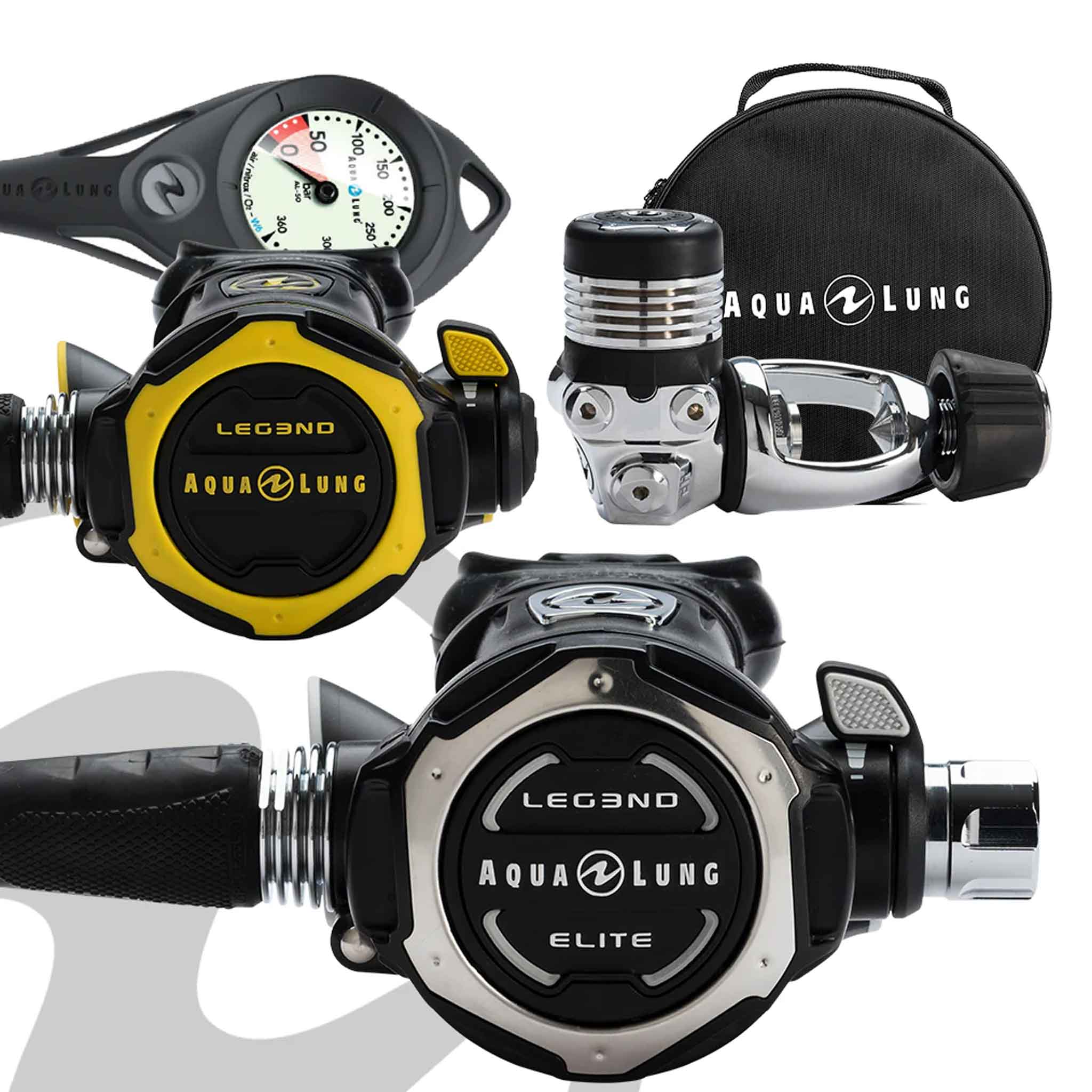
Aqualung is a name that resonates with scuba diving history and innovation. In this in-depth review, we explore Aqualung's current range of scuba regulators geared toward recreational divers. We'll cover the brand's legacy and reputation, then dive into detailed evaluations of key models including the Leg3nd Elite and Leg3nd MBS, the ever-popular Titan, the Core Supreme mid-range performer, and the travel-friendly Mikron. For each, we examine features like cold-water performance, adjustability, comfort, breathing effort, materials, build quality, design strengths/weaknesses, real-world reliability, and value for money. Along the way we'll incorporate insights from brand literature, expert reviews, dive professionals, and everyday users on dive forums. By the end, you should have a clear picture of where Aqualung regulators excel, where they fall short, and how they stack up for different diving needs. Let's take the plunge.
Aqualung: A Brand Born from Scuba History
Few brands in diving can claim heritage like Aqualung. The company essentially invented the modern scuba regulator it began with the iconic "Aqua-Lung" designed by ocean explorer Jacques-Yves Cousteau and engineer Émile Gagnan in 1943. This revolutionary device allowed divers to breathe underwater from a tank, and it launched recreational scuba diving as we know it. Over 80 years later, Aqualung remains a world leader in dive gear, proud of its legacy but continually innovating. Aqualung's reputation in recreational diving is excellent. Their regulators are known for solid performance, reliability, and widespread service availability a crucial factor for frequent divers. Many dive resorts and instructors trust Aqualung gear; in fact, Aqualung and Scubapro are often considered the "big two" of regulator brands. On forums, divers often debate these brands, but even professionals acknowledge Aqualung's quality. One dive shop owner noted that "for recreational diving I'm very impressed by the AquaLung Titan… I'd go for AquaLung every time," also pointing out that Aqualung owns Apeks, another highly regarded regulator make. This speaks to the brand's strong reputation for breathing performance and build quality.
In terms of product range, Aqualung offers everything from beginner-friendly regs to top-tier models for demanding dives. They back their products with robust customer support (historically including free parts programs for regular servicing) and have a global network of dealers giving divers peace of mind that their gear can be serviced wherever they go. Overall, Aqualung's name carries weight: it stands for a blend of innovation (as the original scuba pioneers) and dependability (decades of gear that holds up in the water).
Overview of Aqualung's Regulator Line-Up
Aqualung currently organises its regulators into four main families: Leg3nd, Helix, Titan, and Calypso. Each line targets a different segment of divers and budgets, ensuring there's an option for everyone: - Leg3nd Series (High-End): The flagship regulators originally known as the "Legend" series (now stylized as Leg3nd). These are designed for diving regulars and enthusiasts who demand top performance in all conditions. The Leg3nd line is built to be the benchmark for breathing comfort, even in extreme environments. Within this family are models like the base Leg3nd, the Leg3nd MBS, and the range-topping Leg3nd Elite, each adding special features (discussed below). All Leg3nd first stages are over-balanced diaphragm designs with advanced cold-water resistance and Aqualung's latest tech. In short, if you're a diver who wants the best Aqualung has to offer, you'll be looking at the Leg3nd series.
- Helix Series (Mid-Range): Aqualung's newest mid-range line, effectively succeeding the older "Core" regulators. The Helix regulators offer balanced first and second stages and solid breathing performance at a moderate price point. Aqualung markets the Helix as embodying the "core DNA" of their regulators in fact, one might say the Helix is the new Core. There's a Helix Pro variant that includes cold-water features (environmental sealing) for diving below 50°F/10°C , and even a Helix Compact Pro, which is the smallest regulator Aqualung has ever made (more compact than even the Mikron, interestingly). The Helix series is pitched as lightweight and travel-friendly (the name hinting at "helix" for portability), making it a great choice for divers who roam the world and want easy-packing gear. We'll touch on the predecessor Core Supreme in detail shortly, as many divers may still encounter it.
- Titan (Entry-Level to Mid): The Titan regulators are a longtime staple for Aqualung, known for being rugged, reliable, and affordable. Now in its third generation, the Titan incorporates the best features of its predecessors in a lightweight design. It's often recommended for newer divers or as a durable workhorse reg many dive shops use Titans in rental fleets because they can take abuse and keep working. The Titan is a balanced diaphragm design in the first stage, paired with a classic second stage that favors simplicity and ease of maintenance. It hits a sweet spot on price vs. performance, giving recreational divers excellent value. We'll dive deeper into its characteristics below.
- Calypso (Budget Friendly): At the most affordable end, Aqualung's Calypso is a simple, reliable regulator often used in dive schools and by casual vacation divers. It's a classic downstream piston design (simple = fewer parts) and is praised for durability, though it lacks the higher performance and features (like balancing or cold-water kits) of the pricier models. Aqualung positions Calypso as the go-to for entry-level divers seeking their first regulator. We won't be focusing on the Calypso in this review, but it's worth noting it exists for those on a tight budget or who need an ultra-simple setup.
- Mikron (Travel/Compact): While not a "family" per se, the Mikron stands out as Aqualung's specialized travel regulator. It's extremely compact and lightweight the smallest and lightest reg in Aqualung's collection. The Mikron is designed for the jet-setting diver or those with smaller faces/jaws who find standard regs bulky. We'll give Mikron its own detailed section, as it addresses a unique niche in the market (travel divers willing to trade a bit of performance for minimal weight).
Before jumping into each model review, a quick note on common Aqualung features: Many Aqualung regulators share proprietary innovations. For example, most mid-range and up models (Core/Helix, Leg3nd series) include the Auto Closure Device (ACD) on the first stage, which automatically seals the air inlet when the reg is removed from a tank. The ACD is great for preventing water and debris from entering the first stage, essentially protecting your reg's internals from corrosion or contamination . Also, Aqualung's regulators often come with their patented Comfobite mouthpiece, which has a bridge that sits on the palate to reduce jaw fatigue a small but appreciated comfort feature for many divers. All current Aqualung regs are Nitrox compatible (usually up to 40% out of the box) for those who dive nitrox mixes. In terms of materials, first stages are marine-grade chrome-plated brass, and second stages use durable technopolymers (with strategic metal components in higher models for heat transfer and toughness) . Build quality is generally high across the board, with attention to ergonomic details like easy-grip yoke screws and large purge buttons. With that overview in mind, let's examine each key model and see how they stack up in practice. Leg3nd Elite Flagship Performance and Precision
Positioning: The Leg3nd Elite is Aqualung's premier regulator for recreational diving effectively the top of the Leg3nd line. It's built for demanding divers and challenging environments, from deep cold wreck dives to everyday tropical reefs. If you want the ultimate Aqualung regulator, the Elite is it, and its price (~USD $1,099) reflects that premium status. The question is, what do you get for that top-tier investment?
Design & Features: The Leg3nd Elite shares its core DNA with the other Leg3nd models notably an over-balanced diaphragm first stage that's sealed against the environment for top cold-water performance.Being over-balanced means as you go deeper (or your tank pressure drops), the first stage actually elevates its intermediate pressure a bit, ensuring breathing stays effortless at depth and low tank pressures . The first stage is packed with features: the ACD sealing system, a permanent dry chamber to keep water out and prevent ice, and deep heat exchange ribs to fight freeze-up. In other words, the Leg3nd Elite is engineered for extreme conditions divers report it handles icy quarry dives or cold currents without a hiccup, thanks to these anti-freeze measures. With two high-pressure ports and four low-pressure ports on a swiveling turret, hose routing is flexible and optimized as well.
Where the Elite truly sets itself apart is in the second stage adjustments. It features both a Venturi lever and a user adjustment knob for breathing resistance (cracking effort). Most regs at least have a Venturi switch (to prevent free flows at surface), and many high-ends have a cracking pressure knob the Elite gives you independent control of each. This means you can fine-tune exactly how it breathes: the Venturi lever boosts flow when set to "Max", and the separate knob lets you adjust how hard or easy it is to initiate a breath. Aqualung calls this "independent micro-adjustments of breathing resistance," allowing advanced divers to dial in their precise preference . In contrast, the Leg3nd MBS (next model down) combines those into one control more on that soon. The Elite's adjustment knobs are large and rubberized, easy to manipulate even with thick gloves on cold dives .
Material-wise, the Leg3nd Elite second stage is a bit of an "aesthetic masterpiece" with some metal components stainless steel accents alongside high-impact polymer. It certainly looks and feels premium, with a sleek black-and-bronze color scheme in the standard version, and there's even an all-black "Black Edition" variant for the style-conscious. But it's not just about looks: those metal bits also act as heat sinks for cold water and add durability. The mouthpiece is the tried-and-true Comfobite, and Aqualung even includes a removable silicone lip shield on the second stage to keep lips warm in chilly water (all Leg3nd models have this lip shield, which you can take off in warm tropics)
Breathing Performance: In a word outstanding. The Leg3nd Elite breathes like a dream according to virtually all reviews and user feedback. ScubaLab tests indicate the work of breathing (WOB) on the Leg3nd series is extremely low around 0.70 Joules/Liter at a deep 50m and low tank pressure , which is excellent (for context, anything under 1.0 J/L at depth is very good, and 0.7 J/L is among the top performers). Divers consistently describe the airflow as smooth and ample, with no sense of strain even when you're inverted, facing current, or breathing hard. In the water, you can barely tell you're drawing air from a tank; it's that natural.
"In use, all three of the Leg3nd regulators breathed exceptionally smoothly, and it required minimal effort to start inhaling… we could not get any of them to freeflow or be even remotely troubled in single-digit [°C] conditions." - Divernet review by Mark Evans, testing the Leg3nd Elite, MBS, and base model in cold UK waters.
That quote above is high praise confirming the Leg3nd Elite's real-world reliability. The regulator won't free flow even if you smack the purge or jump in hot/cold the design (with those side openings on the front cover) actually deters free flows in currents by bleeding off pressure. The large exhaust tee channels bubbles nicely away from your face, so you don't get that annoying bubble interference when exhaling.
Adjustability and Comfort: With the Venturi and cracking knobs, divers can adjust the Elite from a "harder" breathe (useful at the surface or if you want to conserve air a bit) to an ultra-"easy" breathe when you're deep or working hard. Many divers just leave it wide open for max airflow, because why not it's silky smooth. The Venturi lever on Leg3nd series is big and easy to grip, though one test diver noted on the base model Leg3nd he had to look at it to find it with thick gloves. On the Elite, you've also got the knob which is impossible to miss. Comfort-wise, the second stage is mid-sized not as tiny as a Mikron, but compact enough and lightweight (around 260 g) so jaw fatigue is minimal. Add the Comfobite mouthpiece which many love for its "no-bite" design, and you've got a reg you can comfortably keep in your mouth for hour-long dives. The only minor downside of the Comfobite is some people don't like the feel of the palate bridge but it's removable if so, and Aqualung provides a normal mouthpiece in the box as an alternative.
Build Quality & Weaknesses: The Leg3nd Elite is made in France with high quality control, and it shows. The first stage's chrome finish and detailing are top-notch. Internal parts like the "Blue" high-pressure seat are designed for longevity (Aqualung claims their new HP seat material lasts longer between service) . With proper maintenance, these regs last decades. Weaknesses are few: one is weight the first stage is fairly heavy (957 g in yoke), owing to all that brass and over-molded caps. If you're a travel diver counting grams, a Helix or Mikron is lighter. But many will happily trade a bit of weight for the performance and robust build. Another is obviously price: at over $1k for a reg (often not including octopus), it's a serious investment for recreational diving. You pay a lot for incremental improvement over cheaper models. Finally, some might consider the dual adjustments redundant if you're not a techie which is why Aqualung offers the MBS version for those who want simplicity (more next). But as a true flagship regulator, the Leg3nd Elite really doesn't fall short in any technical aspect. It's exceptional in most regards, and "average" at worst in areas like hose count (it has standard port counts) or general size.
User Feedback: Customer feedback on the Leg3nd Elite is overwhelmingly positive. On retailer sites, it's common to see 5-star reviews praising the ease of breathing. Dive professionals using the Elite often mention how it performs on par with or better than anything they've used. Some long-time divers note it's "the best breather I've ever had," making deep dives feel effortless. On ScubaBoard (a popular forum), when people ask "what's the best reg," the Legend/Leg3nd series frequently comes up alongside Scubapro's MK25/S620 or Apeks high-end models it's in that elite club of top regulators. The consensus is that the Leg3nd Elite delivers consistent airflow at any depth and is built to handle whatever you throw at it[37] [38] . Unless you absolutely need to shave weight or cost, it's a regulator that can last your entire dive career, from open water certification through the most advanced recreational dives.
Bottom Line: The Aqualung Leg3nd Elite stands out as a pinnacle of design for recreational regulators. It offers "unmatched performance [and] optimal comfort" for divers who demand the best . Its strengths are exceptional breathing ease, robust cold-water capability, and fine-tunable controls. The only real downsides are the high price and the fact that its advanced features might be overkill for casual warm-water divers. But if you prize having top-notch gear or plan to dive in varied conditions (cold water, deep, currents) frequently, the Leg3nd Elite is hard to beat. As one retailer's summary put it: choose the Leg3nd Elite for "the highest breathing comfort and safety on your next dive" it truly lives up to the legend name. Leg3nd MBS Master Breathing System Made Simple
Stepping one notch down from the Elite, we have the Leg3nd MBS. This regulator is very much a sibling to the Elite in fact, it uses the exact same first stage and core design. The big difference lies in its second stage adjustment mechanism. MBS stands for Master Breathing System, which is Aqualung's term for a combined control that adjusts both Venturi and breathing resistance in one twist. Priced slightly lower (around USD $999) than the Elite, the Leg3nd MBS aims to give divers high performance with a bit more simplicity in operation.
Design & Features: As mentioned, the first stage on the MBS is identical to the Elite's. That means you still get the over-balanced diaphragm, environmental sealing, ACD, heat exchangers, and excellent cold-water performance. The first stage is chrome-plated and features the same port configuration (2 HP, 4 LP). In other words, under the hood, the MBS can deliver the same air flow and reliability as the Elite. The difference is all about user controls on the second stage.
Instead of two separate adjusters, the MBS second stage has one large knob on the side. Turning this single MBS knob simultaneously alters the Venturi effect and the cracking effort. In practical terms: if you dial it toward "+" (or whatever marking for easier breathe), it will reduce inhalation resistance and open up the Venturi assist; turn it toward "-" (harder) and it does the opposite. Aqualung's idea was to make it easy for a diver to "tune" the reg without having to understand two different knobs. As one forum member succinctly explained, "MBS vs Elite only difference is the 2 breathing controls are combined in one knob on the MBS." . This combined control is beneficial for those who prefer simplicity: for example, if you're not the type to fiddle with settings throughout a dive, the MBS gives you a quick one-step adjustment.
From a functional standpoint, how well does the MBS knob work? According to instructors familiar with it, the system is well engineered: "Reduce your opening effort and you reduce your Venturi", meaning the two are linked in a way that makes sense . If you dial for easiest breathing, you automatically get maximum Venturi assistance (great for deep water or when you need lots of air flow). If you dial it back to avoid freeflow (like on a choppy surface or giant stride entry), it also slightly increases cracking effort so the reg isn't as sensitive. Previous generations of Legend regulators had a similar combined control and were known to breathe great. So the consensus is that the MBS system works reliably, and its effectiveness is on par with having separate controls, for most divers. It really comes down to personal preference do you like one knob or two? Apart from the control knob, the Leg3nd MBS's second stage has all the Leg3nd family features: the wide co-molded purge button, Comfobite mouthpiece, removable lip shield, and that smart front cover design that channels water flow to reduce breathing effort and prevent freeflows. The second stage housing and internal components are the same as the Elite (pneumatically balanced valve, etc.). So you're not sacrificing any build quality or materials it's essentially the Elite minus one adjustment. The weight difference is negligible; aesthetically, the MBS has a slightly different color accent (often blue or silver highlights, vs Elite's gold).
Performance: Given the shared first stage, it's no surprise that the Leg3nd MBS breathes just as effortlessly as the Elite. In fact, Aqualung notes all Leg3nd variants "share the same breathing characteristics"meaning in lab tests, the base Leg3nd, MBS, and Elite perform equally in terms of work of breathing. The difference is purely in how you control that performance. Divers who have used both often report that there's no noticeable breathing difference between MBS and Elite when both are tuned optimally. If you set the Elite's Venturi to max and knob to easiest, it breathes the same as the MBS set to max easy. The advantage of the Elite would be if you like to, say, leave Venturi on max but knob a bit stiffer (or vice versa) which is a very fine tweak that many recreational divers don't bother with.
In the Divernet review, Mark Evans and team found all three Leg3nds breathed "exceptionally smoothly" in all positions. They specifically mentioned that tweaking the MBS knob or Elite controls could make initial inhalation effort almost disappear. They also torture-tested them (lots of purging, head-down, etc.) and none freeflowed or faltered even in cold water. So, the MBS clearly inherits the Leg3nd line's stellar performance and cold tolerance.
One potential concern a new user might have is whether the combined control is limiting i.e., could it ever be a "bad compromise"? According to threads on ScubaBoard, the MBS knob basically makes the reg either "easy" or "hard" breathing (or something in between) by linked adjustments, and it's tuned such that at the extremes it mirrors what an expert might set manually. No one reports any functional problem with it. It's more about mindset: some experienced divers like having a separate Venturi switch to flick, especially to pre-set the reg before a dive (e.g., Venturi off at surface, then on at depth). With MBS, you have to crank the knob each time (though it's quick to do). But really, that's a minor ergonomic difference. For many recreational divers, one knob is actually easier to manage. It's worth noting Aqualung isn't alone in this idea other brands have had combined controls (Mares has their "Twin Power" system, etc.), but Aqualung's MBS is one of the better-received implementations because it's intuitive.
Build & Real-World Reliability: Since the hardware is the same robust setup as the Elite, reliability is equally top-notch. You can take the Leg3nd MBS on an ice dive or 40°C tropical dive trip and expect consistent results. Several divers on forums who own the MBS have attested to its reliability over multiple years, requiring only routine maintenance. The first stage being sealed (Supreme cold-water spec by default) means less worry about silt or salt getting inside; the ACD means even if you forget the dust cap and dunk the reg, water likely won't reach the filters. These things contribute to longevity. The MBS knob itself is sturdy; it would take deliberate abuse to knock it out of whack. One could argue there's slightly less that can go wrong compared to Elite (since one less moving part externally though internal complexity is similar).
What about weaknesses or user gripes? Honestly, there are few specific to the MBS. Those who want ultimate control might spend the extra ~$100-$150 for the Elite. But if you don't need that, the MBS gives nearly the same experience for a bit less money. One diver quipped on Reddit that the MBS's single knob is meant "for divers that don't know the difference" between Venturi and cracking pressure[49] a tongue-in-cheek way of saying it simplifies use. That's not really a knock on the reg, more on user knowledge. Another slight downside: because the MBS combines functions, the knob must be larger to have enough range, so it protrudes a bit. It's not bothersome, but something like Scubapro's discreet Venturi lever is smaller. Again, pretty trivial.
User Feedback: Customer and community feedback for the Leg3nd MBS is generally positive, mirroring praise for the Elite. For example, divers comment on the ease of breathing and often mention they barely ever need to adjust the knob once they set it to their liking. Some instructors using Leg3nd MBS regs for training say students find them very comfortable and trouble-free (which is ideal new divers can just focus on diving, not fussing with gear). One Australian diver on ScubaBoard asked whether the MBS feature was "good or bad" and after getting explanations, summed up that if it saves money and you're fine with one control, it's a smart choice There's not a lot of distinct feedback separating MBS vs Elite because performance is equal, most commentary just speaks to the Leg3nd line quality as a whole. On the retail side, you might see the MBS recommended for someone who wants high performance but isn't gear-techy; whereas the Elite might be upsold to the diver who loves tweaking knobs and having "the best." It's telling that Aqualung kept both options in the lineup clearly there's an audience for each.
Bottom Line:
The Aqualung Leg3nd MBS delivers flagship breathing performance with a simplified user interface. You're getting the same proven first stage and overall design as the Elite. The Master Breathing System knob is essentially a convenience feature "two functions at onetime it controls the direction of air (Venturi)… as well as changing the cracking resistance". This makes the MBS a great choice for divers who want top-tier capability without having to micromanage their reg. It excels in cold water, deep water, and everything in between, just like its big brother. Where it's a bit average is perhaps in not offering the absolute finetuning of the Elite but for many, that's a worthy trade-off to save some money or complexity. Considering it's slightly cheaper, the MBS might actually represent the best value in the high-end bracket you get 95% of the features for less cash. Whether you choose the Elite or MBS ultimately comes down to personal preference on controls. Either way, you're getting a Leg3nd, and that means a regulator that has been a "world benchmark" in scuba since the early 2000s
Titan The Reliable Workhorse for All-Around Diving Moving to the mid-range, we find the venerable Aqualung Titan. This model name has been around for decades, and the latest Third-Generation Titan continues the legacy of a simple, robust regulator that offers great performance for its price. The Titan is positioned as an ideal reg for beginners and recreational divers who want something dependable and easy to use, without breaking the bank. At roughly USD $475 for the first and second stage set, it's significantly more affordable than the Leg3nds, yet it carries many Aqualung hallmarks.
Design & Build: The 3rd-gen Titan features a balanced diaphragm first stage, which is a big plus at this price point (many entry-level regs use unbalanced designs, which don't breathe as consistently as tank pressure drops). The balanced first stage means the Titan can deliver consistent intermediate pressure to the second stage throughout your dive, maintaining easy breathing even as your tank empties. The first stage is not environmentally sealed (no dry chamber) this is one area where Titan economizes compared to Leg3nd or Core. That means in very cold water (near freezing), it's more prone to ice-up, and in silty water you have to be careful to rinse it well. That said, plenty of divers use Titans in temperate cold waters (~50°F/10°C) without issues, but pushing it to true icy conditions isn't advised unless you add an environmental kit. A Reddit user noted the Titan's cold limit is about 50°F; beyond that, you'd want something like the Core Supreme or Leg3nd.
The first stage is notably lightweight and compact. Aqualung achieved this by using a unique forged body that uses less brass, resulting in a smaller size and lower weight than many regs in its class. At 690 g (yoke version) it's nearly 30% lighter than the Leg3nd's first stage[57] a benefit for travel divers. It still packs 2 HP ports and 4 LP ports in a "T" shaped arrangement for good hose routing . Unlike the higher models, the Titan first stage does not have the ACD system (Auto Closure Device) so you do need to keep that dust cap on religiously when it's off the tank . It also lacks the fancy external heat exchangers, though it does have an open yoke screw design that helps drain water.
The second stage of the Titan is a classic design, pneumatically unbalanced downstream type. Here is another point of simplification: whereas the Core and Leg3nd second stages are balanced valves, the Titan's is unbalanced. The result is that the Titan second stage might breathe a touch harder at very low tank pressures (as the intermediate pressure from first stage falls slightly), but with the first stage balanced, this effect is minimal until you're really sucking the tank near empty. The benefit of an unbalanced second stage is simplicity and reliability there are fewer parts that move in response to pressure, so it can be more rugged. The Titan second stage does not have an adjustment knob for cracking effort (those are usually only on balanced second stages anyway), but it does have a Venturi lever for "Dive/Pre-Dive" settings. This lever is helpful to prevent freeflows: set it to MIN when you're jumping in or have the reg out of your mouth, and flip to MAX when diving to allow easier breathing. This is a straightforward mechanism that most divers will find intuitive.
Other features: The purge cover on the Titan is large and made of durable polyurethane, built to be impact- and abrasion-resistant. It's designed to minimize inhalation effort too likely by allowing easy flex of the diaphragm. The exhaust tee is a clip-on design (simplifying maintenance access to the valve) and is optimized to break up bubbles and reduce noise. The mouthpiece on the Titan III is interestingly listed as not the Comfobite in Aqualung's spec sheet it might come with a standard mouthpiece by default, perhaps to shave cost. But since mouthpieces are easily changed, many users put a Comfobite or other premium mouthpiece on their Titan. The Titan also uses Aqualung's flexible Aqua Flex braided hose, which is lightweight and kink-resistant.
In summary, the Titan's design focuses on simplicity, low weight, and proven tech. It might lack some bells and whistles, but each omission is intentional to keep cost down while preserving performance where it counts.
Performance: Considering its category, the Titan performs admirably. It provides effortless breathing for recreational depths Aqualung themselves say it "combines a lightweight, durable design with effortless breathing functionality". In objective terms, the work of breathing for the Titan is around 1.0 J/L at 50m, 50bar in Aqualung's specs. That's a bit higher than the Leg3nd's 0.70 J/L, but 1.0 J/L is still comfortably within the excellent range for any reg (for context, US Navy and EN250 standards allow up to ~3 J/L at depth, so 1 is very good).
Divers who use Titans often comment that in real-world recreational diving (say shallower than 100 ft/30m on a full tank), you'd be hard-pressed to tell the breathing difference between a Titan and a much more expensive reg. It's only at the extremes deep depths, near-empty tank, or very cold water that the higher-end ones pull ahead noticeably. One ScubaBoard contributor (who is a shop owner and tech diver) praised the Titan, saying "for recreational diving I'm very impressed by the Aqualung Titan" quite a statement considering his experience with more expensive regs. He noted the Titan is "slightly over-balanced" which likely refers to its first stage design that slightly elevates intermediate pressure, enhancing breathing as tank pressure drops. This aligns with Aqualung's spec of the Titan being balanced (some earlier Titan generations were unbalanced the new one is indeed balanced, which was a great update).
Cold Water and Reliability: As mentioned, the Titan isn't meant as a cold-water reg per se, but it's no slouch either. Many dive centers in temperate climates (like the UK, parts of the US, Australia) use Titan regulators for training dives year-round. It can handle moderately cold water thanks to the diaphragm design (diaphragm first stages tend to handle cold better than unsealed pistons). However, below ~50°F (10°C), freezing can occur since there's no environmental dry seal. If cold diving is on your menu often, you'd look at a Core Supreme or Helix Pro instead, which are basically Titans with added sealing and slightly higher performance in cold.
Where the Titan truly shines is reliability and ease of maintenance. It's known as a workhorse that "just works." Fewer moving parts in the second stage and a time-tested design mean it's less finicky. Dive shops love Titans because they hold up to the abuse of rental use getting banged around on boats, neglected rinsing, and high dive counts. Should something go wrong, parts are readily available and every service technician knows how to service a Titan (not always the case for exotic brands). Aqualung also designed it to be easy to service with features like that clip-on exhaust and fewer O-rings. If you're a diver who might venture into self-servicing gear down the road, the Titan is relatively straightforward to learn on as well.
Comfort and Ergonomics: The Titan's low weight makes it comfortable for travel and in-mouth feel. Users often report minimal jaw fatigue; the second stage weight at 175 g is very light . It doesn't have the fancy lip shield, but those are arguably only needed in really cold dives. The Venturi lever is ergonomically shaped with a tactile grip, similar to the one on Leg3nd (just no extra knob). The purge is easy to press and not overly stiff. Overall, nothing glaring stands out which is good, it just works seamlessly.
Customer Feedback: Divers typically describe the Titan with words like "reliable," "sturdy," and "worth every penny for a first reg." It's often recommended as a great first regulator for new divers because it will last long and grow with them. Many experienced divers keep a Titan as a backup reg or pony bottle reg, due to its dependability. Aqualung's own marketing calls it "an ideal choice, especially suited for beginners diving into their adventures", and user feedback echoes that. Also, because Titans have been around, you'll find a lot of second-hand ones and people are willing to buy them used because they trust the model's longevity.
Critiques on the Titan are usually mild and in context of what it is: you'll hear "not as feature-rich as X" or "a bit harder breathing at depth compared to my Legend." But these are often comparing to regs that cost 2-3 times more. For instance, in one forum discussion comparing Titan vs Core vs Helix, some noted the Core breathed a bit easier and had ACD and cold rating (we'll cover that next). However, others pointed out the Titan is "a very good reg" and to think hard before spending more, implying that the Titan holds its own nicely.
One potential weakness is that as divers advance, they may start to desire the finer features (like a breathing knob or sealed first stage) that the Titan lacks. But the Titan is not trying to be a tech/advanced reg it sticks to being an everyday champ. Another note: the Titan doesn't come with a flashy look; it's fairly plain in design (mostly black and gray plastic with some blue accent). If someone is into the "cool factor" of gear, the Leg3nd's aesthetics might sway them, but the fish certainly don't care what your reg looks like!
Bottom Line: The Aqualung Titan has earned its reputation as a workhorse regulator that offers reliable performance for recreational diving at a very attractive price. It represents innovation where it counts (balanced first stage for easy breathing) while maintaining simplicity (unsealed, unbalanced second, fewer knobs) to minimize cost and complexity. It's "reliable and robust," providing excellent performance at an affordable price". Where is it exceptional? In reliability, ease of use, and value for money. Where does it fall short? It's not the top breather under extreme conditions (extremely cold or deep) and it lacks luxury adjustments but those aren't expected in its class. It's average in looks and features, but that's by design.
For a recreational diver who wants a reg that will last and deliver trustworthy performance on typical dives (think 30, 100 ft, in warm to moderate waters), the Titan is hard to beat. It's also a favorite for dive travelers who want to own their reg but keep baggage light and maintenance fuss-free. As one forum user summarized: the Titan "always works great" even in 4°C waterand divers are "perfectly happy" breathing from it . That sums up the Titan's ethos it might not be glamorous, but it gets the job done every single time.
Core Supreme Mid-Range Champion with Cold-Water Credentials
Next up is the Aqualung Core Supreme, a regulator that until recently was Aqualung's primary mid-range offering (now essentially succeeded by the Helix series, but still widely in use and available). The Core sits between the Titan and Leg3nd in the lineup, aiming to give nearly high-end performance at a middle-of-the-road price. In many ways, the Core Supreme was the darling of scuba gear reviews for several years it won awards and was often cited for offering "bang for the buck." Let's examine why.
Position & Price: The Core Supreme used to retail around the $480-$500 mark (with the non-Supreme Core a bit less). This placed it in a very competitive category. The Supreme designation means it's the cold-water ready version t comes with an environmentally sealed first stage and usually includes a silicone lip shield on the second stage for warmt . Essentially, "Supreme" in Aqualung-speak equals cold-water optimized (good for water below 50°F/10°C). Many divers, even in warm climates, opt for the Supreme versions of regs if available, just for that extra protection and versatility.
Design & Features: The Core's first stage is a balanced diaphragm design with environmental dry seal (in the Supreme). It has 2 HP and 4 LP ports, similar layout to the Titan and Leg3nd. It also includes the Auto Closure Device (ACD) a big differentiator from the Titan. This means when you remove the Core from a tank, the valve closes automatically, preventing water ingress. Many divers love this feature for the peace of mind it adds; it's the kind of trickle-down tech from the high-end Legend series that Aqualung included in the Core to up its appeal. The presence of ACD and sealing basically addresses the Titan's two main omissions, which partly explains the ~$100 jump from Titan to Core.
The Core's second stage is pneumatically balanced, unlike the Titan's. This yields a lighter breathing effort and consistent performance regardless of depth or tank pressure. The Core second stage also features a Venturi lever (yes) but no user adjustment knob like the Titan, you cannot manually adjust cracking pressure on the Core. At this price point, the lack of a knob is not unusual (most competitors in mid-range also stick to Venturi only). The logic is, keep it simple and tuned for optimal breathing out-of-the-box. And indeed, the Core was tuned so well that independent tests showed it performed as good as or better than some regs with knobs.
The Core Supreme comes with the aforementioned lip shield on the second stage to keep your lips warm in cold water. It's a small rubbery attachment around the mouthpiece area. Some like it, some don't, but it's easily removable if you prefer not to use it. The mouthpiece is the Comfobite (and in some markets, Aqualung even offered a smaller Comfobite specifically on a pink-accented Mikron and possibly Core Supreme for women/smaller mouths). The hose is a braided Aqua Flex hose. Essentially, the Core is feature-rich: balanced both stages, sealed first, ACD, Comfobite, etc., making it arguably "over-specced" for its mid-range price which is why it got so much positive press.
Performance: The Aqua Lung Core/Core Supreme earned a Tester's Choice award in ScubaLab's regulator tests and was lauded as being the only reg in its price category to earn excellent breathing scores across all rates and depths[79] . In that ScubaLab review, it was noted that on the breathing machine, the Core performed at the top of the pack "rated excellent throughout the range of breathing rates and depths". Divers in the test also gave it top marks in ergonomics. What this translates to is: the Core breathes remarkably easy for a mid-tier reg. Testers and users report a very smooth inhalation and a quiet, dry exhalation. Part of that is the balanced second stage doing its job, and part is Aqualung's fine-tuning of the Venturi and diaphragm.
In cold water tests, the Core Supreme held its own as well. With the environmental seal, it's officially cold-rated (Aqualung said Supreme is for water "50 degrees below zero" which is surely a typo likely they meant below 50°F). Practically, divers have used Core Supremes in water just above freezing and did not encounter freeflows, attesting to its solid cold performance (though at truly extreme cold, Legend Glacia or Apeks might be even more specialized but those are niche). For travel, the Core is moderate weightlighter than Leg3nd, a bit more than Titan. Many used it as a "do-it-all" reg: capable enough for a cold quarry dive at home, but not too bulky to pack for a tropical trip.
One noted aspect: the Core's only user control is the Venturi lever, which testers found "well positioned and easy to grip with or without gloves". They did humorously mention some divers wished the MIN/MAX markings on the lever were more visible (apparently on the rounded part, so not obvious when in mouth). But that's a minor nitpick. The lack of a breathing knob was not seen as an issue because, again, it breathed great out of the box.
Numerically, I've seen the work of breathing for the Core reported around ~0.8 J/L at depth which is fantastic. It basically almost matched older Legend models. In one Reddit discussion, a user runsongas (who's quite knowledgeable) pointed out "Core has a balanced 2nd stage, WOB is a little lower and can be tuned a little lighter usually" compared to Titan . Another user tinker_toys highlighted "the Core is noticeably easier to breathe from… also suitable for colder water… and has the ACD", concluding the extra ~$100 over Titan is worth it . Those sentiments echo what reviews found: the Core took the already good Titan platform and improved the breathing to near-elite levels.
Build Quality & Durability: The Core Supreme is a solidly built reg. The first stage is chrome brass (with a nice satin chrome finish) and has a tough polyurethane protector around it for impacts. Looks-wise, it had a bit more flair than the Titan (yellow accents on the Supreme version). It's still in service in many dive shops, and parts are readily available (Aqualung tends to support their models long-term). The presence of ACD means fewer chances of internal corrosion, helping longevity. The balanced second stage has more parts than an unbalanced one, but there have not been reports of it being finicky. In fact, one diver on Phuket Dive Tours' site said the Core Supreme is "rated as superior on the ANSTI breathing machine… this feature-rich winner is the best value of any regulator in its class" , indicating both performance and presumably quality to achieve that.
If we look for weak points, there aren't many. One could argue the Core Supreme's strength was being so good, it nearly cannibalized Legend sales in some cases! Perhaps why Aqualung rebranded to Helix and repositioned pricing. As for user critiques: Some divers who push limits might miss an adjustment knob but those folks likely go for higher models anyway. The lip shield, as noted in the Divernet review, "will not be to everyone's liking" but it "can be easily removed". Also, a lip shield in tropical water can be a bit unnecessary, but again, optional.
Another aspect: weight and size. The Core first stage is compact, but not as tiny as Mikron. It's a good balance though. Travel divers might lean Mikron if every ounce matters, but the Core Supreme was still considered travel-friendly by most (it certainly beats lugging a heavy old reg).
User Feedback: The Aqualung Core Supreme has garnered excellent feedback. It's been called a "belting little unit for this price point" by UK magazine Scuba Diver translation: an outstanding piece of kit for the money. Divers on forums often recommend the Core to new divers who want a reg that they won't outgrow quickly. Common pros mentioned: easy breathing, lightweight, high value. For example, in that 2021 Scuba Diver Mag review, they summarized "The Core Supreme is a decent-looking regulator that delivers a smooth breathe, doesn't break the scales when it comes to weight, and at this price point, represents excellent value for money". They even noted it could "hold its own in the mid-range price bracket" and called it exceptional value.
From dive professionals: some instructors used to dive Legends switched to Core for a lighter setup and reported no real loss in performance for recreational depths. On ScubaBoard, a frequent comment was that the Core breathes almost as nicely as an Apeks (which Aqualung also owns) but in a smaller package. It was quite popular among women and smaller-framed divers because of its lightness.
Any negatives from users? Very few. I've seen perhaps a comment like "the purge could be a bit large for small mouths" or "the exhaust tee is fairly compact so bubbles are fine" which actually was phrased positively: "the exhaust is fairly compact, but the routing is sound and it disperses bubbles efficiently.". If anything, one might say it doesn't have the prestige name like "Legend", but the guts are so good that hardly matters.
Core vs. Helix: It's worth noting for readers in 2025 and beyond Aqualung introduced the Helix and Helix Pro to replace the Core line. The Helix is essentially the Core with some refreshed design. The Helix Pro corresponds to the Core Supreme (with sealing and ACD), and the base Helix corresponds to the Core (unsealed, not sure if ACD possibly not on base Helix). The performance and purpose remain the same. So any praise for the Core Supreme can safely be extended to the Helix Pro. For instance, the Helix Pro is said to "embody the DNA of Aqualung's technical excellence" and also has a cold-water version[91] . So, if you can't find a Core Supreme, the Helix Pro is its spiritual (and literal) successor.
Bottom Line: The Aqualung Core Supreme carved out a reputation as one of the best mid-priced regulators on the market. It offers near-legendary breathing performance indeed ScubaLab's testing proved it outperformed many pricier models[79] and packs in features like ACD and environmental sealing that are usually reserved for top-end gear. In real-world diving, it's known for a smooth, easy breathe and lightweight comfort. It's exceptional in value for money, punching above its weight class. It's reliable for frequent use and versatile enough for cold or warm water. Where could it be seen as average? Perhaps in not having an adjust knob, but frankly it breathes so well tuned wide-open that few miss it. It also doesn't have the luxury finishes of the Leg3nd (it's more utilitarian looking). But those are minor trade-offs.
For recreational divers, especially those who might dive in varied conditions or simply want a regulator that feels high-end without the high-end price, the Core Supreme (or Helix Pro) is a top recommendation. As Scuba Diving Magazine put it when awarding it Tester's Choice: "The Aqua Lung Core/Core Supreme regs are our Testers Choice", being the only ones in their class rated excellent at all breathing rates/depths[79] . It truly set a benchmark for mid-range regulators.
Pull Quote: "Excellent little regulator which could hold its own in the mid-range price bracket… For this price point, this is exceptional value for money."[89] Scuba Diver Magazine, on the Aqualung Core Supreme. Mikron Travel-Light Marvel with a Small Footprint
Rounding out our review is a regulator that addresses a very specific need: ultra-portability. The Aqualung Mikron is designed for the traveling diver and those who want the lightest possible setup. It's often touted for divers with smaller mouths or anyone prone to jaw fatigue. Weighing in at just 26 oz (0.74 kg) in DIN or 31 oz (0.88 kg) in yoke, the Mikron is truly featherweight about half the weight of many standard regulators. Let's see what compromises (if any) are made to achieve this, and how it performs.
Design & Features: The Mikron packs an impressive amount of technology into a pint-sized package. It has a balanced diaphragm first stage (keeping with Aqualung's preference for diaphragm designs) and a balanced second stage as well. Yes, remarkably, Aqualung managed to make even the second stage balanced in this tiny reg which is one reason it can perform decently despite its size. The first stage has 2 HP ports and 4 LP ports, standard configuration, but it's scaled down in size. It also features ACD (Auto Closure) in newer versions, meaning it seals when off the tank a welcome inclusion given travel divers might connect/disconnect frequently.
The second stage of the Mikron is extremely compact. If you've seen one in person, it's noticeably smaller than even the Core's second stage. Aqualung likely drew from their old "Micra" regulator (from the 90s) design in fact, the Mikron is the spiritual successor to the Micra, which was famed for being tiny. A small second stage means a smaller diaphragm and smaller exhaust tee, which has implications we'll get to. The Mikron second stage does have a Venturi lever for pre-dive/dive settings. It does not have an adjustment knob (unsurprising due to trying to keep it tiny, and also balanced second stages often default to easy breathing anyway). It comes with a specialized Comfobite mouthpiece in a smaller size Aqualung actually created a smaller version of their mouthpiece for the Mikron (sometimes marketed in a pink accent "Mikron Lady" version), which is great for those with smaller mouths or who find the standard one too large. Many users credit this mouthpiece and the light weight for eliminating jaw fatigue.
Crucially, the Mikron comes with a super lightweight braided hose as well weighing under 5 oz. Every ounce was shaved. Even the yoke knob is likely a lighter design. All told, the Mikron set is about as light and compact as regs get, making it ideal for travel: you can fit it in carry-on easily and it won't eat much baggage allowance. Performance: When it was first introduced, there was understandable skepticism: can such a small reg breathe well? The answer is yes within reason. For recreational dives in warm water, the Mikron breathes comfortably. It was designed not to sacrifice performance despite the mini size. One early Scuba Diving magazine blurb said the Mikron offers "comfort, strong performance and ease of packing", clearly aiming to reassure divers that it's not a toy.
Being balanced on both stages, the Mikron actually can deliver air quite effortlessly at depth. Many users report that when diving in typical ranges (shallower than 100 ft/30m), they don't feel a huge difference between the Mikron and a larger reg. In fact, one diver on ScubaBoard said their daughter loves the Mikron and "has not complained... about bubble interference," and she uses a camera too indicating she found the breathing and bubble dispersion fine, possibly having no reference to bigger regs.
However, some experienced divers do note a slight trade-off in breathing "openness". Because the second stage is so small, the venturi assist and overall flow might feel a bit more limited under high demand. A forum user mentioned that the Mikron "feels restrictive to breathe from, as if the small second stage creates a bottleneck". This typically might be noticed if you're breathing hard (e.g., swimming against a current or at depth). The same user observed that divers who tried the Mikron and then a Titan often preferred the Titan's breathing feel. So, while the Mikron's WOB numbers might still be within a good range, the subjective feel could be a tad less airy than a full-sized reg. It's a physics challenge: a smaller diaphragm and case means a bit less sensitivity and possibly more venturi needed to boost flow.
Cold water is not the Mikron's domain. It's really intended for warm-water travel. There is no environment seal on the first stage (to keep it small), and minimal metal for thermal mass. So you'd keep Mikron in 50°F+/10°C+ waters ideally. For most tropical travelers, that's fine.
Bubble Interference: One commonly reported downside of small second stages is exhaled bubbles hitting your face. The Mikron's exhaust tee is necessarily small, so some divers do experience more bubbles around the cheeks, especially when stationary. As buddhasummer on ScubaBoard said, "due to its small size you will suffer from bubble interference from the exhaust T… I kind of got used to the bubbles in my face [with a Micra] but now dive a standard sized reg and wouldn't go back.". Photographers might find this particularly annoying because bubbles can get in the frame or distract when lining up a shot. So, if you do a lot of underwater photography or mind bubbles, this is a point to consider. Some users aren't bothered by it, especially if they haven't used a larger reg for comparison (as in the case of the daughter mentioned earlier). It's a very personal thing and also depends on your face shape and trim in the water.
Reliability and Build: The Mikron, despite its size, is built to Aqualung's standards. It uses brass and anodized aluminum in the first stage to cut weight,but still maintain strength. It's not known for particular issues; however, due to the miniaturization, some techs note that servicing a Mikron can be a bit fiddly (small parts and tight spaces). It's usually recommended to have Mikrons serviced by experienced Aqualung technicians. In terms of durability, if treated well (rinsed, etc.), Mikrons can last long but one might argue they aren't meant for heavy daily use like a rental reg would be. They are more of a specialized personal reg.
User Feedback: Travelers love the Mikron for obvious reasons. Many reviews highlight how incredibly light it is in luggage and on dives. If you do a lot of flying with dive gear, shaving a kilogram off your regulator setup is a big deal. Divers with smaller jaws (often female divers or those with TMJ issues) frequently praise the Mikron for reducing jaw fatigue. One user on ScubaBoard who had jaw fatigue with a Titan switched to Mikron and found relief though interestingly, others in that thread recommended first trying a smaller mouthpiece on the Titan, which can also solve the issue without changing regs.
The Mikron has a bit of a niche following. People either buy it for travel and love it, or they prefer full-size regs and skip it. There's not much middle ground. If you know you want light and small, the Mikron usually satisfies. If ultimate breathing performance is your goal, you'd probably just go with a bigger reg from the start. One thing to note: The Mikron is often sold in a package with a matching Mikron octopus (also very small and lightweight). That makes for an extremely light dual-reg setup. Price-wise, the Mikron is actually not cheap typically it was priced around or even above the Core. For example, anecdotally it might be around $600. On Reddit, a user listed (in Aussie dollars likely) Mikron $650, Core $600, Titan $550 . So you pay a premium for miniaturization. That cost and the slight performance trade-off means the Mikron is best for those who really value the weight savings.
Critiques: We've covered most slightly restricted feel under heavy breathing, bubble interference, high price. It's also not as multi-purpose it excels in warm water vacation diving, but if you later start doing cold water or very frequent deep dives, you might end up wanting a beefier reg. Some divers therefore choose to use Mikron only as a travel reg, while keeping a larger set for home/local diving.
It's worth mentioning that Aqualung's introduction of the Helix Compact Pro (if one recalls from earlier search) they claim it's the smallest reg they've made suggests Aqualung is continuing the concept of a tiny reg, possibly to eventually replace Mikron with the Helix Compact. But as of 2025, Mikron is still known and used. Bottom Line: The Aqualung Mikron fulfills its mission of being an ultra-light, compact regulator for travel and petite divers. It's exceptional in how light and small it is you'll barely notice it in your baggage or when diving. It offers good breathing performance for recreational limits, showing that Aqualung didn't skimp on engineering (balanced first and second stage in something so small is an achievement). It's also quite comfortable for those who struggle with larger mouthpieces or heavier second stages dragging on the jaw.
Where does it fall short? In situations demanding maximum air flow (deep, hard exertion dives) it might feel a bit less robust than bigger regs. Also, its small exhaust means more bubbles in the face, which some find bothersome something standard-sized regs avoid with larger exhaust tees . It's not intended for cold water or heavy-duty use. And value-wise, you are paying extra for miniaturization, so if weight isn't a concern, a core or titan gives similar or better performance for less money.
In summary, if you're a traveling recreational diver who dives mainly in warm waters and prioritizes low weight and comfort, the Mikron is a fantastic choice. Many such divers swear by it and won't go back to heavier regs. As one ScubaBoard member aptly put it, "The Mikron is also a good breather but due to its small size you will suffer [some drawbacks]… I now dive a standard sized reg and wouldn't go back"[104] this highlights that it really comes down to personal priorities. The Mikron shines when light weight matters most. And given that, it's arguably one of the best-in-class for that niche. Where Aqualung Regulators Excel (and Where They're Average) Having reviewed the key models, it's clear that Aqualung's regulator range has some common strengths:
- Breathing Performance: Across the board, Aqualung regulators deliver strong breathing performance for their class. From the top-tier Leg3nd Elite's near-effortless inhale at any depth, to the mid-range Core's award-winning efficiency, to even the entry Titan's smooth draw, these regs are engineered for easy breathing. They consistently rank high in objective tests and subjective diver satisfaction. Aqualung's use of balanced mechanisms (even in mid/entry models) really pays off here. In user terms, that means less air hunger and more relaxed dives. - Cold-Water Capabilities: Aqualung clearly puts emphasis on cold-water design in their high and mid lines. The Leg3nd series and Core Supreme (and new Helix Pro) all have environmental sealing, heat exchangers, and features to resist freezing . They are exceptional in cold water performance as evidenced by zero freeflows in harsh test conditions . Even the Titan, while not sealed, has decent cold tolerance due to being diaphragm. This makes Aqualung a go-to brand for divers in cooler climates or anyone who might dip into colder waters occasionally. - Build Quality & Durability: With their long history, Aqualung knows how to build regs to last. Components like chrome-plated brass first stages, high-grade polymers, and thoughtful design (e.g., ACD to keep internals clean, tool-free mouthpiece swaps ) mean these regs endure. They may not always be flashy, but they're solid. Many dive centers use Aqualung for rentals because they hold up. Titan's reputation for being bulletproof is a prime example. The Core and Leg3nd, with more complex parts, still have proven reliable in the field. Routine maintenance is key, but Aqualung's wide dealer network makes that easy.
- Comfort & Ergonomics: Features like the Comfobite mouthpiece and well-designed purge buttons and venturi controls add to diver comfort. Most Aqualung second stages also have very efficient exhaust tees, keeping bubbles out of the face (except the Mikron, as noted). The weight of the second stages is generally low to moderate, reducing jaw fatigue. Mikron excels in this regard with its tiny form. The Leg3nd's lip shield is another comfort touch for cold dives. Overall, divers find Aqualung regs comfortable to use for long durations. - User-Friendly Features: Aqualung leads in things like the Auto Closure Device (no need to worry if some water splashes on your tank valve during a swap your reg is protected) . The Master Breathing System knob on the Leg3nd MBS is another example of making tech more user-friendly by combining adjustments. These kinds of features set Aqualung apart and show their focus on real-world diver convenience. - Service and Parts Availability: Not to be overlooked, Aqualung's global presence means getting your reg serviced or repaired is usually straightforward, whether you're in Australia (like our audience) or Africa or anywhere in between. That's a big plus for frequent travelers and a reliability factor in itself. Also, Aqualung's long production runs (e.g., Titan has been refined over 3 generations) mean parts tend to remain available for a long time. Now, as for where they fall short or are just average: - Price (High-End Models): Aqualung's top models like the Leg3nd Elite are pricey. They're exceptional products, but you pay a premium sometimes more than competing high-end regs (though not always). The value proposition at the very high end can diminish; beyond a certain point, spending more yields smaller performance gains. For example, is the Leg3nd Elite's dual adjust worth $100+ more than the MBS for you? It depends on the diver. For budget-conscious buyers, Aqualung's strength is more in the mid-range (Core/Helix) and entry (Titan) offerings, which are extremely competitive on value. The high end, while excellent, might be overkill for an average recreational diver's needs. - Weight (Flagship Models): The Leg3nd first stages are on the heavier side. If you're a traveler, lugging a couple of Leg3nd Elites (primary + octo) is noticeably heavier than an equivalent set of travel-oriented regs (like Mikron or competitors' travel lines). This is a trade-off for all that metal and cold-water beefiness. So, in terms of travel-friendliness, the top Aqualung models are average at best, not particularly optimized for weight. The good news: Aqualung offers alternatives (Helix, Mikron) if weight is a concern. - Complexity of Some Features: While Aqualung's advanced features are great, they can also be points of potential confusion or maintenance. For instance, the ACD system, if not understood, might lead a diver to think they don't need to dry the dust cap (you still should). Or having two adjustments on the Elite a newer diver might not use it properly (hence the MBS option). These aren't "flaws" per se, but they highlight that the most advanced Aqualung regs are designed with knowledgeable users in mind. That said, Aqualung mitigates this by offering simpler variants and providing good documentation. - Limited Adjustability on Mid/Entry Models: On the flip side, Aqualung's mid-range Core/Helix and entry Titan have no inhalation adjustment knob. Some competing mid-range regs (e.g., models from Hollis or Atomic) might include a user knob even in mid-tier. If you are someone who likes to fine-tune on the fly, you might find Aqualung's mid-tier lacking that knob. However, as we discussed, they breathe so well as is that it's often a non-issue. Still, it's an area where Aqualung chose simplicity, which some might label a "shortcoming" compared to fully adjustable models. - Mikron Trade-offs: The Mikron, while great at what it does, has the known compromises of bubble interference and slightly restricted feeling under heavy demand . So in that niche, it's not perfect t's average or slightly below in breathing ease if you really push it. However, given its purpose, most Mikron users are fine with that. - Aesthetics: This is subjective, but some divers find Aqualung's styling to be a bit conservative (except maybe the shiny Leg3nd Black or such editions). They tend to prioritize function. If someone wants a super sleek or modern-looking reg, they might lean Scubapro or Cressi. Again, purely subjective, but an area someone might say Aqualung is just "okay." The Leg3nd did amp up style compared to older Legends, though.
Overall, any "shortcomings" in Aqualung's lineup are relatively minor and usually involve conscious design choices balancing cost, complexity, and target user. None of the regs we reviewed have any glaring issues in quality or performance it's more about matching the right reg to the diver's use case to avoid perceiving a limitation. With all of that said, let's wrap up with a handy summary for those who want the quick take on each model and how they compare.
Quick-Take Summary for Buyers
For a quick recap, here's a summary of Aqualung's key regulators we've reviewed, with their standout features and who they're best suited for: - Leg3nd Elite Flagship Pro Performance: A top-of-the-line reg with independent breathing and Venturi adjustments. Pros: Exceptional breathing ease at all depth , fully sealed for cold water, premium build and materials. Cons: Very expensive; a bit heavy for travel; advanced features may be overkill for casual divers. Ideal for: experienced divers who demand the absolute best performance and dive in varied or extreme conditions. - Leg3nd MBS High-End Made Easy: Same high performance as the Elite but uses a single Master Breathing System knob to simplify control. Pros: Nearly identical breathing quality to Elite, cold-water ready, easier to use (one knob) and slightly cheaper. Cons: Lacks separate fine-tuning controls (all-in-one knob might not satisfy gear tweakers), still premium priced. Ideal for: divers wanting flagship capability without multiple knobs great for those who value simplicity but still want top performance. - Titan Reliable Workhorse: A longstanding favorite that's lightweight, rugged, and affordable. Pros: Balanced diaphragm first stage for consistent performance , very reliable and easy to maintain, moderate price, lightweight design good for travel. Cons: Not sealed for cold water (limit ~50°F/10°C), second stage has no balance or adjustment knob (only Venturi) so slightly harder breathing at extremes, fewer frills. Ideal for: new divers, travel divers, or anyone who wants an economical reg that can handle everyday recreational diving with minimal fuss. - Core Supreme (Helix Pro) Value Champion: A mid-range reg that punches above its weight in performance. Pros: Balanced first and second stage = effortless breathing even at depth, Supreme version is cold-water rated (sealed) , includes ACD for protection, excellent value (Testers Choice winner) . Cons: No user breathing knob (venturi only), being phased out for "Helix" branding (but identical in function), lip shield not everyone's taste (removable). Ideal for: divers seeking near high-end performance at a mid-range price a fantastic all-rounder for both local and travel diving, warm or cold. - Mikron Ultra-Light Travel Reg: The smallest and lightest regulator in Aqualung's range, designed for travelers and petite divers. Pros: Incredibly light (under 2 lbs), compact second stage and short hose reduce jaw fatigue, balanced design maintains good performance for recreational depths, great for packing light. Cons: More bubble interference due to small exhaust , can feel "tighter" on air delivery under heavy workload, not suitable for cold water, relatively high cost for a travel reg. Ideal for: globe-trotters and warm-water vacation divers who prioritize low weight and comfort over extreme performance. Also a good choice for divers with smaller mouths who struggle with standard regs.
Overall:
Aqualung's regulator lineup offers something for every diver. The common thread is reliable performance and solid engineering. If you're a recreational diver looking for your first regulator, the Titan or Helix/Core are superb starting points they deliver quality without steep cost, and you won't outgrow them quickly. If you plan to dive in cold waters or just want extra performance headroom, the Core Supreme/Helix Pro is hard to beat for value, giving you many high-end features at mid price. For those who only want the best or will push their gear's limits, the Leg3nd series provides top-notch breathing and build quality just be prepared to invest accordingly. And if you're often on the road (or in the air) with your gear, the Mikron can be a travel game-changer, as long as you accept its small-reg trade-offs.
In summary, Aqualung's current regulator range upholds the brand's storied reputation. They are honest, well-engineered pieces of kit that generally meet or exceed divers' expectations in their respective categories. Whether you spend $400 or $1000, you can trust that an Aqualung reg will deliver air reliably dive after dive and in the end, that confidence is perhaps the most important feature of all.
Where to Buy
Get the Best Aqua Lung Regulators 2026: Buying Guide and experience the difference quality gear makes underwater.