Best Dive Computers Australia 2026
Eight dive computers ranked for Australian diving in 2026, from the budget Mares Puck Pro+ to the Shearwater Peregrine, with honest picks for every tier.
Where to Buy
Affiliate links — we may earn from qualified purchases
# Best Dive Computers Australia 2026
Australian diving asks more of a dive computer than most places on earth. In the same logbook year you might run repetitive 28 metre dives on the [SS Yongala](https://scubadownunder.com/dive-sites/ss-yongala-wreck), spend an hour at 12 metres with the turtles at [Julian Rocks](https://scubadownunder.com/dive-sites/julian-rocks), then shiver through a 14 degree winter shore dive at [Flinders Pier](https://scubadownunder.com/dive-sites/flinders-pier) looking for weedy seadragons. Your computer has to handle all of it: nitrox, repetitive boat schedules, cold fingers in thick gloves, and a screen you can actually read through 8 metres of green southern visibility.
The good news is that 2026 is a strong year to buy one. Colour screens have pushed down into the mid range, rechargeable batteries are close to standard, and the entry level is more capable than it has ever been. The bad news is the price spread, from under $400 to nearly $2,000, and the most expensive computer is rarely the right one for the diving you actually do.
Every computer below has been through a full individual review here on ScubaDownUnder. These are the eight we would put on our own wrists, sorted by who they suit.
## How we picked
These picks come straight from our standalone reviews, not from spec sheets. Each computer has been assessed against Australian conditions and Australian pricing in 2026, and every section links to the full review where we go deeper on the details. You can browse the complete set on our [gear reviews page](https://scubadownunder.com/gear-reviews).
## Best overall: Shearwater Peregrine
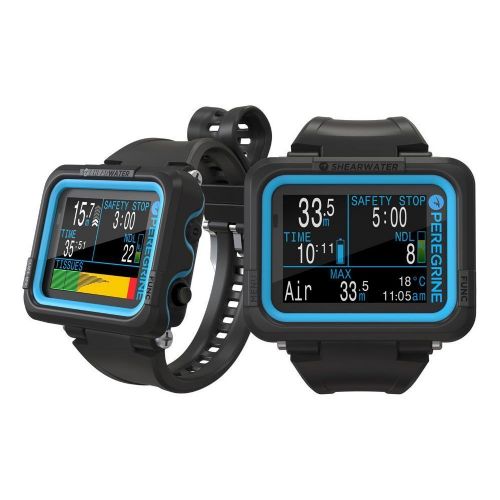
At AU$735 the Peregrine is the computer we recommend more often than any other. You get Shearwater's reputation for reliability, a bright 2.2 inch colour screen that stays readable in murky water, and a full Buhlmann ZHL-16C implementation with adjustable gradient factors, so the computer can grow with you from Open Water through to basic decompression diving. Wireless charging means no battery door to flood. It suits any diver who wants to buy once and stop thinking about it. The honest trade-offs: no digital compass, no air integration, and it costs roughly twice what a basic entry computer does. We think the screen and the algorithm flexibility justify every dollar. [Read our full review](https://scubadownunder.com/gear-reviews/shearwater-peregrine-dive-computer-review)
## Best premium: Suunto Nautic
The $1399 Nautic is Suunto's flagship and earned a 4.5 from us, largely on the strength of the best AMOLED screen in its class. It covers multi-gas diving, includes genuinely useful tide data for Australian shore divers, and doubles as a watch you will happily wear to work. It suits divers who want one premium device for diving and daily life, with a display that makes every other computer look dim. The trade-off is simple: a lot of that $1399 is paying for the screen, and a Peregrine does the core decompression job for half the money. [Read our full review](https://scubadownunder.com/gear-reviews/suunto-nautic-dive-computer)
## Best dive watch: Garmin Descent G1
The Descent G1 at $599 is the rare dive computer you will actually wear every day. It is a full Garmin sports watch with GPS, so it logs surface swims, marks your entry and exit points, and tracks training between trips, then turns into a capable recreational dive computer the moment you splash. It suits active divers who resent owning two watches, and it earned a 4.5 from us as a genuine do-everything device. Trade-offs: the screen is small and monochrome, so digits are harder to read at depth than on a Peregrine or a Quad, and the button-heavy interface takes a weekend to learn. [Read our full review](https://scubadownunder.com/gear-reviews/garmin-descent-g1-dive-watch)
## Best for air integration: Suunto D5
If you want cylinder pressure on your wrist, the $899 D5 is the cleanest mid-range way to get it. The colour screen is sharp, the wireless air integration is reliable once paired, and the watch-style sizing suits smaller wrists that find bigger units clunky. It suits divers settled into regular boat diving who want tank pressure, no-deco time and dive time in a single glance. Trade-offs: the transmitter is a separate purchase that adds several hundred dollars to the real cost, and Suunto's algorithm runs conservative, which can mean shorter no-deco times than your buddy's Buhlmann computer on repetitive dives. [Read our full review](https://scubadownunder.com/gear-reviews/suunto-d5-dive-computer)
## Best big screen value: Mares Quad CI
The Quad CI gives you the largest, most legible display in the mid range for $690, plus a tilt-compensated compass, a rechargeable battery and Bluetooth log downloads. It is function over flash: bold segments and big digits rather than a glossy colour panel, which is exactly why it works so well in low visibility. It suits divers with average eyesight and honest budgets who want everything readable at arm's length, gloves on. The trade-off is bulk, it wears big on small wrists, and it has none of the smartwatch extras the same money buys elsewhere. [Read our full review](https://scubadownunder.com/gear-reviews/mares-quad-ci-dive-computer)
## Best for new divers: Suunto Zoop Novo
The Zoop Novo has probably strapped onto more Australian student wrists than any other computer, and there are good reasons for that. It is simple, tough and conservative, and the chunky display is easy to interpret when everything underwater still feels new. It suits brand-new divers who want a no-drama first computer, and dive schools that need a fleet able to survive rental abuse. Trade-offs: the RGBM algorithm is notably conservative on repetitive dives, the button interface feels dated, and there is no colour screen or rechargeable battery. It will not be your last computer, but it is a sensible first one. [Read our full review](https://scubadownunder.com/gear-reviews/suunto-zoop-novo-wrist-scuba-diving-computer)
## Best budget: Mares Puck Pro+
At $359 the Puck Pro+ does the essentials and nothing else, and does them well. The display is huge for the price, nitrox is fully supported, and the single-button operation is impossible to get lost in. It suits occasional holiday divers, backup-computer buyers, and anyone kitting out on a tight budget who refuses to dive tables. The trade-offs are exactly what you would expect: navigating menus through one button is slow, there is no compass or air integration, and the styling is pure function. None of that matters at 18 metres on a reef. [Read our full review](https://scubadownunder.com/gear-reviews/mares-puck-pro-plus-dive-computer)
## Best console: Oceanic Pro Plus 4.0
Console computers are a shrinking category, but for divers who prefer them the Pro Plus 4.0 is the one to buy. At $1811 you get a big high-contrast screen, quick-disconnect hose mounting, and Oceanic's dual selectable algorithms, so you can match your computer's conservatism to your buddy's. It suits instructors who want gauges where students can see them, and long-time divers who like their information on the console where it has always lived. Trade-offs: it is heavy, it is expensive for what it does, and our 3.5 rating reflects that wrist units now offer more capability per dollar. [Read our full review](https://scubadownunder.com/gear-reviews/oceanic-pro-plus-4-console)
## How to choose
Start with the algorithm. Buhlmann computers with gradient factors, like the Peregrine, let you tune conservatism and play nicely in mixed-brand buddy pairs. Suunto's house algorithms run conservative, which is no bad thing for new divers but can frustrate on a liveaboard schedule with four dives a day.
Think hard about the screen. Australian temperate water sits between 12 and 20 degrees for much of the year and visibility can drop to a few metres after a blow. A big, bright display is a safety feature, not a luxury.
Battery type matters more here than in most countries. Rechargeable is convenient at home, but if your diving includes week-long runs to remote sites like [Osprey Reef](https://scubadownunder.com/dive-sites/osprey-reef), confirm the battery genuinely lasts the trip or that charging on board is practical. A computer with a user-replaceable cell never needs a powerpoint.
Air integration is lovely but optional, and transmitters add $400 or more to any quoted price, so budget for the system, not the headline number. Finally, buy from a seller with a real Australian warranty. A dive computer is the closest thing to life support you will own, and a grey import with no local service agent is a false economy.
## The verdict
If you want one answer: buy the Shearwater Peregrine, and if the budget will not stretch, the Mares Puck Pro+ covers the essentials honestly. New divers are well served by the Zoop Novo, gadget lovers by the Descent G1, and if money is no object the Suunto Nautic carries the nicest screen we have ever taken underwater. Whatever you choose, log a few easy dives on it before your next big trip: a computer you know by feel is worth more than any feature on a spec sheet.
Where to Buy
Get the Best Dive Computers Australia 2026 and experience the difference quality gear makes underwater.