Best Dive Torches Australia 2026: Buying Guide
Australian buying guide to the best dive torches for 2026: primary, backup, and photo-video picks across budgets, with current AU pricing and use-case framing.
Where to Buy
Affiliate links: we may earn from qualified purchases
Best Dive Torches Australia 2026: Buying Guide
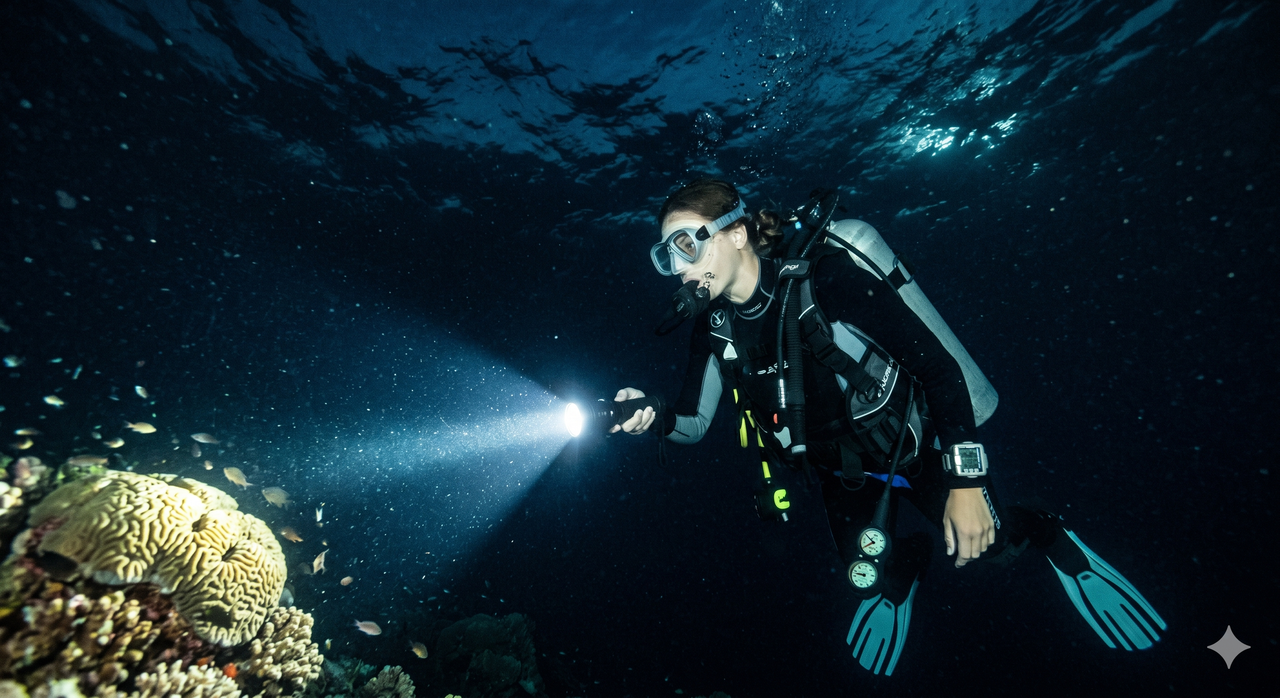
Australian diving runs from clear tropical water in the Coral Sea to silty estuaries in NSW, kelp forests in Tasmania, and night dives off Heron Island where the torch is the difference between seeing a Spanish Dancer at three metres and missing it entirely. A dive torch is not optional kit on most Australian dive trips, and the same torch does not suit every dive type. This guide covers the picks for 2026 across primary, backup, and photo-video roles, sized to the actual Australian conditions where they will be used.
The picks are framed by use case rather than brand loyalty. Where SDU has reviewed a specific torch in depth, we cross-link to it. Pricing is current Australian retail at the time of writing and is rounded to a useful approximation; check with your dive shop for current stock and any factory-authorised service options before committing.
Quick comparison: dive torch picks at a glance
| Torch | Tier | Lumens | Burn time | Approx AU price | Best for | |---|---|---|---|---|---| | Scubapro Nova 1000R | Mainstream primary | 1,000 | 4 hours | $249 | Recreational primary, night dives | | OrcaTorch D710 | Compact primary | 3,000 | 4 hours | $169 | Budget primary, strong backup | | Light & Motion GoBe S 1000 Wide | Photo-video primary | 1,000 (flood) | 3 hours | $339 | Underwater photography, video | | Big Blue VL15000PB | Tech primary | 15,000 | 3 hours | $749 | Wreck, cave, cold water | | Scubapro Nova 250 | Backup | 250 | 4 hours | $89 | BCD-pocket backup | | Wurkkos DL70 | Budget primary or backup | 4,500 | 2 hours | $99 | Best value primary | | Big Blue AL250 | Budget backup | 250 | 3 hours | $59 | Cheapest reliable backup |
What an Australian diver actually needs
Three torch decisions cover most Australian dive types.
A primary torch runs for the duration of the dive, has enough output to see colour in turbid water (300+ lumens minimum, 1,000+ preferred for night dives), and has a battery system that survives a multi-day trip without a daily charge. The primary is the torch that signals your buddy in a current, lights the swim-through at the back of Bare Island, and finds the cuttlefish hiding under the Cabbage Tree Island ledge.
A backup torch is a smaller, simpler unit carried as redundancy for night dives, wreck dives, cave dives, and any overhead environment. The Surface Lifesaving Australia and Australian Cave Divers Association both default to backup-light protocols for any planned overhead. A backup is also the torch you reach for to read your computer in shadow on a sunny afternoon dive.
A photo-video torch is optional but transforms recreational photography. A wide flood beam delivers even lighting for video and macro photography, and the Light & Motion GoBe family or the Big Blue VTL line are the practical Australian choices. A photo torch is rarely a primary; it is a third torch on a dedicated photographer's rig.
The recommendation for most Australian recreational divers is one primary plus one backup. Night divers, wreck divers, and tech divers add a third torch as a redundant backup. Photographers add a photo-video torch to that.
Mainstream primary: Scubapro Nova 1000R
The Scubapro Nova 1000R is the safe-money recreational primary. A true 1,000-lumen output with an 8° focused beam, a 21700 lithium-ion battery delivering around 4 hours of burn time, and a heavy-duty matte black aluminium body that survives shore entries and boat-deck drops. Australian retail sits around AU$249 with the battery and charger included.
The Nova 1000R is the right pick for divers who want a torch that just works without configuration. The focused 8° beam favours signalling and pointing over flood-style lighting; it is not the right choice for video, but it is the right choice for finding a buddy across 20 metres of viz on a NSW shore dive. The Scubapro service network across Australian dive shops is the largest of any torch brand, which matters when the charging port eventually wears.
Compact primary: OrcaTorch D710
The OrcaTorch D710 is the budget primary that punches well above its AU$169 retail. It runs 3,000 lumens out of an 18650 battery, sits in a hand-sized aluminium body, and delivers around 4 hours of burn at medium output. The trade-off against the Scubapro Nova is less polished build, a shorter ambient warranty period, and a smaller Australian service footprint.
SDU has reviewed the D710 in detail; the verdict there carries through to this guide. For divers building their first dive kit on a budget, the D710 is the recommendation. For divers building a kit they will own for ten years, the Nova 1000R is the long-tail choice.
Photo-video primary: Light & Motion GoBe S 1000 Wide
The Light & Motion GoBe S 1000 Wide is the choice for any diver who shoots underwater video or macro photography. The 60° flood beam delivers even illumination across the camera frame, the modular head system means you can swap to a spot beam or a different colour temperature without buying a second torch, and the build quality is the best in the under-AU$500 photo torch market.
The trade-off is shorter burn time (around 3 hours at full output) and a higher AU$339 price than equivalent flood torches. For divers who shoot, the burn time is rarely a problem because the torch is only on during the photographic sequence. The wide-beam advantage is the entire point of the purchase.
Cross-shop the GoBe S 1000 Wide against the Big Blue VTL series before committing. The Big Blue lights are larger, brighter, and cheaper at equivalent lumen output; the Light & Motion modularity is the deciding feature for divers who anticipate evolving their camera rig over time.
Technical primary: Big Blue VL15000PB
For wreck divers, cold-water divers, and divers planning their first tech-diving steps, the Big Blue VL15000PB is the right tier. 15,000 lumens of output, 3-hour burn time, dual-beam configuration with a spot core and flood halo, and the build quality to survive cave-diving abuse. Australian retail sits around AU$749.
This is a serious-budget torch and the wrong pick for casual recreational diving. It is the right pick for a diver progressing into the Pelorus Sound, Truk Lagoon, or Coral Sea wreck circuits where the depth, the silt, and the swim-through complexity actually need 15,000 lumens of output. Cold-water Tasmanian and South Australian wreck divers should add this to the kit.
Backup torch: Scubapro Nova 250
The Scubapro Nova 250 is the recommended backup for Australian recreational and technical divers. 250 lumens of output is enough to read a computer in shadow and signal a buddy in clear water, a 4-hour burn means it survives a forgotten on-switch in the BCD pocket, and the AU$89 retail puts it in the impulse-purchase bracket. The Nova 250 lives in the BCD pocket; it gets used twice a year on average; it costs less than a typical liveaboard breakfast.
For divers on a tighter budget, the Big Blue AL250 delivers similar specs (250 lumens, 3-hour burn) at AU$59. Both are reliable; the choice between them is brand-loyalty rather than meaningful specification difference.
Budget primary or strong backup: Wurkkos DL70
The Wurkkos DL70 is the high-output budget primary that competes with the OrcaTorch D710. 4,500 lumens, 2-hour burn at full output, 18650 battery, and an AU$99 retail price that puts it at the bottom of the budget bracket while delivering specs that the AU$249 mainstream primary tier offers. SDU has reviewed the DL70 in depth.
The trade-off is build quality, brand support, and Australian retail distribution. The DL70 is sold mostly through online channels; warranty service is shipped back to the manufacturer; the lifetime is shorter than a Scubapro or Light & Motion equivalent. The right framing is "an excellent torch for the price" rather than "the best torch on the market." For divers who replace their primary every 18-24 months and want to maximise lumens per dollar, the DL70 is the pick.
Buying considerations for Australian conditions
Battery type matters more than total lumens. A torch rated for cold-water performance keeps voltage above the threshold where the LED dims at 4°C; a torch rated for tropical use can dim significantly in temperate water. For divers diving Tasmania, South Australia, or southern Victoria, confirm the manufacturer's cold-water rating before purchase.
Charging convention matters for travel. USB-C is the default for new releases in 2026. Older proprietary chargers (Scubapro Nova legacy connectors, some Light & Motion FlexCharge) work fine but add a brick to the carry-on. A USB-C torch charges from any phone power bank on a multi-day boat trip.
Lanyard configuration matters underwater. A torch without a wrist lanyard becomes a torch lost overboard. Most premium torches ship with a lanyard; budget torches often do not. Add a Goodman handle for primary photo-video torches if you shoot two-handed.
Australian dive-shop service availability matters across a 10-year ownership horizon. Scubapro, Light & Motion, Big Blue and Bigblue all have dive-shop technician support in major Australian cities. OrcaTorch and Wurkkos are sold mostly through online channels and shipped back to the manufacturer for warranty work; budget for that workflow.
Verdict
For most Australian recreational divers, the right answer is the Scubapro Nova 1000R as primary plus the Scubapro Nova 250 as backup, around AU$340 total. That kit handles night dives, shore entries, low-viz recovery dives, and reading the computer in shadow on a sunny afternoon. For budget-conscious divers, the OrcaTorch D710 plus the Big Blue AL250 substitutes at around AU$230 with no meaningful safety compromise for recreational depths.
Photographers add the Light & Motion GoBe S 1000 Wide as a third torch. Wreck divers and tech divers progressing into overhead environments add the Big Blue VL15000PB as a third torch.
The deliberately-omitted recommendation is any USB-C dive torch under AU$50 sold through marketplace channels with no Australian importer. The Australian dive-shop service network is the long-tail value in a torch purchase; an unrepairable budget torch in the BCD pocket the day a primary fails is no torch at all.
Whatever combination you choose, check the lanyard, charge it to full the day before the trip, and pack the spare batteries in your carry-on rather than checked luggage. The torch that arrives at the dive site is the torch that works.
Where to Buy
Get the Best Dive Torches Australia 2026: Buying Guide and experience the difference quality gear makes underwater.