Divevolk SeaTouch 6 Pro First Look
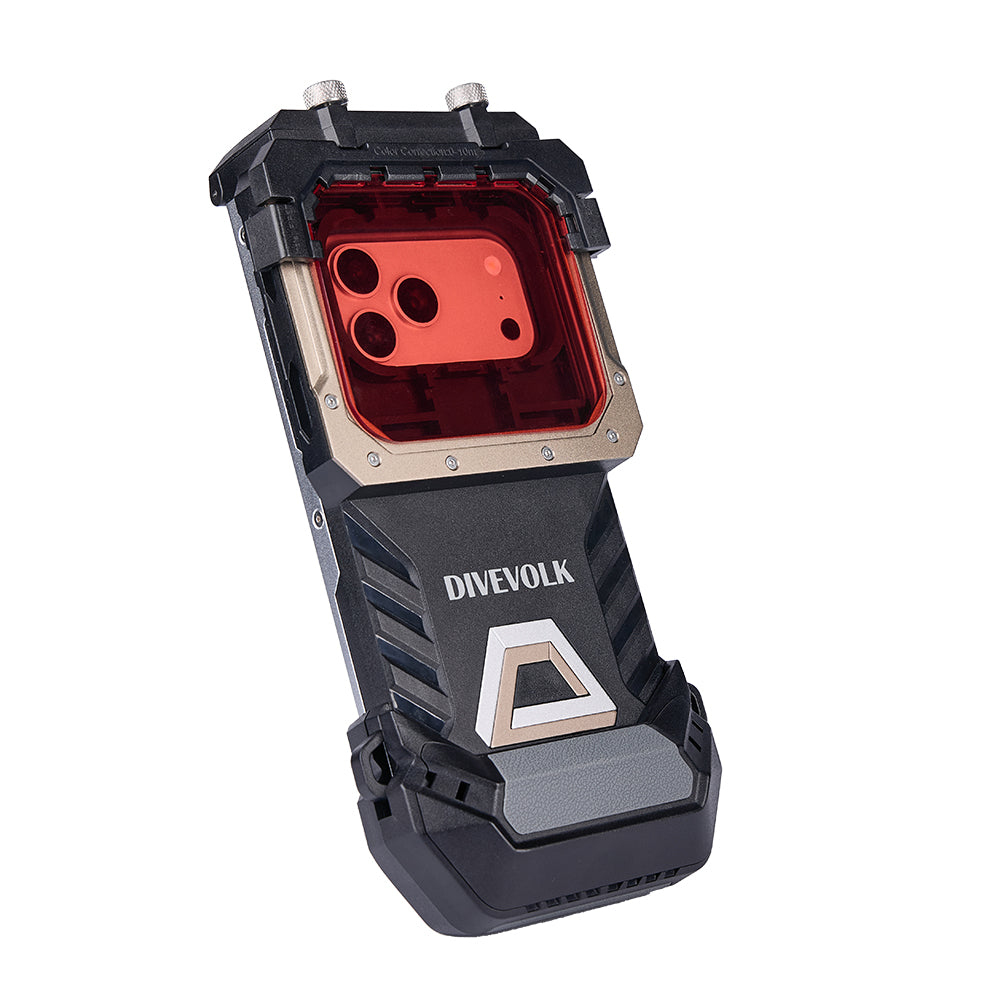
Divevolk's SeaTouch 6 Pro keeps a phone's own touchscreen working to 60 m, with room for bigger camera bumps and a red filter included in the box.
Where to Buy
Affiliate links: we may earn from qualified purchases
*First look based on manufacturer specifications and published reports. Hands-on review to follow.*
Most divers already own a decent camera. It just happens to live in their pocket. The Divevolk SeaTouch 6 Pro is the company's sixth-generation attempt to take that phone underwater while keeping the touchscreen working, so the phone's own camera app does the work instead of a set of mechanical buttons. Divevolk announced it in mid-September 2026, opened pre-orders straight away and said shipping would start on 15 October 2026.
The housing is rated to 60 m, comfortably beyond recreational depth limits, and is aimed at divers who want good photos and video without buying a dedicated camera system. Snorkellers on Great Barrier Reef day boats are also squarely in its sights, thanks to a red filter tuned for the shallows. For travellers watching their baggage allowance, swapping a camera, housing and charger for a phone housing is an appealing trade.
Touchscreen and Controls
The SeaTouch 6 Pro is buttonless. Control comes through a sixth-generation flexible touchscreen membrane, which Divevolk rates at 150,000 touches, up from 100,000 on the earlier SeaTouch 4 Max Plus. The company says the new membrane improves sensitivity and edge control, and it now supports the swipe-up gesture used to reach the home screen on current phones, which the previous model did not.
In practice, that means switching between photo and video, changing zoom or reviewing a shot uses the same taps and swipes as on land. No vacuum pump, companion app or Bluetooth pairing is needed to operate it, although Divevolk lists an optional Bluetooth external shutter among its accessories. Divevolk says the phone's native apps keep working, and that GPS and mobile signal remain available at the surface, so a diver back on top can still navigate or call for help without opening the housing.
Phone Compatibility
Internal clearance has grown from 15 mm to 18 mm. That matters because each new flagship phone seems to carry a larger camera bump. Divevolk lists a maximum phone size of 180.0 x 82.5 x 11.2 mm (length x width x thickness), and its product page says the camera bump should not exceed 17 mm. Divevolk names recent iPhones, the Samsung Galaxy S26 Ultra and flagship phones from Huawei, Xiaomi, vivo, OPPO, Google and OnePlus as compatible.
The housing only works with the SeaTouch 6 Pro phone adapter, which is chosen by handset at purchase: the standard option covers the non-mini iPhone 12 to 18 series, and other iPhones and Android phones cost more. Anyone with an unusual handset should measure the bare phone against those figures before ordering. Divevolk also recommends removing screen protectors before fitting the phone, both to stop it sticking and to keep the touchscreen responsive.
Optics and Colour
A redesigned dome mount, using what Divevolk calls second-generation AquaLock, is designed to sit over all of the phone's rear lenses, so the ultra-wide, main and telephoto cameras can all be used. The older SeaTouch 4 Max Plus covered only one lens. A red filter comes in the box, and Divevolk recommends it for 0 to 10 m.
That range is the honest limit of any filter. Water strips red light first, and a filter can only restore colour that is still present in the ambient light. On a sunny reef pontoon or a shallow shore dive such as Shelly Beach in Sydney, it should reduce the blue-green cast. Deeper down, on a wall or wreck dive, a video light will do far more than any filter, which is why Divevolk's modular mount system also takes lights, wet lenses, filters and brackets.
Sealing, Buoyancy and Travel
The housing carries an IPX8 rating to 60 m and uses multi-layer sealing, with aluminium-alloy frames reinforcing the touchscreen and lens areas, according to Divevolk. It measures 239 x 123 x 42 mm. Divevolk quotes about 485 g for the empty housing and about 760 g with a phone fitted. With a phone inside it is positively buoyant: +150 g in salt water and +170 g in fresh water.
Replaceable desiccant pads sit inside to help prevent fogging, which is a real issue when a warm phone meets cool temperate water in a NSW winter. The box also includes a spare gasket for the seal cover, a membrane cover, a lanyard and an inner support block for a waterproof test, so the seal can be checked before the phone goes in. Divevolk offers a one-year warranty on its products.
Key Specifications
| Specification | Detail | |---|---| | Depth rating | 60 m (IPX8) | | Maximum phone size | 180.0 x 82.5 x 11.2 mm; camera bump up to 17 mm (product page) | | Internal clearance | 18 mm (up from 15 mm) | | Touch membrane rating | 150,000 touches | | Dimensions | 239 x 123 x 42 mm | | Weight | About 485 g empty; about 760 g with phone | | Buoyancy (with phone) | +150 g salt water; +170 g fresh water | | Red filter | Included, for 0 to 10 m | | App or vacuum pump | Neither required | | Warranty | 1 year | | Price | US$268 with iPhone 12 to 18 adapter; US$287 for other phones (Australian pricing not yet confirmed) | | Shipping | From 15 October 2026 (Divevolk) |
Drawbacks
- No leak warning. Divevolk's specifications don't mention a moisture alarm or vacuum check. Protection relies entirely on the seals and on the diver running the waterproof test properly. Given what a current flagship phone costs, that is a significant gap. - Positive buoyancy. At +150 g in salt water with a phone fitted, the housing will try to float up on a lanyard and can pull at the wrist during slow, careful framing. - Touch with gloves is unproven. Divevolk describes operation with bare fingers. Divers in 3 to 5 mm gloves in Victorian or Tasmanian water should expect to remove a glove or accept limited control until hands-on reports appear. - Compatibility figures vary between sources. Divevolk's product page allows a 17 mm camera bump while its press release says 18 mm, and the iPhone range differs between the product page and the adapter options. Check the exact handset. - Australian supply unknown. No Australian retailer or AUD price has been confirmed, and first deliveries were only due from mid-October 2026.
Verdict
The SeaTouch 6 Pro looks like a sensible step forward for phone-based underwater shooting: more room for big camera bumps, a tougher touch membrane, a dome that covers every rear lens and no app to fight with on a rocking boat. It suits recreational divers and snorkellers who already own a recent flagship phone and want better holiday footage without carrying a camera system. Divers who shoot in cold water with gloves on, or who aren't comfortable trusting an expensive phone to a housing without leak detection, should skip it for now and wait for hands-on reports, or look at a dedicated compact in a housing such as the one in SDU's SeaFrogs TG-7 housing review.
Sources
- Divevolk: SeaTouch 6 Pro product page - Divevolk press release via GlobeNewswire (16 Sep 2026), syndicated by Generation NT - DeeperBlue: DIVEVOLK unveils new SeaTouch 6 underwater smartphone housing - DIVEIN: SeaTouch 6 Pro launch - Daivings.lv: SeaTouch 6 Pro vs SeaTouch 4 Max Plus
Where to Buy
Get the Divevolk SeaTouch 6 Pro First Look and experience the difference quality gear makes underwater.
Australian pricing not yet confirmed; Divevolk lists US$268 with the iPhone 12 to 18 adapter or US$287 for other phones.