Suunto Nautic S Review: AMOLED All-Rounder
Suunto Nautic S review: a versatile AMOLED dive computer for scuba, freediving and sidemount, though its 80m depth limit keeps it recreational.
Where to Buy
Affiliate links: we may earn from qualified purchases
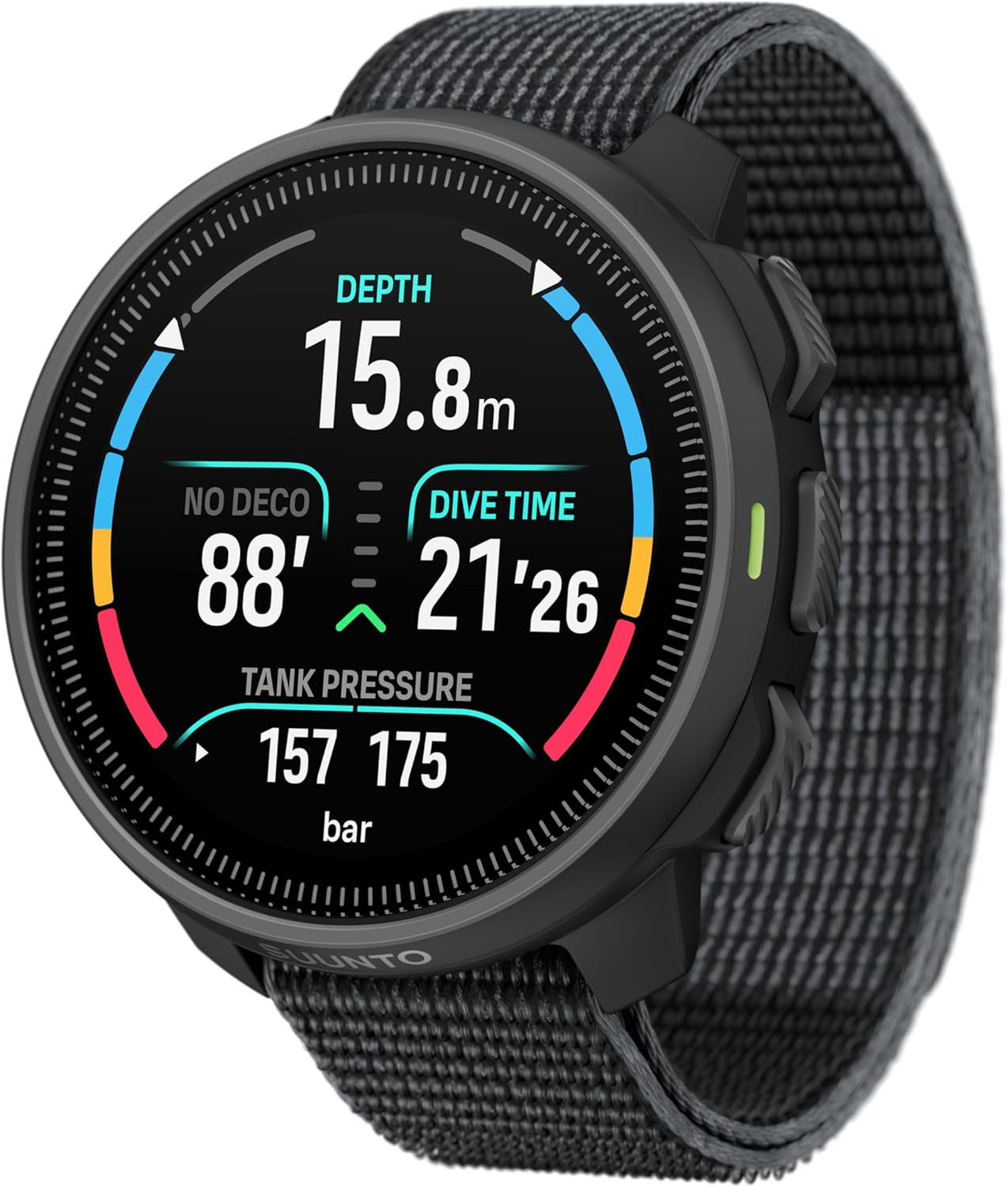
The Suunto Nautic S packs an AMOLED display and a surprisingly deep feature set into a compact dive computer that works well for recreational divers who also dabble in freediving or sidemount configurations.
Positioned at $999, it occupies an interesting middle ground in Suunto's lineup — more modern than the D5 with its AMOLED screen, but without the flagship multi-gas capabilities of the full-size Nautic. For Australian divers who want one computer to handle a shore dive at Rapid Bay, a freediving session at Julian Rocks, and the occasional sidemount dive in a Piccaninnie Ponds restriction, the Nautic S makes a compelling case for itself.
Overview
The Suunto Nautic S is a wrist-mounted dive computer featuring a vivid AMOLED display that delivers excellent contrast and readability underwater. It supports air and nitrox modes for scuba diving, a dedicated freedive mode with apnea-specific alarms, and sidemount compatibility for tracking two independent cylinders.
The AMOLED display is the standout feature here. Compared to the LCD panels found on most computers in this price range, the blacks are deeper and the colours are more saturated, making the dive data genuinely easier to parse at a quick glance — particularly useful when you're managing a sidemount configuration and don't want to spend extra seconds squinting at numbers. The 80-metre depth rating is adequate for recreational and most advanced recreational diving, though it falls short of what you'd want for deeper technical work.
GPS surface tracking is a thoughtful addition. It logs your entry and exit points on the surface, which is handy for marking new dive sites along the NSW coast or tracking drift dive paths at places like Fish Rock Cave. It won't work underwater, but having an accurate surface breadcrumb trail is more useful than you might expect for boat diving logistics.
Compared to the Garmin Descent G1, the Nautic S offers a better display and sidemount support, but lacks the extensive fitness tracking features.
Key Features
- AMOLED display with deep blacks and high contrast - Air and nitrox support for scuba diving - Dedicated freedive mode with customisable apnea alarms - Sidemount compatible — tracks two independent cylinders - GPS surface tracking for entry/exit point logging - 80-metre depth rating - Bluetooth connectivity for dive log sync - Suunto RGBM algorithm with adjustable conservatism settings - Rechargeable battery with approximately 30-hour battery life in dive mode - Compact, low-profile wrist design
The Good
- AMOLED display is superb underwater: The contrast ratio makes dive data pop, even in the silty conditions common at sites like Clifton Gardens or Bare Island. You can read everything at a glance without tilting your wrist. - Freedive mode is genuinely useful, not a gimmick: The apnea-specific alarms and surface interval tracking are well implemented. For divers who split their time between scuba and freediving — common among spearfishers in Queensland — having one unit that handles both properly saves carrying two devices. - Sidemount support is well thought out: Cylinder tracking for two independent tanks works smoothly. The display layout in sidemount mode clearly separates the two gas sources, reducing the chance of confusion during a dive. - GPS surface logging adds real value: Marking entry and exit points automatically is useful for divers exploring new sites along the coast, particularly for shore diving where GPS waypoints help you return to the same reef system. - Comfortable form factor: The compact design sits well under a wetsuit sleeve, and the low profile means it doesn't snag on anything during cave or wreck penetrations.
The Bad
- 80-metre depth rating limits growth: Divers progressing into deeper technical diving will need to upgrade. The 80-metre ceiling is fine for recreational and advanced recreational work, but it's a hard stop for anyone eyeing trimix depths. - No wireless tank pressure integration: Unlike the D5 or the flagship Nautic, there's no option for a wireless transmitter. You'll still need a console SPG for tank pressure, which adds bulk to your rig. - Battery life drops significantly with AMOLED on full brightness: The beautiful screen comes at a cost. Running at maximum brightness during a full day of diving (4-5 dives) will push the battery hard. Dialling brightness down helps, but defeats part of the appeal. - Limited nitrox mix options: Supporting only standard air and nitrox without multi-gas switching means it won't suit divers using multiple deco gases.
Verdict
The Suunto Nautic S is a versatile computer that does several things well rather than one thing perfectly. Its AMOLED screen is the best in its price class, the freedive mode is genuinely capable, and sidemount support opens it up to a broader range of diving styles. At $999 it's priced fairly for what you get, though the lack of wireless air integration and the 80-metre depth ceiling mean it's firmly a recreational-to-advanced-recreational tool. If you're a diver who freedives on weekdays and runs sidemount on weekends, this is one of the few computers that handles both without compromise. If you need multi-gas support or deeper depth ratings, look at the full-size Nautic instead.
Where to Buy
Get the Suunto Nautic S Review: AMOLED All-Rounder and experience the difference quality gear makes underwater.
Best price for Australian shipping