Buchanan's Wall - South Solitary
Coffs Harbour, NSW
Buchanan’s Wall South Solitary Island Dive Guide Coffs Harbour NSW
By ScubaDownUnder Team · 2025-07-23
Introduction
The skipper throttles back as the white tower of South Solitary Island lighthouse drifts past the bow and the hull begins to rock gently in open ocean swell. Coffs Harbour’s breakwall is only thirty minutes behind you, yet the mainland already feels remote. Gannets wheel overhead, their cries mingling with the hiss of water against ancient granite. Beneath the boat the Pacific is startlingly clear, revealing tier upon tier of orange sponge and mauve soft coral clinging to a dramatic rock face known to locals as Buchanan’s Wall.
This is the signature site on the south western flank of South Solitary Island, a place where warm East Australian Current water collides with temperate southern flow. The collision fuels extraordinary biodiversity. Stately grey nurse sharks glide through mid water, green turtles doze on ledges, and a patient eye can pick out tiny Duncker’s pipehorses that resemble scrap-like wisps of red seaweed. Few Australian spots deliver such an effortless blend of big animal drama and intricate macro treasure on a single dive.
Fast facts
* Depth: top between ten and fifteen metres, base at thirty * Visibility: averages ten to thirty metres, peaks in winter * Water temperature: about eighteen °C in July, rising to twenty four °C by February * Access: thirty to forty minutes by fast RIB from Coffs Harbour Marina * Certification level: Open Water is accepted although Advanced allows more time at depth * Standout species: grey nurse shark, green and hawksbill turtle, wobbegong, Spanish dancer, banded coral shrimp, Duncker’s pipehorse
The dive in detail
Descent
Your giant stride lands on a plateau of weather-smoothed boulders at twelve metres. Light dances through schools of silver trevally, illuminating yellow encrusting sponge and pale pink soft coral that cloak every surface. Anemones the size of boxing gloves sway with the surge while assertive clownfish nip at curious fingers. Take a moment here: even at this modest depth the wall’s citizenry can occupy a photographer for an entire tank.
Mid wall
At fifteen metres the granite drops away in a sheer vertical sweep that lends the site its name. Bubble streams race skyward against mottled rock while curious blue groper trail at a polite distance. Small overhangs hide lionfish, and keen eyes might locate paper-thin fire gobies hovering head down in shadow. Progress east with the prevailing current, finning slowly while the scene unfurls. The wall is punctuated by wide ledges that form natural rest stops. Here green turtles wedge themselves for a nap and multicoloured nudibranchs parade across sponge.
Sand line
Twenty five to thirty metres marks the meeting of rock and sand. Slender whip corals rise like antennae from the seabed and wobbegongs lie motionless amid scattered boulders, their fringed snouts blending perfectly with algae flecks. In late autumn and winter the cooler layer draws protected grey nurse sharks that cruise parallel to the wall, mouths agape and eyes unblinking. They are placid but command respect. Remain at least five metres away, keep arms close, and let the animals set the distance.
Ascent and safety stop
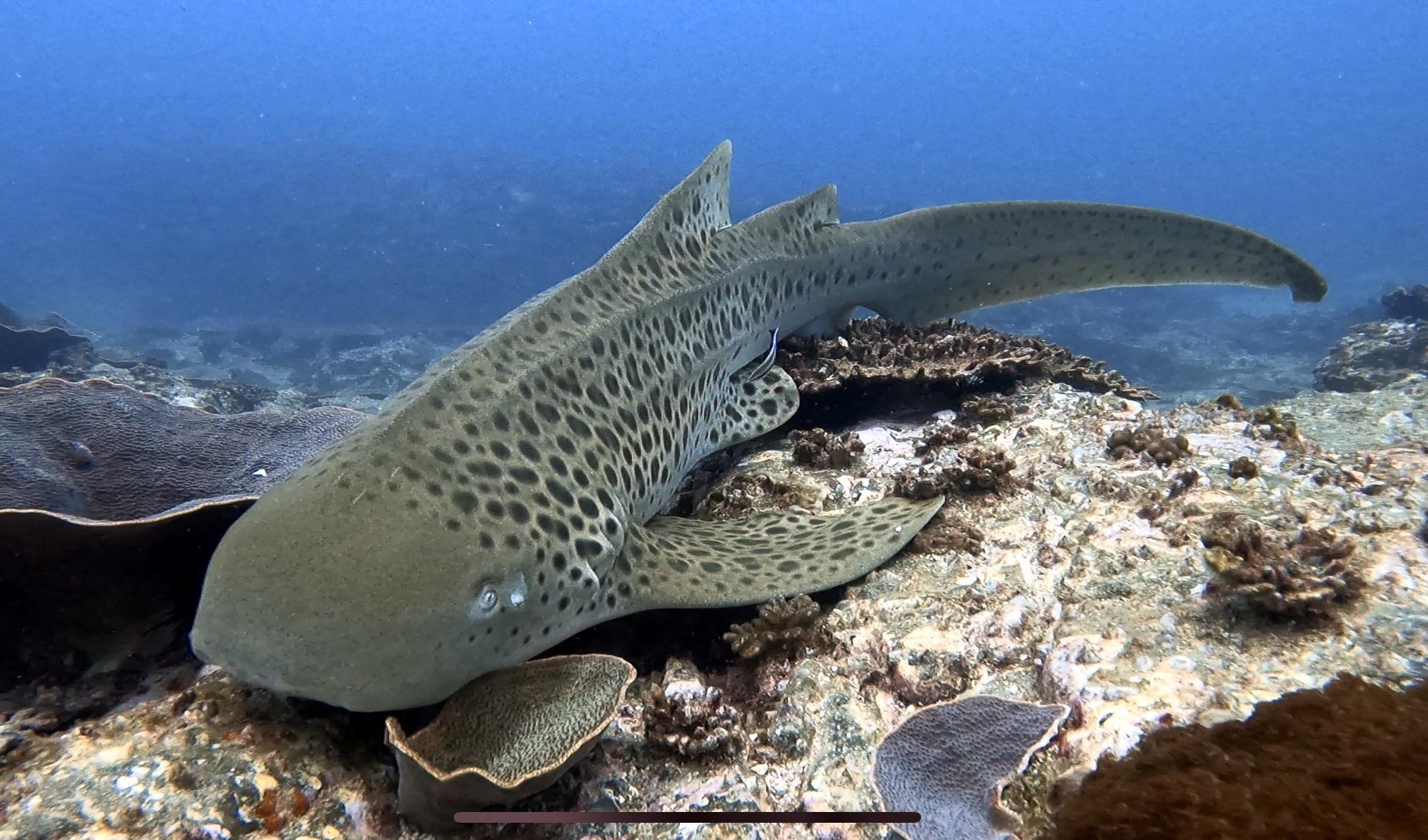
Turn west and rise gradually along stepped shelves that lead back to the mooring line. Surge is often noticeable around eight metres, especially on a big southerly swell, yet it is manageable by timing fin kicks with the ocean’s pulse. While you off-gas at five metres cast an eye into mid water for eagle rays. On exceptional blue-water days a leopard shark may appear from the island’s deeper southern gutters and circle lazily before fading to cobalt.
Seasonality and conditions
Buchanan’s Wall is sheltered from the dominant southerly swell thanks to South Solitary’s bulk, though northerlies can introduce surface chop. Winter delivers the clearest water and reliable grey nurse sightings but is cooler, so a seven millimetre suit or five millimetre with hooded vest is sensible. Summer brings richer plankton that feeds dazzling macro life and boosts water temperature into the mid twenties. Photographers chasing Spanish dancers in open display flights favour dusk dives in late summer when these large red nudibranchs leave hiding to swim through the column.
Currents are usually mild and predictable, flowing east to west with the East Australian Current eddies. Operators time entries so divers drift gently along the face rather than kicking into flow. Surge is common shallower than ten metres and can be stronger on spring tide.
Marine life highlights
* Grey nurse shark: Present mainly May to October. Approach slowly, maintain a generous gap, and stay below the animal if possible for respectful silhouettes against the sun. * Green and hawksbill turtle: Seen year round resting on ledges or grazing sponge gardens. Approach from the side and avoid looming overhead. * Spanish dancer nudibranch: These huge crimson slugs emerge at dusk. Watch for their undulating swimming motion which resembles flamenco skirts. * Duncker’s pipehorse: Endemic to northern New South Wales and southern Queensland. Search crimson soft coral fans around seventeen metres. * Wobbegong shark: Often draped over low boulders at the sand line. Their cryptic patterning is a reminder never to place hands blindly. * Schooling pelagics: Trevally, kingfish and on very clear winter mornings, barracuda patrol the blue edge beyond the wall.
Practicalities and planning
Operators: Jetty Dive Centre runs daily two-tank trips utilising custom RIBs with rear lifts and offers nitrox, full gear hire, and guided diving packages. Bookings are essential on weekends and during school holidays.
Gear tips: A five millimetre wetsuit is adequate from October through April. Outside those months a thicker suit or layered vest is advisable. Gloves are discouraged to minimise temptation to grab the wall. A pointer stick is handy for steadying cameras in surge without contacting living coral.
Navigation: Most charters use a fixed mooring line set in twelve metres. Guides typically lead eastward then curl back shallower for multilevel profiles. If diving unguided carry a reel and surface marker; afternoon sea breeze can raise chop that hides the boat skipper’s view of a low profile SMB.
Safety: Depth, surge and occasional current make an audible signalling device and high-visibility sausage wise additions. All charter operators carry oxygen and first aid, but remember the nearest chamber is at Gosford almost three hundred kilometres south, so conservative profiles are prudent.
Photographic advice: Wide angle lenses suit shark and turtle portraits with the wall as backdrop. In macro mode look for banded coral shrimp under ledges and the delicate, translucent bodies of solar powered phyllodesmium nudibranchs on algae clumps. Shooters hoping to capture the lighthouse beam through shark silhouettes should plan winter mid morning dives when sun angle aligns with the wall.
Conservation notes
South Solitary Island forms part of the Solitary Islands Marine Park, the oldest marine protected area in New South Wales. Zoning around Buchanan’s Wall prohibits fishing yet anchors may still damage fragile sponge gardens, so use fixed moorings only. Jetty Dive logs every charter with Reef Life Survey and Project AWARE, contributing data on shark abundance and coral health. Visitors are encouraged to submit photographs of turtles for the national Turtle Identification Database, helping track growth and migration.
Despite slow recovery since the nineteen nineties grey nurse sharks remain critically endangered in Australian waters. Disturbance by divers is a known stressor, so avoid flash photography close to the animals and back away if any shark begins mouth gaping or rapid circling.
Verdict
Buchanan’s Wall delivers a rare double act. Few sites on the east coast combine year-round turtle encounters and winter shark congregation with soft coral vistas more typical of tropical reefs. Add easy boat logistics, dependable clarity, and a sheltered mooring that suits divers of varied experience and you have a must-see underwater landmark. Linger over the small details and the wall will reveal hidden life that rewards patient observation, yet always keep an eye on the blue where a gentle giant may loom. For visitors to the Coffs Coast this dive justifies the early alarm and the salt spray ride home, stoking eagerness for a return descent into that vertical kaleidoscope.
Sources
* Jetty Dive Centre, Dive Sites Guide * DivePlanit, Buchanan’s Wall Overview * Solitary Islands Marine Park Diving Information PDF * NSW DPI Solitary Islands Marine Park Scuba Diving * Jetty Dive Blog, April 2025 Dive Report
Other great blogs
---
*Planning a NSW dive trip? See our region-by-region guide to the best places to dive in NSW for the full overview of dive sites across the state.*
Visibility at Buchanan's Wall - South Solitary
Visibility at Buchanan's Wall - South Solitary typically ranges from 10 to 15 metres, though it shifts with swell, wind and recent rainfall. October-April generally offers the best conditions for diving here.
Right now: approximately 7 m, 83% confidence (updated 10:37 AEDT).
View the live forecast and 7-day outlook for Buchanan's Wall - South Solitary →