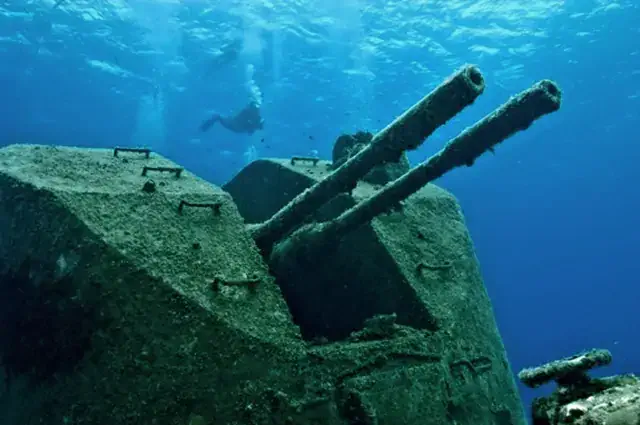
Diving at Darwin Harbour Wrecks
AdvancedVideoReview

Darwin Harbour Wrecks

Darwin, NT

Water temp26–30°C
Visibility3–10m
Depth15–25m
Best timeApril–October

Darwin Harbour Wrecks Dive Guide

By ScubaDownUnder Team · 2025-09-21

# Darwin Harbour Wrecks Dive Guide

Darwin Harbour may look like a working port at first glance, its waters busy with ferries, fishing boats and naval vessels, but beneath the surface lies a time capsule of wartime history. For divers, the harbour offers an intriguing collection of shipwrecks, aircraft and industrial relics dating back to World War II, when Darwin endured fierce Japanese bombing raids. The wrecks are scattered across the harbour floor, now home to a surprising abundance of marine life. Diving here combines history with adventure, making it one of Australia’s most underrated wreck diving destinations.

## A Harbour Shaped by War

Darwin was bombed more than 60 times between 1942 and 1943, leaving the harbour littered with sunken ships and aircraft. Some were destroyed in the attacks, others scuttled or abandoned. Today, these sites form an underwater museum, protected by strong tidal currents and murky visibility that keep them from becoming over-dived. Each descent feels like stepping into history, as the outlines of ships and planes emerge slowly from the greenish water.

## Access and Conditions

Diving in Darwin Harbour is challenging but rewarding. The tidal range here is one of the largest in Australia, up to 8 metres, which creates powerful currents and visibility that can shift dramatically from 2 to 10 metres depending on conditions. Dives are carefully timed around slack tide, so trips are usually limited to a narrow window of opportunity. Water temperatures remain warm throughout the year, hovering between 25 and 30°C, so most divers are comfortable in a 3mm wetsuit or even a rash vest.

Because of the tidal dynamics, diving the wrecks is only possible with local operators who understand the harbour’s rhythms. Darwin has a small but experienced dive community, and guided wreck trips are available seasonally.

## Notable Wrecks

**SS Zealandia** This steel cargo and passenger ship was bombed and sunk in 1942. The wreck lies at about 27 metres, with its twisted hull still recognisable. Divers can see sections of deck machinery, scattered debris and schools of fish weaving through the broken structure.

**USS Peary** Perhaps the most famous wreck in the harbour, the American destroyer USS Peary was lost with more than 80 crew during the first bombing raid in February 1942. The wreck lies in deeper water (around 30 metres) and is a war grave, so diving is restricted. However, memorial dives are occasionally organised.

**Catalina Flying Boats** Several PBY Catalina flying boats, used by the RAAF, were sunk or scuttled in the harbour. These aircraft wrecks rest in shallower water around 18 metres, their fuselage frames and wing outlines still discernible. They make for fascinating dives because aircraft wrecks are far rarer than ships.

**Meigs and Mauna Loa** These American transport ships were sunk during bombing raids and now rest on the seabed in accessible recreational depths. They are covered in corals and sponges and attract batfish, trevally and barracuda.

**Oil and Industrial Relics** In addition to wartime wrecks, Darwin Harbour holds various industrial remains including oil barges, wharves and tugboats. These smaller wrecks provide additional variety for divers and are often teeming with marine life.

## Marine Life

While the wrecks are the main attraction, the life that thrives on them is equally remarkable. The structures provide artificial reef habitats where hard and soft corals grow in surprising density, despite the silty conditions. Schools of snapper, fusiliers and batfish are common, along with barramundi cod and groupers lurking in the shadows. Pelagic visitors like trevally and queenfish patrol the wreck edges, while nudibranchs and shrimp hide in the crevices. Occasionally, divers may encounter turtles or even a passing reef shark.

Because the water can be turbid, encounters often feel sudden and intimate. One moment the wreck seems lifeless, the next a school of golden trevally bursts into view.

## Skills and Suitability

Darwin Harbour wrecks are best suited to advanced divers due to the depth, currents and limited visibility. Wreck speciality training is an advantage, particularly for penetrations, though most sites are explored from the outside. Novices can dive some of the shallower aircraft wrecks under supervision, but strong buoyancy skills are essential.

Night diving is sometimes offered on smaller wrecks, where the harbour comes alive with crustaceans, lionfish and hunting barracuda.

## The Experience

What sets Darwin Harbour apart is the blend of raw history and untamed diving conditions. Unlike the crystal-clear wrecks of Queensland or Micronesia, here the water carries a sense of secrecy. Descents are suspenseful, as silhouettes gradually take shape in the gloom. When you run your hand across a steel plate scarred by wartime fire, the reality of history feels immediate.

Darwin’s wrecks are not about photogenic clarity but about atmosphere, imagination and respect. They challenge divers to appreciate the stories that lie beneath the waves rather than just the view.

## Practical Information

* **Season:** Best diving is during the dry season (May–October) when winds and rains are minimal. * **Operators:** A handful of local dive shops in Darwin run wreck trips, often combining them with harbour exploration and fishing charters. * **Depths:** Wrecks range from 10 to 30 metres. * **Conditions:** Tidal windows dictate timing; visibility can be as low as 2 metres. * **Permits:** Some wrecks, like USS Peary, require special permission due to war grave status.

## Final Thoughts

Darwin Harbour is not a place of easy diving. The conditions demand respect and patience, but those who make the effort are rewarded with a haunting connection to Australia’s wartime past. Each dive is both a history lesson and an exploration, where relics of conflict have been reclaimed by the sea. For divers seeking something deeper than just coral gardens, Darwin’s wrecks deliver an unforgettable experience.

**Sources:**

* [Darwin Wrecks and Reefs](https://www.dsac.com.au/Dive_Sites.htm) * [Australian War Memorial, Bombing of Darwin](https://www.awm.gov.au/advanced-search?query=darwin) * [Bombing of Darwin - Wikipedia ](https://en.wikipedia.org/wiki/Bombing_of_Darwin) - [Darwin Harbour - Wikipedia ](https://en.wikipedia.org/wiki/Darwin_Harbour)