East Newry Island
Newry Islands, QLD
East Newry Island Dive Site Guide | Newry Islands, QLD, Australia
By ScubaDownUnder Team · 2026-04-13
East Newry Island
A sheltered fringing reef in the Newry Island Group off Mackay, offering coral gardens and diverse reef fish in a rarely crowded section of the Great Barrier Reef Marine Park.
---
Quick stats
| Detail | Info | |---|---| | Location | Newry Islands, QLD | | Skill Level | Intermediate | | Depth Range | 5–20 m | | Typical Visibility | 5–18 m | | Water Temperature | 22–29 degrees C | | Best Season | June–November | | Entry Type | Boat | | Hazards | Tidal currents between the islands can be strong on spring tides; Marine stingers (box jellyfish and Irukandji) possible October–May; Exposed to southeast swell in some aspects | | Facilities | No shore facilities on the island day trips from Victor Creek or Seaforth only; Camping permitted on some Newry Islands under permit Queensland Parks and Wildlife Service |
---
The Newry Islands sit offshore from the Mackay coast in a stretch of the Great Barrier Reef Marine Park that most visiting divers bypass in favour of the more heavily marketed sites further north. That oversight is the Newry group's quiet advantage. East Newry Island's fringing reef runs in good health along its sheltered edges, the water moves through with the reliable quality of an inner reef system in sound condition, and the absence of dive boat queues gives every dive a spaciousness that is increasingly hard to find in the Whitsundays.
The Newry Island Group sits within the Great Barrier Reef Marine Park and is managed as part of the Newry Islands National Park, with Queensland Parks and Wildlife Service overseeing both the terrestrial and marine components. The islands are among the southernmost in the reef marine park system, occupying a transitional zone between the subtropical and tropical reef environments that gives them a slightly different community composition from sites further north. East Newry is the largest island in the group, and its eastern and northern faces carry the most developed fringing reef.
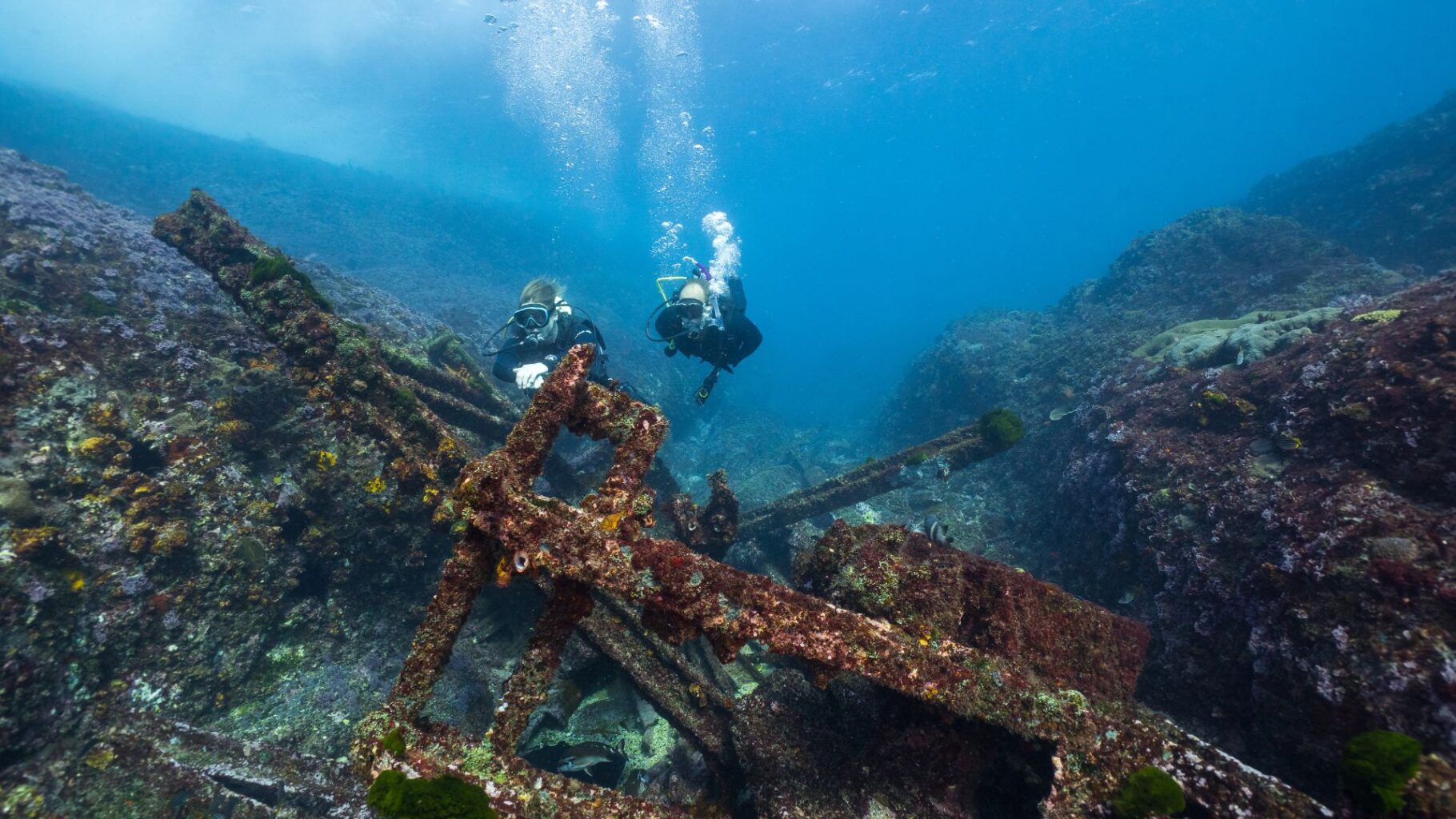
The reef structure begins in 5–8 metres of water at the top of the slope and descends to around 18–20 metres at the base, where the reef transitions to sand and rubble. The hard coral coverage on the upper slope is reasonable, with plate corals and branching Acropora formations interspersed with massive Porites heads that provide permanent structural features across the reef. The middle section of the slope carries the most topographic variety overhangs, gutters, and vertical faces that create habitat complexity and concentrate fish life. A gentle current on the right tidal stage adds a drift component that makes the dive more dynamic and improves water clarity.
Green turtles are the most frequently encountered large animals, feeding methodically on the algae and seagrass that grows between the coral heads. Whitetip reef sharks patrol the deeper sections of the slope and are reliably present, particularly in the morning hours before boat activity peaks. Maori wrasse move through the reef with the authority of animals with no predators to concern them, and the reef fish community parrotfish in several species, triggerfish, surgeonfish schools, and the rotating cast of fusiliers gives the dive a sense of constant activity that rewards both systematic swimmers and those who find a spot and watch.
Conditions at East Newry are best from June through November, when the southeast trades produce consistent weather, moderate winds, and the clearest water of the year. Visibility ranges from 8 to 18 metres in these conditions. The wet season from December through March brings warm water, reduced visibility, elevated marine stinger risk, and less predictable diving weather. Water temperature spans 22°C in the coolest months to 29°C at the height of summer, and a 3mm wetsuit covers most divers adequately year-round. From October through May, stinger suits are recommended box jellyfish and Irukandji are present in these waters during the stinger season and operators provide suits as standard.
The site is unlikely to rank among the most dramatic dives in the GBR Marine Park, and it does not need to. It earns its place as a consistently enjoyable intermediate reef dive in an undervisited part of the coast, where a good day produces turtles, sharks, and a healthy reef without the complications of a premium-priced offshore trip.
Site Access and Logistics
East Newry Island is accessed by boat from Victor Creek boat ramp or the Seaforth boat ramp, south of Mackay. The island is approximately 25–30 minutes by boat. Local operators run day trips to the Newry Group, sometimes combining East and Outer Newry islands in a single day. No commercial dive infrastructure exists directly at the island.
Open Water certification is the minimum requirement. A stinger suit is strongly recommended from October through May. Tanks and equipment should be arranged through Mackay-based dive operators before departure, as no facilities exist at the island. Camping is available on some Newry Islands by Queensland Parks and Wildlife Service permit for those combining diving with an overnight stay.
Mackay is approximately 970 kilometres north of Brisbane and is serviced by regular domestic flights.
Sources
- Queensland Parks and Wildlife Service: Newry Island Group National Park - Great Barrier Reef Marine Park Authority: Mackay/Capricorn region zone maps - Mackay Regional Council: tourism and dive site information - Michael McFadyen's Scuba Diving: Newry Islands profile - Atlas of Living Australia: Green sea turtle (*Chelonia mydas*) distribution
Visibility at East Newry Island
Visibility at East Newry Island typically ranges from 8 to 10 metres, though it shifts with swell, wind and recent rainfall. May-October generally offers the best conditions for diving here.
Right now: approximately 11 m, 98% confidence (updated 10:36 AEDT).
View the live forecast and 7-day outlook for East Newry Island →