Ewens Ponds
Port MacDonnell, SA
Ewens Ponds Dive Site Guide — Port MacDonnell, SA
By ScubaDownUnder Team · 2026-03-13
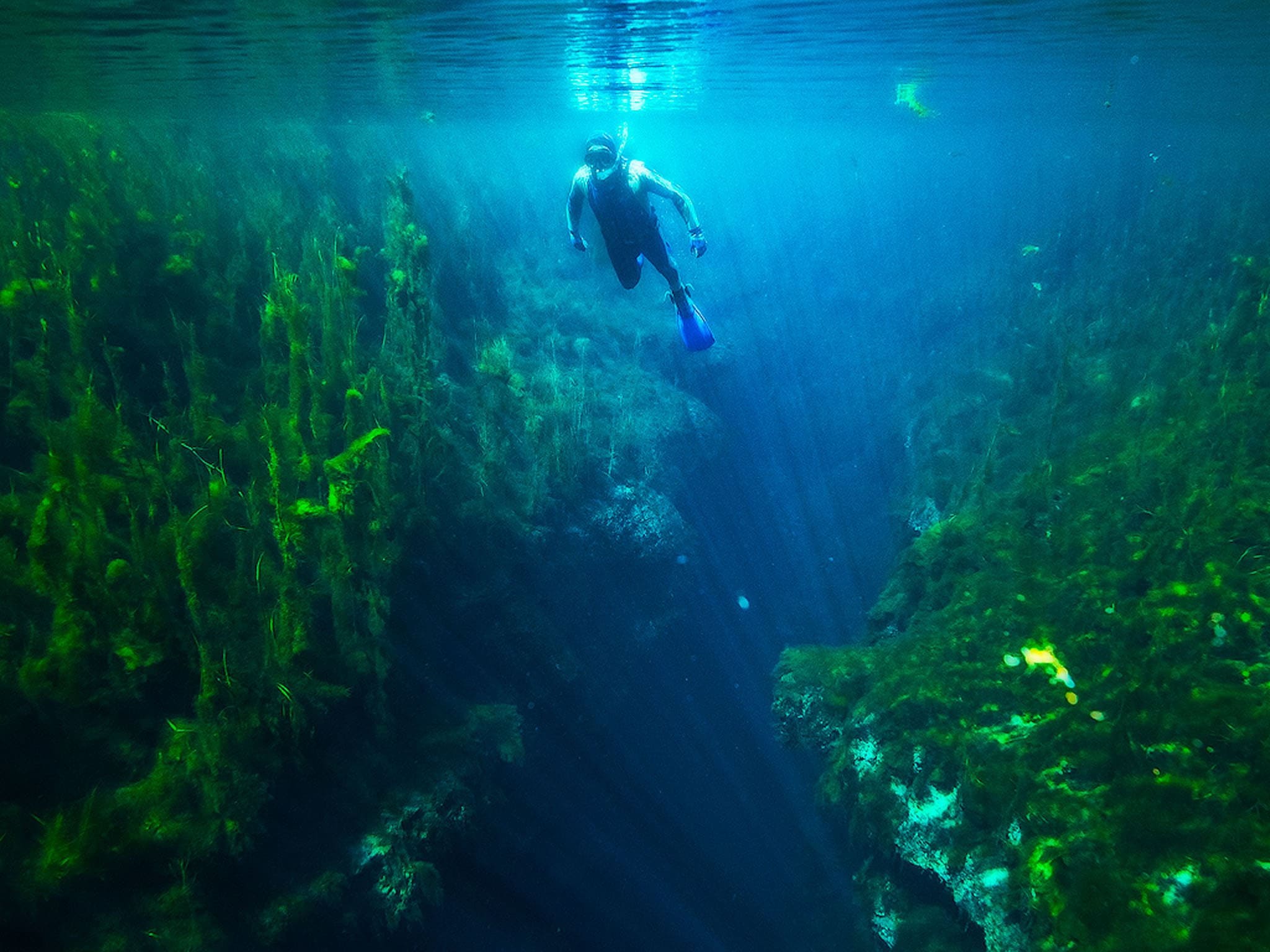
The first thing that registers underwater at Ewens Ponds is the distance you can see. Forty metres of visibility, every plant and fish and grain of sand on the bottom rendered in unfiltered detail, sun-shafts cutting through the freshwater all the way to the limestone basin — Ewens Ponds is the clearest dive in Australia, and possibly the clearest open dive in the world. The water has come out of the limestone aquifer that underlies the South East of South Australia, filtered through hundreds of metres of porous rock, and emerges into three connected sinkhole ponds at a constant fourteen degrees and a constant flow. There is nowhere else like it.
The ponds sit twenty kilometres south of Mount Gambier, in the karst country that defines the volcanic plain stretching from the Coorong to western Victoria. The Mount Gambier region is built on Tertiary limestone, riddled with cave systems and sinkholes — most of them flooded, several of them famous as world-class cave dives. Ewens Ponds is the open-water relative of those caves. The water source is the same regional aquifer; the difference is that Ewens has surfaced as a chain of three open sinkholes rather than remaining underground. The ponds are part of the Ewens Ponds Conservation Park, and all diving is regulated by the South Australian Department for Environment and Water — permits, booked time slots, and strict carrying capacity limits apply. The protections are why the ponds still look the way they do.
The dive itself is a slow drift along the chain of three ponds. Entry is via timber steps into Pond 1 at the upstream end; the route runs through a short connecting channel into Pond 2, then a longer channel into Pond 3, and exits at a wooden ladder at the downstream end. Maximum depth is around ten metres in the central basin of each pond, with the connecting channels between three and five. Bottom time is governed by the time slot rather than air or no-deco limits — most slots are 60 to 90 minutes. The current flow is gentle and downstream, which means the dive runs in one direction; the kit walk back along the bank is the most physically demanding part of the trip.
The marine life at Ewens Ponds is freshwater and almost entirely plant-driven. Beds of long, ribbon-like vallisneria cover the basin floors, swaying in the slow current. Common reed and water milfoil grow along the edges. The fish life is small and quiet — climbing galaxias, smelt, and the rare and protected Glenelg spiny crayfish in deeper crevices. There are no large species; this is not a wildlife dive in the usual sense. The interest is in the landscape itself — the geometry of the limestone basins, the perfect clarity, the play of light through the surface ripples onto the sand at ten metres. Underwater photographers travel for the wide-angle landscape shots, which are unlike anywhere else in Australia.
Conditions at Ewens Ponds are stable to a degree that no other dive site in the country matches. Water temperature is a constant 12 to 16°C year-round; visibility is a constant 30 to 40 metres regardless of season; the flow is constant. A 7mm wetsuit or drysuit is the sensible default — divers consistently underestimate how cold a 14°C dive feels after 60 minutes. There is no current to plan around, no swell, no tide. The only weather variable that affects the dive is heavy rain in the immediate catchment, which can lift sediment from the surface inflow into Pond 1 — but the underground source water keeps the rest of the system clear regardless.
For divers willing to slow down, Ewens Ponds rewards close attention to the limestone walls. The sinkhole geology is visible directly — clean fracture planes, the pale grey of the country rock, occasional small inflow points where aquifer water enters the ponds in slow plumes that distort the light. The deeper crevices in Pond 2 and Pond 3 sometimes hold the spiny crayfish — protected, slow-moving, and rarely seen. The dive is also memorable as a night dive, when a torch turned downward through ten metres of crystal water reaches every corner of the pond floor, and the freshwater fish turn up in numbers they don't show during the day. Night dives, like all Ewens dives, are by booking only.
Ewens Ponds is unlike any other dive in Australia. It is shallow, slow, cold, and entirely freshwater — none of which sounds like the makings of a great dive — but the combination of geological clarity, regulated access, and the unique landscape produces an experience that divers travel from interstate and overseas for. Treated as the geological and ecological dive it is, rather than a wildlife dive, Ewens delivers something that the open ocean simply cannot.
Site Access and Logistics
Ewens Ponds is a regulated shore dive in the Ewens Ponds Conservation Park, off Eight Mile Creek Road, near Port MacDonnell, South Australia. All diving requires a permit booked through the South Australian Department for Environment and Water — drop-in dives are not permitted. Bookings open three months in advance and the popular weekend slots fill within hours of release. Each permit covers a fixed time slot (typically 90 minutes) and a maximum group size; rangers monitor the site and check permits.
Entry is via timber steps into Pond 1 at the car park end of the system. Exit is via a timber ladder at the Pond 3 end, with a 200-metre walk back along the bank trail to the car park. Skill prerequisites are clear: an Open Water certification, drysuit or 7mm exposure protection, and confidence in cold water — Ewens is not a difficult dive but the cold plus the duration plus the regulatory rules add up to a dive that should not be approached casually. First-time divers are strongly advised to dive with a guide who knows the site.
Facilities: Sealed car park, picnic shelters, toilets and information signage at the conservation park. There are no on-site dive services or rinse-down. The closest dive shops are in Mount Gambier, 20 minutes north — Dive Experience and Reef 2 Ridge both run guided Ewens trips and rent the cold-water exposure protection most visiting divers need.
Sources
- South Australian Department for Environment and Water — Ewens Ponds Conservation Park: https://www.parks.sa.gov.au/parks/ewens-ponds-conservation-park - Dive Experience, Mount Gambier: https://www.dive-experience.com.au - Reef 2 Ridge, Mount Gambier: https://www.reef2ridge.com - Cave Divers Association of Australia — South East SA cave and karst diving - South Australian Museum — Glenelg spiny crayfish (Euastacus bispinosus)
Visibility at Ewens Ponds
Visibility at Ewens Ponds typically ranges from 30 to 40 metres, though it shifts with swell, wind and recent rainfall. Spring-Autumn generally offers the best conditions for diving here.