Heron Island
Southern Great Barrier Reef, QLD
Heron Island, Great Barrier Reef
By ScubaDownUnder Team · 2026-07-16
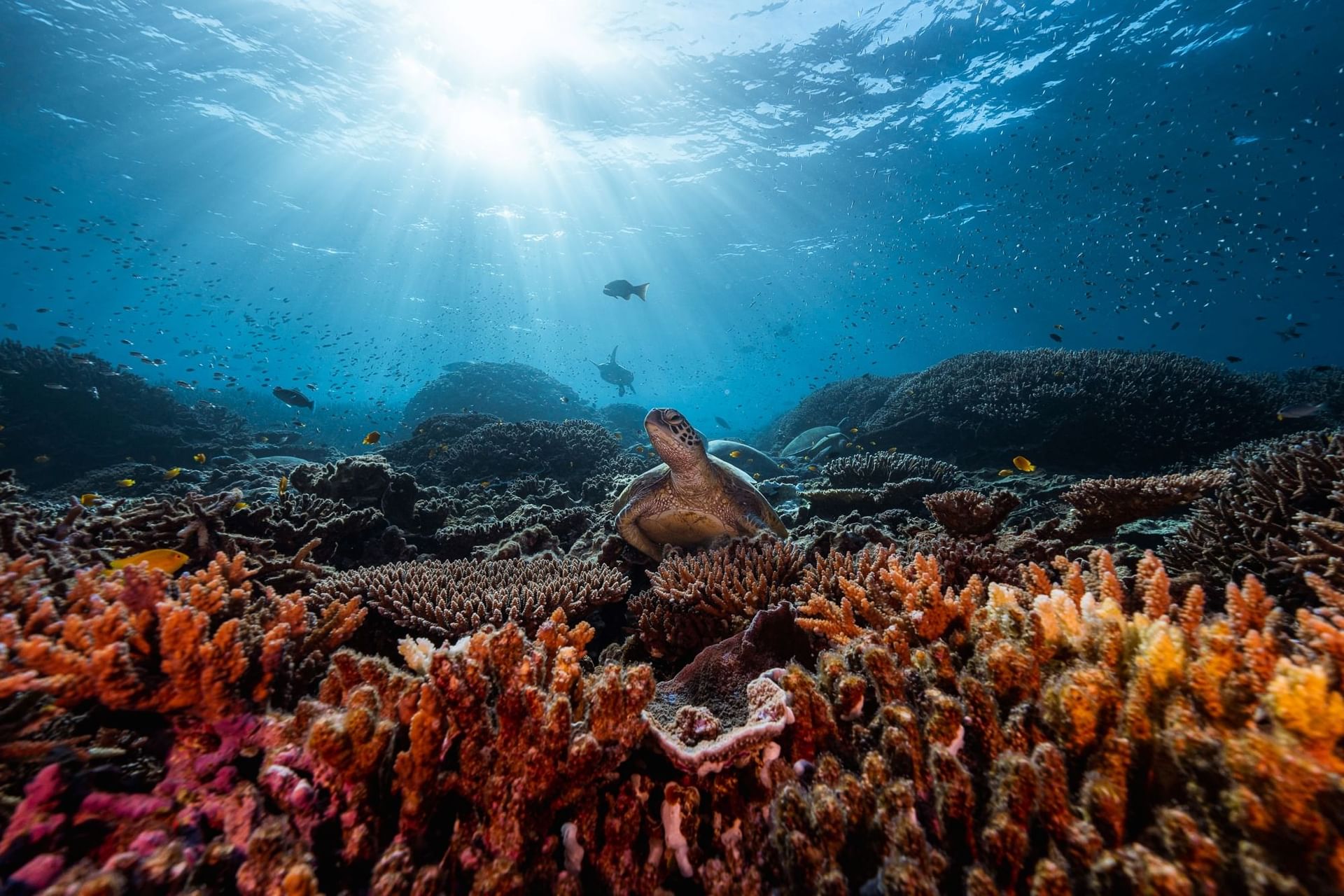
Some islands you have to work to dive. Heron is not one of them. Step off the beach of this coral cay at the southern tip of the Great Barrier Reef and within a short swim you are over living reef, and a few hundred metres out sits the Heron Bommie, a coral tower that Jacques Cousteau named among his ten favourite dives in the world. Turtles cruise the shallows in numbers, reef sharks patrol the slopes, and the water is so full of fish that the reef seems to vibrate. Heron Island is the rare place where world-class Great Barrier Reef diving begins at the waterline.
Heron is a true coral cay, a low island of sand and vegetation sitting right on the reef itself rather than a rocky island near it, about 80 kilometres off Gladstone on the Tropic of Capricorn. It shares its small footprint between a low-key resort and a long-running University of Queensland research station, and the surrounding reef is protected within a national park and a marine park green zone. That combination, a working reef-science island wrapped in protection, has kept the diving exceptional. The island is also one of the most significant green and loggerhead turtle rookeries on the reef, and in summer the beaches fill with nesting females and, later, with hatchlings making their run to the sea.
More than twenty dive sites ring the island, almost all within a short boat ride and several reachable straight from the beach. The reef slopes where most diving happens run from about five to twenty-five metres, gentle enough for newer divers and rich enough to hold the attention of veterans. The undisputed star is Heron Bommie, a large coral head roughly 200 metres off the main beach that rises from around 18 metres to within a few metres of the surface. Encrusted in soft corals, gorgonian fans and crinoids, it works as a magnet for marine life and as a manta cleaning station, and it consistently delivers the kind of dive that lingers in the memory. Other favourites include the coral gardens, the bommie fields and the cleaning stations on the island's southern side, each with its own character.
The biodiversity here is staggering. Something like 60 per cent of the 1,500 fish species and over 70 per cent of the coral species found on the entire Great Barrier Reef occur in the waters around Heron, which means a single dive can feel like swimming through a field guide. Green and loggerhead turtles are everywhere, grazing the reef and resting under ledges, and they nest on the island in summer in numbers that make a turtle encounter all but guaranteed underwater. Whitetip and blacktip reef sharks work the slopes, the odd-looking epaulette shark walks across the shallows on its fins after dark, and reef manta rays visit the cleaning stations, most reliably in the cooler months. Queensland groper, rays and clouds of reef fish fill the bommies, and from June to October humpback whales pass offshore on migration. Few places pack so much life into water this accessible.
Heron offers the clear, warm water the southern reef is known for. Visibility commonly runs from 15 to 30 metres and is at its best between April and November, when the water is clearest and the mantas and whales are most active. Water temperature ranges from around 20°C in winter to 27°C in summer, comfortable in a 3mm to 5mm wetsuit. Most sites are sheltered and gentle, though current can run on Heron Bommie and through the channels on a moving tide, which is also when the cleaning stations are busiest. The shore dives are tide-dependent, since the reef flat dries at low water, so entries and exits are planned around the tide. As a southern cay, Heron has a genuine seasonal rhythm, with winter bringing clear water and big animals and summer bringing warm water and turtle nesting.
Beyond the headline sites, Heron rewards a slow and curious diver. The reef flat and lagoon make superb snorkelling and gentle shore dives, the night dives reveal the epaulette sharks and the reef's other nocturnal life, and the macro photography on the bommies is first rate. Because the island is small and the diving is run by a single operation, the sites are rarely crowded, and a guided dive often feels more like a private tour of the reef. The research station's long presence also means few reefs on the system are as well understood, and divers benefit from decades of accumulated knowledge about where and when to find things.
Heron Island distils the Great Barrier Reef into something a diver can hold. The turtles, the sharks, the manta cleaning stations and the legendary bommie are all here, in clear warm water a short swim or boat ride from the beach, on an island small enough to walk around in an afternoon. It is a place that rewards both the first-time reef diver and the veteran chasing Cousteau's ghost, and it does so without asking for much more than the will to get there.
## Site Access and Logistics
Heron Island is reached from Gladstone, in central Queensland, by a launch transfer of around two hours or a 25-minute helicopter flight, with Gladstone itself served by flights from Brisbane and other capitals. There is no day-trip access and no separate town: the island's resort runs the only diving, with a dive shop, gear hire, courses and guided boat and shore dives, alongside the university research station.
The diving suits a wide range of experience. The sheltered reef slopes and shore sites are comfortable for Open Water divers and snorkellers, while the bommie and the channel sites are better with a little experience reading current, and Advanced Open Water opens up the deeper slopes. A surface marker buoy is standard on boat dives, and because the island is remote with no recompression chamber on site, conservative profiles and sensible surface intervals matter. The reef is a green zone, so divers take only photographs and leave the coral and animals untouched.
All diving is run through the [Heron Island Resort](https://www.heronisland.com/experience/diving) dive operation.
## Sources
- Heron Island Resort, dive the Great Barrier Reef: [https://www.heronisland.com/experience/diving](https://www.heronisland.com/experience/diving) - PADI Blog, Heron Island home to world-class dive sites: [https://blog.padi.com/heron-island-queensland-australia-home-to-world-class-dive-sites/](https://blog.padi.com/heron-island-queensland-australia-home-to-world-class-dive-sites/) - Diveplanit, Heron Bommie: [https://www.diveplanit.com/dive-site/heron-bommie/](https://www.diveplanit.com/dive-site/heron-bommie/) - Coral Centre of Excellence, Heron Island diving guide: [https://www.coralcoe.org.au/heron-island-diving-guide.html](https://www.coralcoe.org.au/heron-island-diving-guide.html) - SLO Active, scuba and free diving on Heron Island: [https://sloactive.com/diving-heron-island-great-barrier-reef/](https://sloactive.com/diving-heron-island-great-barrier-reef/)
Visibility at Heron Island
Visibility at Heron Island typically ranges from 15 to 30 metres, though it shifts with swell, wind and recent rainfall. Year-round; turtle nesting November to March generally offers the best conditions for diving here.