Port Hughes Barge Wreck
Yorke Peninsula, SA
Port Hughes Barge Wreck Dive Site Guide | Yorke Peninsula, SA, Australia
By ScubaDownUnder Team · 2025-10-27
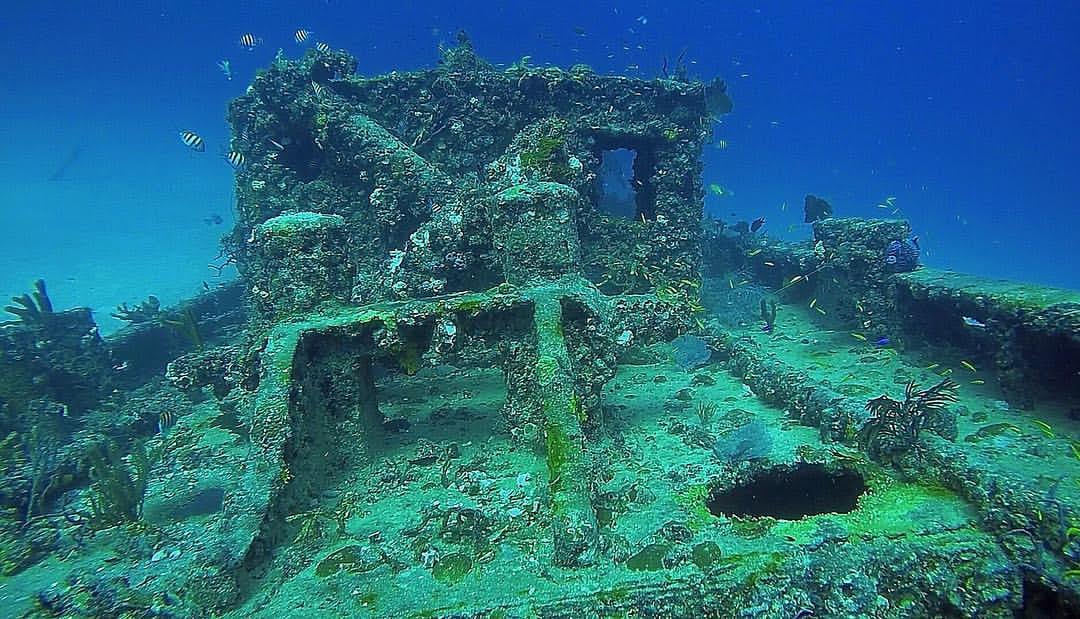
A rust-stained rectangle materialises out of the green distance, squat and low against the pale sand, its outline softened by decades of encrusting growth. A leatherjacket fins lazily across the deck plating, disinterested. Seastars splay across the flat upper surface in colours that seem too bright for the depth, orange and purple and pale yellow draped over steel that has long stopped looking like steel. Inside the open hold, shadows move that resolve, with patience, into the mottled sleeve of a blue-ringed octopus moving deeper into the recess. This is a small wreck, but it sits in a bay otherwise devoid of structure, and what it concentrates in its modest footprint is remarkable.
The Port Hughes barge rests on the sandy floor of Port Hughes Bay on the northern Yorke Peninsula, approximately 165 kilometres from Adelaide, in the shallow sheltered waters of the Copper Coast. The Copper Coast region, which takes its name from the copper mining boom of the 1860s that built Kadina, Wallaroo, and Moonta, sits on Narungga country, and the coast itself carries a documented maritime history of copper shipping through the nineteenth century. The origins of the vessel are not fully documented. It appears to have been a working harbour barge from the twentieth century, of the flat-bottomed type used historically for short coastal transport, loading and unloading cargo in waters too shallow for larger vessels. Its placement on the sea floor was unintentional, but the outcome has been a decades-long experiment in artificial reef colonisation in a bay that otherwise offers only seagrass and open sand. The wreck now functions essentially as an unplanned artificial reef, and its biological productivity per square metre exceeds the surrounding seagrass by a clear margin.
The wreck sits in 8 to 10 metres of water approximately 150 to 200 metres offshore of the Port Hughes foreshore, south of the main jetty. The swim out from the beach covers seagrass, sand flats, and the occasional limestone outcrop before the barge emerges from the distance as a dark rectangular shape on a pale bottom. The structure is a small, flat-bottomed working vessel, rust-coloured and softened by encrusting growth, its outline broken by the rounded shapes of large sponges that have consumed the original hard edges. The hull plates have been colonised over decades by sponges, ascidians, and coralline algae that transform the steel into reef-like substrate. Sea tulips grow in clusters along the deck edges. The open interior spaces provide refuge that the surrounding sand flats cannot offer, and the biological density inside the wreck is several times that of the adjacent bottom.
Weedy sea dragons appear around the perimeter where the wreck meets the seagrass edge, feeding on mysid shrimp in the shallow zone where structure and weed converge. The hunting behaviour, a drifting approach followed by a precise lunge, is easier to observe at the barge than at classic jetty sites because the open sand floor around the wreck provides unobstructed sight lines. Giant cuttlefish hover above the hull in the characteristic mid-water position of animals surveying territory, and respond to divers with cycling colour displays when approached slowly. Leatherjackets, including several species of the horseshoe leatherjacket group, occupy the interior recesses with the proprietary confidence of fish that rarely leave. Southern blue-ringed octopus inhabit the confined darker spaces inside the hull, which are the animal's preferred microhabitat and the reason divers do not enter the interior cavities even where access appears possible. Schools of bullseyes pulse in the shadow of the overhanging plates, and sweeps patrol the water immediately above the structure. Nudibranchs, including dendrodoris and aphelodoris species, work the encrusted hull through the cooler months from April to October. At night, pyjama squid emerge onto the surrounding sand.
Visibility at the barge runs between 4 and 14 metres, with 6 to 10 metres typical on settled days. The sheltered northern aspect of the bay gives reasonable protection from prevailing southerly weather, and conditions degrade mainly during strong northerly and northwesterly winds. Water temperature follows the upper gulf pattern, 13 to 14 degrees C in August and up to 21 degrees C in February. A 7mm wetsuit is sensible through winter and a 5mm workable from December to April. Current is negligible at the site and depth. Swell can affect the swim out from the beach during onshore weather, making the return kick more effortful than the outbound leg. The seabed around the wreck is silty and disturbed easily, so approaching the barge from above rather than alongside helps preserve visibility. The best diving runs April through October when winds tend to settle and the invertebrate community is at peak activity.
Repeat divers work the barge in sections rather than circumnavigating in a single sweep. The interior recesses, observed from the outside with a torch, hold the densest populations of small invertebrates, crustaceans, and the resident blue-ringed octopus. The exterior hull plates hold nudibranch assemblages that reward close inspection, particularly along the horizontal surfaces where encrusting growth is thickest. The perimeter sand zone, where structure meets seagrass, is the productive edge for sea dragons, small rays, and the occasional short-headed seahorse. Night diving transforms the site entirely, with pyjama squid and decorator crabs emerging and the nudibranch community at its most visible.
The swim out from the beach is a dive experience in its own right. The sand flats between the shore and the barge support a small-scale community of sand gobies, flounder, and occasional rays that most divers transit too quickly to notice. A slow outbound swim, with attention to the subtle disturbances in the sand that indicate buried life, frequently produces sightings of partially buried stingarees and the occasional southern eagle ray resting on the bottom. The return kick back to shore, particularly on an afternoon dive with the light fading, brings bullseye schools together into coordinated movement patterns worth pausing to observe. The overall experience, including the transit legs, makes the dive feel more substantial than the modest physical size of the wreck itself would suggest.
The combination of the barge and the nearby Port Hughes Jetty gives the bay a natural two-site progression, with the jetty offering a classic pylon dive profile and the barge providing a focused reef-like experience on an isolated structure. Divers working their way through the Copper Coast typically combine both into a single day with an appropriate surface interval. The 200-metre distance between the two sites can be swum at the surface on a calm day, turning the pair into a single extended out-and-back navigation exercise, though most divers prefer to exit and reset between the two.
The Port Hughes barge is not a wreck in the dramatic sense. There is no tragedy attached, no legend, no deep water to navigate. There is only a small abandoned vessel on a sandy bottom, colonised by the patient accumulation of decades, and the concentrated life that finds its structure worth inhabiting. For divers who have learned to see at the scale the barge offers, a dive here delivers more per square metre than almost anywhere else in the bay.
Site Access and Logistics
The Port Hughes barge is accessed by shore entry from the Port Hughes foreshore, approximately 165 kilometres from Adelaide via the Yorke Peninsula Highway through Kadina. Parking is free at the main foreshore car park on The Esplanade, with toilets, rinse facilities, and picnic shelters at the reserve. The barge sits approximately 150 to 200 metres from the beach, south of the main Port Hughes jetty. A compass bearing from a known land reference, or a guided entry with a local operator, is helpful on a first visit. Surface swim out, descend in 4 to 6 metres, and navigate to the wreck along the seagrass edge. Open Water certification is appropriate, with sound navigation skills and comfortable out-and-back swimming essential given there is no structural reference on the sand flats between beach and wreck. Tank fills are available from Kadina (approximately 15 km north). The Dive Shack in Adelaide (https://thediveshack.com.au) offers guided Yorke Peninsula diving and can coordinate barge and jetty combined days. The site pairs naturally with Port Hughes Jetty for a two-dive morning.
Sources
- The Dive Shack, Local Dive Sites Yorke Peninsula, https://thediveshack.com.au/dive-sites/local-dive-sites-yorke-peninsula/ - Scuba Divers Federation of South Australia, Yorke Peninsula, https://sdfsa.net/sa-dive-sites/yorke-peninsula/ - Visit Copper Coast, Port Hughes, https://visitcoppercoast.com.au/port-hughes - Divernet, Port Hughes Jetty Dive, https://divernet.com/world-dives/australia-oceania/port-hughes-jetty-dive-site-south-australia/ - Atlas of Living Australia, Southern blue-ringed octopus (Hapalochlaena maculosa) distribution
Visibility at Port Hughes Barge Wreck
Visibility at Port Hughes Barge Wreck typically ranges from 10 to 15 metres, though it shifts with swell, wind and recent rainfall. October-April generally offers the best conditions for diving here.