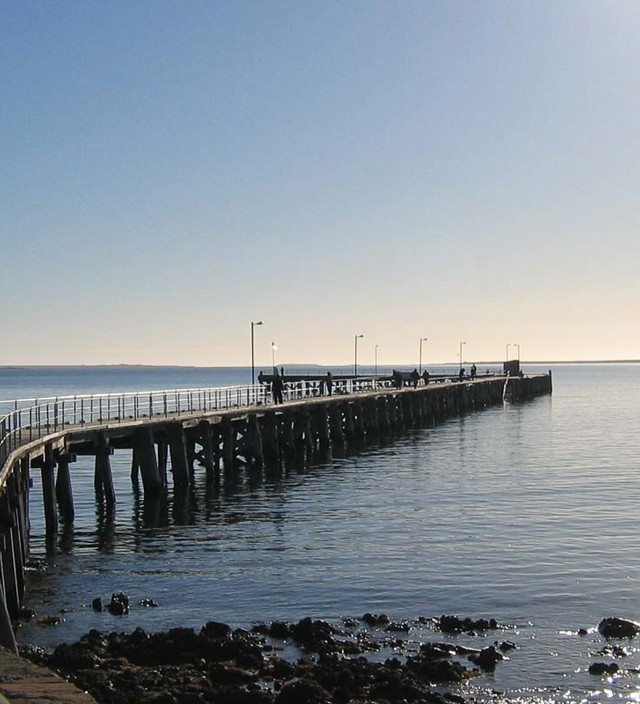
Port Victoria Jetty
Yorke Peninsula, SA
Port Victoria Jetty Dive Site Guide | Yorke Peninsula, SA, Australia
By ScubaDownUnder Team · 2025-09-12
A westerly swell carries across Spencer Gulf on most mornings at Port Victoria, and divers watch the water before committing gear. On a settled day the surface goes glassy and the pylons beneath become clearly visible from the jetty deck, seagrass patches striping the sand in dark-green bands. Descending beside the first pylon, the water resolves into 10 metres of clean clarity, the pylon surfaces dense with orange sponge and white ascidians, and a weedy sea dragon hangs among the ribbon weed exactly where the jetty regulars always say it hangs. The wind may return in the afternoon. The dive works because the timing worked. This is the essential character of the western Yorke coast, where the gulf exposure demands patience and rewards it.
Port Victoria sits on the western shore of Yorke Peninsula looking out across Spencer Gulf, approximately 190 kilometres from Adelaide via the Yorke Peninsula Highway. The Narungga people are the traditional owners of Yorke Peninsula, and the peninsula's western coast retains significant cultural sites documenting their long association with the country and the gulf. The town carries a specific place in Australian maritime history as one of the last ports in the world to handle square-rigged sailing grain ships, the "windjammers" of the early twentieth century. Through the 1920s and 1930s, ships like Herzogin Cecilie, Pamir, and Passat loaded wheat from ketches that shuttled grain from coastal storage sites, and the annual Grain Race from Port Victoria to Europe became one of the final acts of commercial sail anywhere in the world. The final race year, 1949, saw four surviving windjammers clear Port Victoria for the long passage east around Cape Horn to European ports. The Port Victoria Maritime Museum, housed in the former harbour master's office on the foreshore, documents this history in exceptional detail and is worth an hour on any dive day. Ballast stones from the era of sail can still be found on the sea floor in the vicinity of the old jetty alignments.
The dive environment at Port Victoria reflects the western gulf aspect in both its visual character and its exposure profile. The jetty, now purely recreational after the cessation of commercial operations, extends into 6 to 8 metres of water at the outer pylons, with depth increasing gradually from the entry. Below the decking, the bottom alternates between fine sand and extensive seagrass beds that run well beyond the structure on both sides. The pylons carry the encrusting community of a long-established timber jetty, sponges in orange and red, ascidian colonies, and hydroid growth along the shadowed undersides. Schools of old wives pulse in the shadow of the decking, and magpie perch hold station at the pylon junctions. The sand flats to the north of the jetty carry scattered limestone rubble and occasional small ledges that hold the reef fish component of the site. The limestone outcrops deserve exploration in their own right on longer dives, with small cracks and overhangs supporting a slightly different assemblage from the pylon structure itself.
The marine life at Port Victoria delivers the characteristic western gulf assemblage, with the water clarity on good days giving the site a visual quality that the more turbid upper gulf locations cannot match. Weedy sea dragons are the reliable headline, present throughout the pylon zone and the adjacent seagrass across the year. The western gulf water clarity, when conditions are settled, makes searching easier than at the muddier upper gulf sites. Giant cuttlefish are year-round residents of the water column under the structure, with winter breeding displays from June through August drawing competitive males into close range. Short-headed seahorses wrap their tails around individual seagrass blades in the denser patches. Cowfish, the boxy ornate cowfish with distinctive spot patterns, appear in moderate numbers through the warmer months. The pylon surfaces support a diverse nudibranch community from April through October. Schooling sweep patrol the structure at mid-water. Blue-ringed octopus live in the shell rubble and any available small-structure hollows. Occasional sightings of leafy sea dragons in the outer seagrass reward patient searching.
Visibility at Port Victoria runs between 4 and 14 metres, with 6 to 10 metres typical on settled days and exceptional clarity reaching 12 to 14 metres during extended calm periods. The Spencer Gulf exposure is the primary limiting factor, with westerly winds creating chop and reducing clarity noticeably within hours. Easterly weather, blocked by the peninsula landmass, has little effect on the site and produces the best diving windows. Water temperature cycles from 13 to 14 degrees C in August up to 21 degrees C in February. A 7mm wetsuit is sensible through winter. Current is negligible inside the jetty footprint. The primary planning consideration is wind timing. Strong westerly winds make the site uncomfortable and reduce visibility to the lower end of the range, and a sheltered eastern-shore backup site should be planned when westerly weather is forecast. Best conditions run April through October.
Repeat divers work Port Victoria for its combination of sea dragon reliability and the visual quality that clear gulf water delivers. The western side of the jetty, more protected on easterly days, holds the densest pylon encrusting growth and the most reliable sea dragon sightings. The outer seagrass beyond the structure produces less common encounters, including the leafy sea dragon and occasional cowfish in numbers. The sand flats and limestone rubble to the north hold reef fish species and make a worthwhile extension for divers with gas and time. The Maritime Museum on the foreshore, open most days with modest admission, provides historical context that transforms the jetty from a generic dive to a site with documented character.
The site also serves as a natural hub for exploration of nearby offshore features accessible by small boat. The Investigator Strait and the scattered islands off the west coast, including Wardang Island a short distance offshore, hold a series of historic wrecks from the era of the windjammers and earlier coastal shipping, and Port Victoria is the logical shore base for any attempt to dive those waters. For shore-diving visitors, the jetty alone justifies the visit, but divers with boat access find the site a useful starting point for a broader west-coast Yorke program.
Port Victoria is a site with a particular quality, partly underwater, partly above. The sailing-ship history visible in the museum and in the old jetty alignments lends the dive a depth that most jetties lack. On a still easterly morning with clean water beneath the structure and the sea dragon drifting in its familiar seagrass, the site delivers a version of Yorke Peninsula diving that rewards both preparation and curiosity about the country behind the water.
Site Access and Logistics
Port Victoria is approximately 190 kilometres from Adelaide via the Yorke Peninsula Highway and Cross Roads. Entry is a shore dive from the steps on the northern side of the jetty, accessed directly from the Port Victoria foreshore car park on The Esplanade. Parking is free with public toilets and a rinse tap at the foreshore reserve. The Port Victoria Maritime Museum sits on the foreshore adjacent to the jetty. The township offers a general store, cafe, caravan park, and hotel. Air fills are available at the Port Victoria Kiosk on The Esplanade (phone 08 8834 2235), a useful local resource for divers arriving without topped tanks. Open Water certification is appropriate. Check wind forecasts carefully; westerly winds make the site uncomfortable and a sheltered eastern-shore backup is sensible. The Dive Shack in Adelaide (https://thediveshack.com.au) operates mobile dive services to Yorke Peninsula sites including Port Victoria. Note that the jetty has suffered storm damage in recent years; confirm current access arrangements with local sources before travel. The site combines naturally with Point Turton or Edithburgh for a full peninsula day.
Sources
- The Dive Shack, Local Dive Sites Yorke Peninsula, https://thediveshack.com.au/dive-sites/local-dive-sites-yorke-peninsula/ - Scuba Divers Federation of South Australia, Yorke Peninsula, https://sdfsa.net/sa-dive-sites/yorke-peninsula/ - Visit Yorke Peninsula, Diving and Snorkelling, https://www.visityorkepeninsula.com.au/diving-and-snorkeling - Port Victoria Maritime Museum, https://www.nationaltrust.org.au/places/port-victoria-maritime-museum/ - Atlas of Living Australia, Weedy sea dragon (Phyllopteryx taeniolatus) distribution
Visibility at Port Victoria Jetty
Visibility at Port Victoria Jetty typically ranges from 5 to 8 metres, though it shifts with swell, wind and recent rainfall. Spring-Autumn generally offers the best conditions for diving here.
Right now: approximately 7 m, 98% confidence (updated 10:37 AEDT).
View the live forecast and 7-day outlook for Port Victoria Jetty →