Discover Amazing Dive Sites
Explore Australia's premier diving destinations with detailed site information, marine life guides, and essential safety data.

Agincourt Reef
Port Douglas, QLD
A ribbon reef on the outer edge of the Great Barrier Reef off Port Douglas, world-class coral diving reachable as a day trip.
View dive site →
Albany Artificial Reef
Albany, WA
Recfishwest habitat reef in King George Sound: concrete modules in 8-18 m, sheltered conditions, schooling pelagics and slow encrusting growth.
View dive site →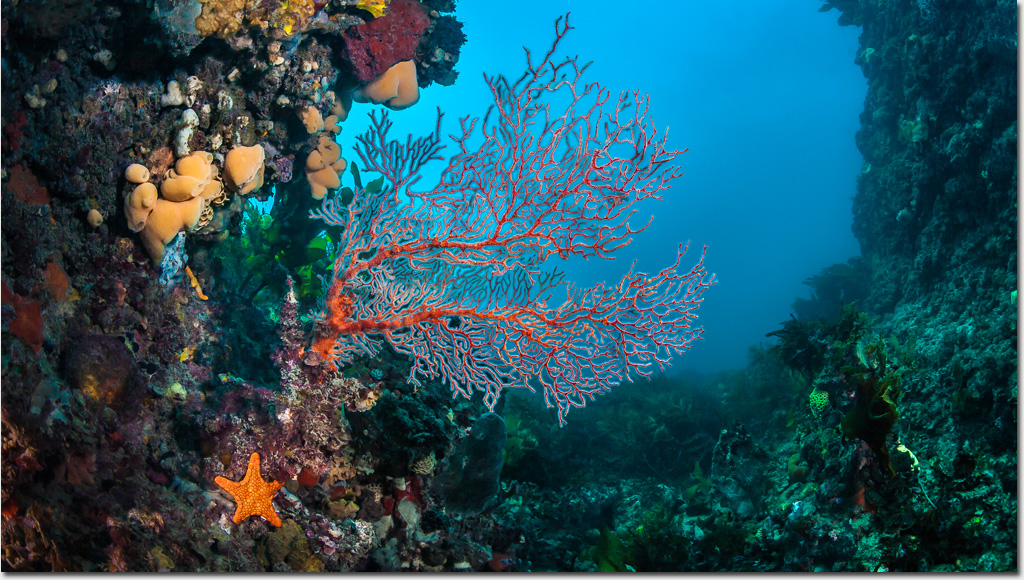
Aldinga Drop-off
Fleurieu Peninsula, SA
Aldinga Reef (Aldinga Drop-off) on South Australia's Fleurieu Peninsula: vertical reef walls, temperate marine life, 40 minutes from Adelaide.
View dive site →
Amity Point
North Stradbroke Island, QLD
Shore dive at the north-western tip of North Stradbroke Island: rocky reef, seawalls and dumped car bodies beside Amity jetty at 5 to 15 m, with wobbegongs, morays, stonefish and…
View dive site →
Angourie Back Beach
Yamba, NSW
Shore dive with basalt rock platforms and fish life.
View dive site →Ardrossan Barge
Yorke Peninsula, SA
Ardrossan Barge is a scuttled hopper barge resting upright in twenty metres of Gulf St Vincent water, one nautical mile south of the protected Zanoni wreck and seventeen kilometre…
View dive site →
Arno Bay Jetty
Eyre Peninsula, SA
Sheltered jetty good for training and macro life.
View dive site →
Baird Bay Sea Lion Swim
West Coast, SA
Small-group boat tours from Baird Bay take snorkellers to swim with wild Australian sea lions off Jones Island and with dolphins in the bay, October to April.
View dive site →
Bait Reef (Stepping Stones)
Whitsundays, QLD
A row of 18 or more flat-topped coral pinnacles on the south-western edge of Bait Reef, an outer reef about 65 km north-east of Airlie Beach; now a GBRMPA rehabilitation site afte…
View dive site →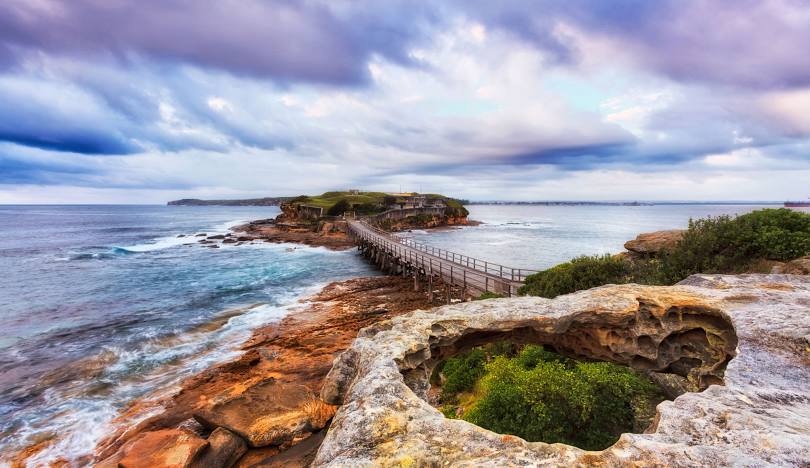
Bare Island
La Perouse, NSW
Classic Sydney shore dive packed with marine life and heritage charm
View dive site →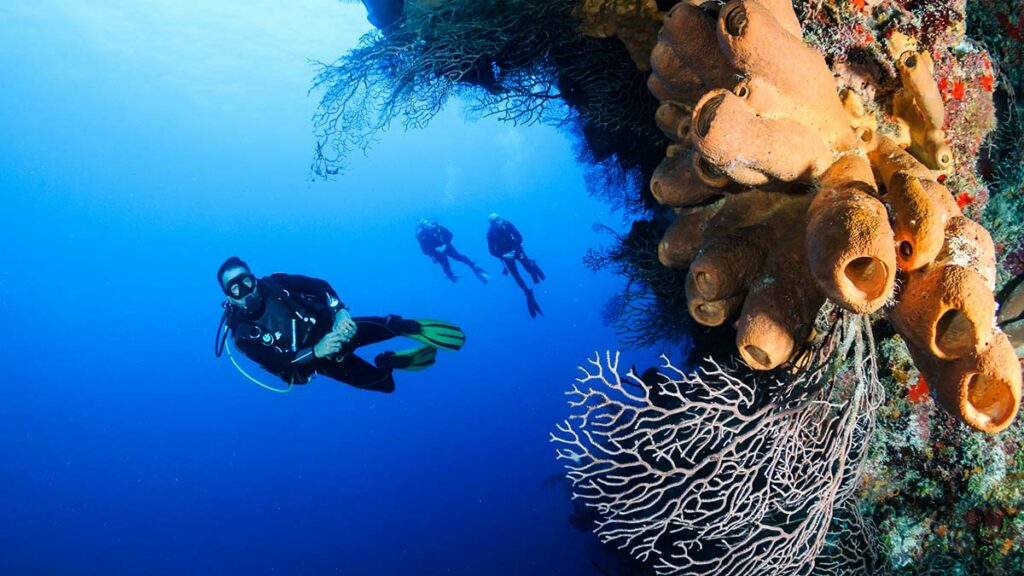
Bare Island Deep Wall
La Perouse, NSW
Sponge-covered drop-off off Bare Island's western point where the reef meets sand at 18-19 m, home to pygmy pipehorses. Island closed for bridge works until about late 2027.
View dive site →
Barolin Rocks
Bundaberg, QLD
A shore dive off the rocks at Coral Cove near Bundaberg, with soft coral gardens from 1 to about 9 m, prolific nudibranchs, turtles, sea snakes and an occasional dugong.
View dive site →
Bass and Flinders Point
Cronulla, NSW
Shallow shore dive at the southern tip of Cronulla where Port Hacking meets the sea: a kelp-fringed reef edge at 3 to 7 metres, known for baby Port Jackson sharks each October.
View dive site →
Bass Point
Shellharbour, NSW
Exposed headland with multiple dive spots offering ledges, overhangs and abundant marine life.
View dive site →
Bass Point Gravel Loader
Shellharbour, NSW
Sheltered shore dive under the disused Bass Point gravel loader, about 150 m long: pylons, old loader wreckage, an anchor and chain, tyres and gravel piles in 2 to 12 m, with cutt…
View dive site →
Bass Point Island (Lous Reef)
Shellharbour, NSW
Boat dive on Bass Point Island off the eastern tip of Bass Point Reserve. North side: sand at 26 m and a sponge and gorgonian slope to walls and 10 to 12 m cracks. South side: ste…
View dive site →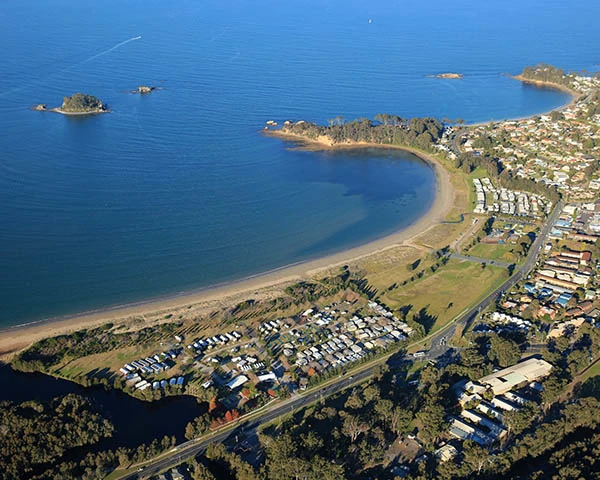
Bateman Bay
Exmouth, WA
The most reliable manta ray cleaning station on the Ningaloo coast, sitting inside a protected bay on the eastern side of the North West Cape with year-round resident mantas.
View dive site →
Bird Rock, Port Macquarie
Port Macquarie, NSW
Easy boat dive circling a small rock that rises more than 7 metres above the sea off Port Macquarie, with gutters and rocky habitat down to about 13 metres.
View dive site →
Black Reef (Mackay)
GBR offshore Mackay, QLD
A liveaboard-access reef on the southern Great Barrier Reef, 110 km offshore from Mackay: turtles, reef sharks and coral trout in 12-25 m of clear water.
View dive site →
Black Rocks, Smoky Cape
South West Rocks, NSW
Two bare rocks off the beach south of Smoky Cape Lighthouse shelter a plate coral garden in 6 to 20 m, with resident turtles and egg cowries; usually dived as separate north and s…
View dive site →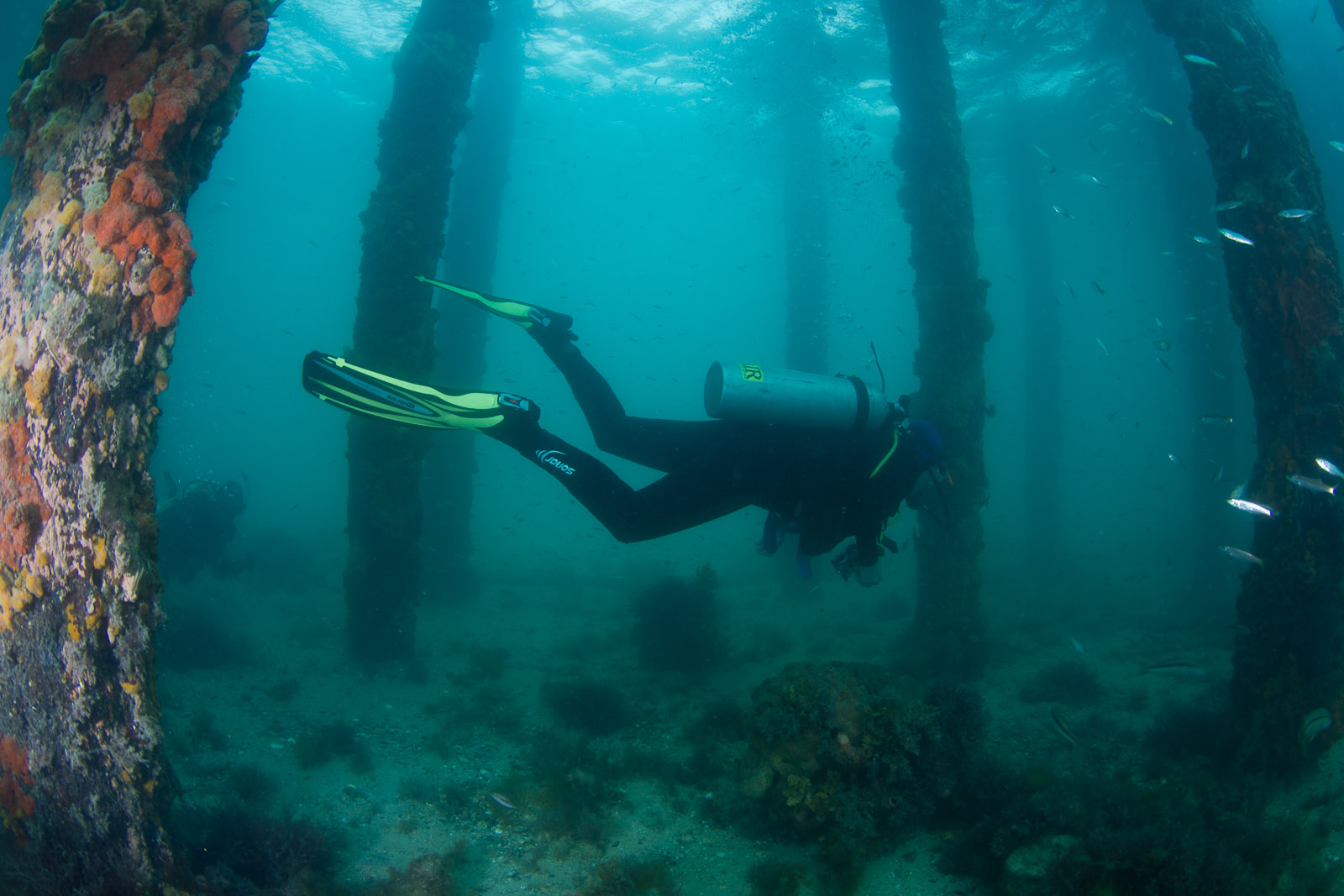
Blairgowrie Pier
Mornington Peninsula, VIC
Mornington Peninsula shore dive that is one of the most consistent weedy seadragon sites in Australia, with dense macro life along and beneath the marina pylons.
View dive site →
Blizzard Ridge
Ningaloo Reef, WA
Dramatic coral slopes and drift diving perfection on the outer Ningaloo. Located on the seaward edge of Ningaloo Reef, Blizzard Ridge is a dive site that lives up to its name with…
View dive site →
Blue Holes
Kalbarri, WA
Tide-fed rock pools packed with marine life in a shallow reef sanctuary
View dive site →
Bluefish Point
North Head, NSW
Deep site with drop-offs and large schools of pelagic fish.
View dive site →
Bondi Wall
Bondi, NSW
Boat dive off North Bondi, 500 to 600 m north of Ben Buckler Point: a north-south rock wall dropping from 21 to 27 m off a 20 m reef, with good sponges and nudibranchs but modest…
View dive site →
Bowen Island
Jervis Bay, NSW
Boat dive off the northern end of Bowen Island at the mouth of Jervis Bay: boulders, caves and swim-throughs from 5 to 28 metres, with seadragons, sheltered in southerly weather.
View dive site →
Boyinaboat Reef
Perth, WA
Boyinaboat Reef near Hillarys Boat Harbour offers beginner‑friendly diving with shallow limestone ledges, swim‑throughs, and colourful marine life including cuttlefish, rays, octo…
View dive site →
British Motorist
Darwin, NT
A 1924 tanker bombed while refuelling USS Peary in the 1942 Darwin raid; refloated by salvors in 1959, she left an 18m debris field with live shells.
View dive site →
Broughton Island
Port Stephens, NSW
An island off Port Stephens with one of the most reliable grey nurse shark dives in NSW and the dramatic swim through the Looking Glass.
View dive site →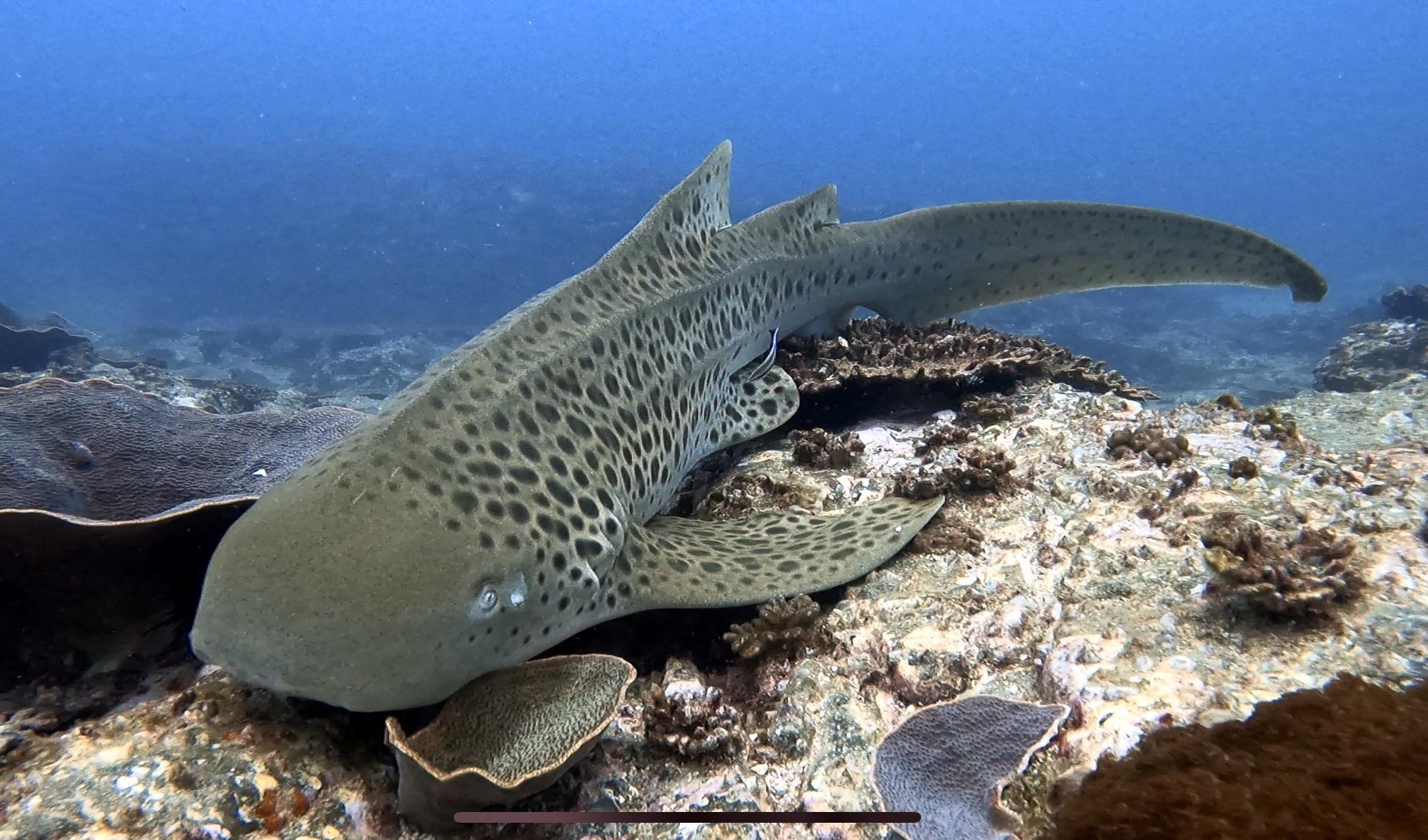
Buchanan's Wall - South Solitary
Coffs Harbour, NSW
Buchanan’s Wall at South Solitary Island is a dazzling granite drop-off alive with soft coral, grey nurse sharks, turtles and macro life a true showcase of NSW’s underwater biodiv…
View dive site →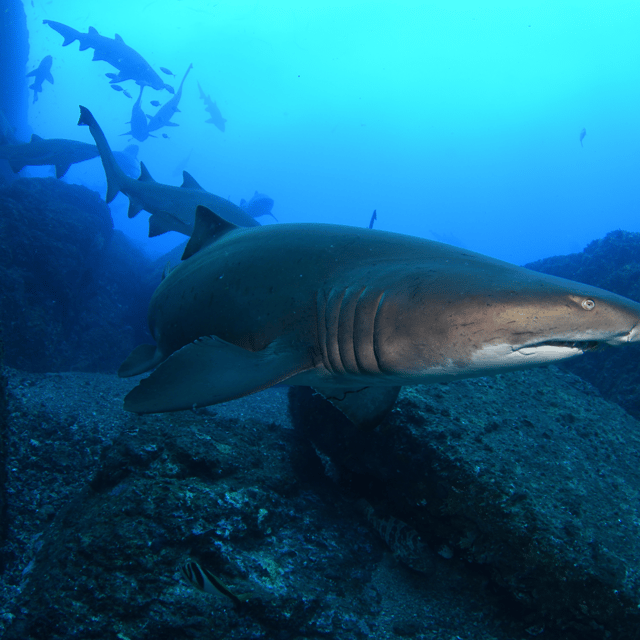
Bushrangers Bay
Shellharbour, NSW
A Bass Point shore dive in the Bushrangers Bay Aquatic Reserve: a resident grey nurse shark aggregation cruises the gutters in 8-15 m of Illawarra water.
View dive site →
Busselton Jetty
Busselton, WA
The far end of the 1.8km Busselton Jetty: encrusted piles and a 13 piece Underwater Sculpture Park in 7 to 9m, inside a no fishing sanctuary. Dive pass and waiver required.
View dive site →
Cabbage Tree Bay, Norah Head
Norah Head, NSW
Beginner shore dive in the small harbour at Norah Head: enter beside the boat ramp, cross the sandy bay and follow the reef wall on the right out and back, from 3 m to about 14 m…
View dive site →Cabbage Tree Island
Port Stephens, NSW
Easy boat dive in 5 to 15 m on the western side of the largest island at the Port Stephens entrance, with the broken-up wreck of a fishing trawler; best near high tide.
View dive site →
Camp Cove
Watsons Bay, NSW
Sheltered site with seagrass beds and sponge gardens, ideal for night dives.
View dive site →
Cape Banks Caverns
Botany Bay, NSW
Explore swim-throughs and sponge-covered tunnels in Sydney's wildest bay
View dive site →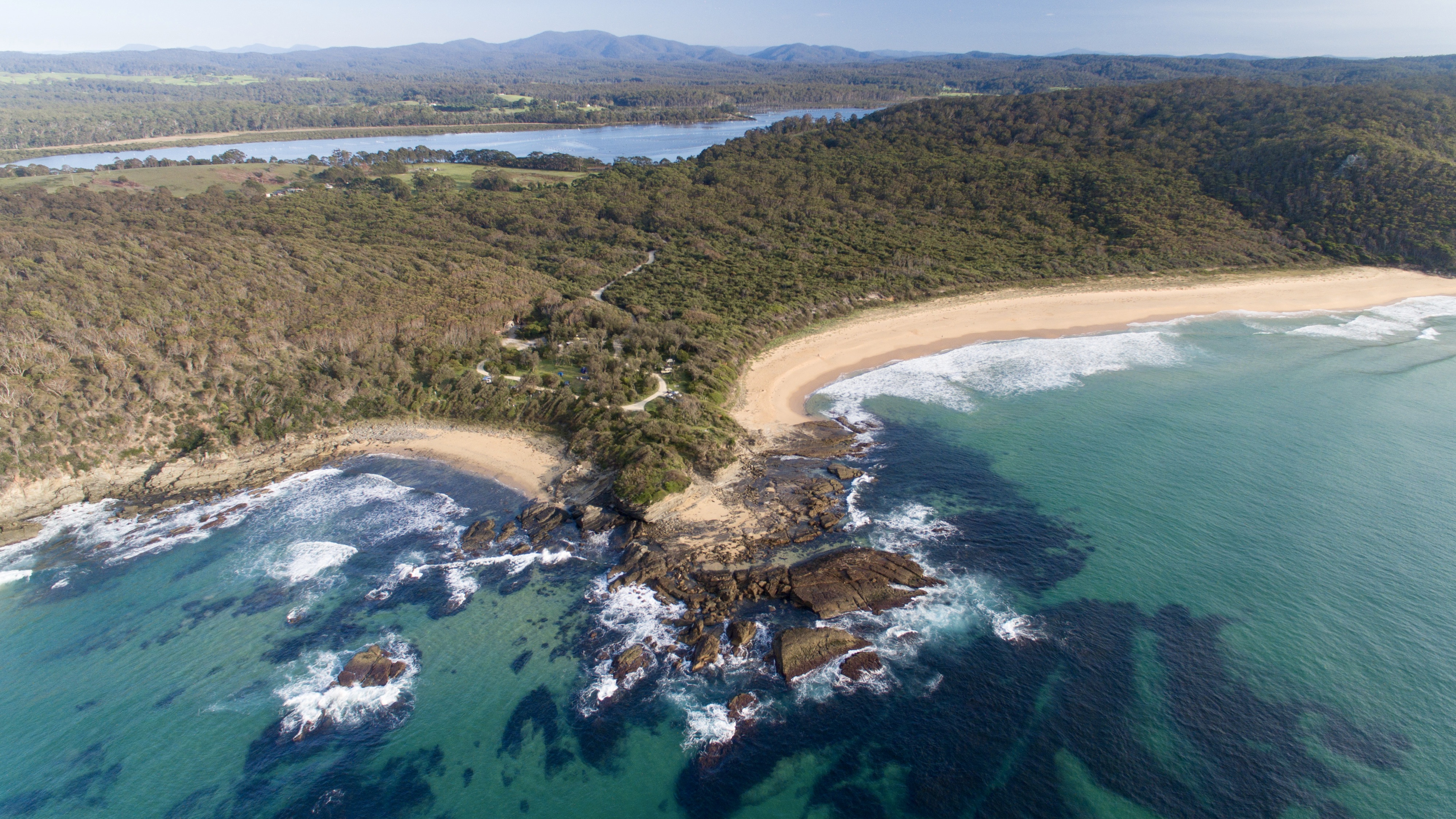
Cape Donington
Eyre Peninsula, SA
Cape Donington sits at the most northerly part of the Jussieu Peninsula on the east coast of the Eyre Peninsula in South Australia, approximately 10 km east of Port Lincoln.
View dive site →
Cape Hauy Seals
Tasman Peninsula, TAS
Shallow kelp dive at the gaps between Cape Hauy and its islands, beside the Candlestick and Totem Pole, where 30 to 50 New Zealand and Australian fur seals haul out year round and…
View dive site →Cape Jervis Jetty
Fleurieu Peninsula, SA
Cape Jervis Jetty offers a high-octane macro wonderland where nutrient-rich currents fuel vibrant sponge gardens, providing a rugged, tide-swept sanctuary for elusive Leafy Seadra…
View dive site →
Cape Spencer Reef
Yorke Peninsula, SA
A thrilling wall dive teeming with life and Southern Ocean drama
View dive site →
Cherubs Cave
Moreton Island, QLD
A hidden cave system off Moreton Island, featuring a large circular cave with multiple exits.
View dive site →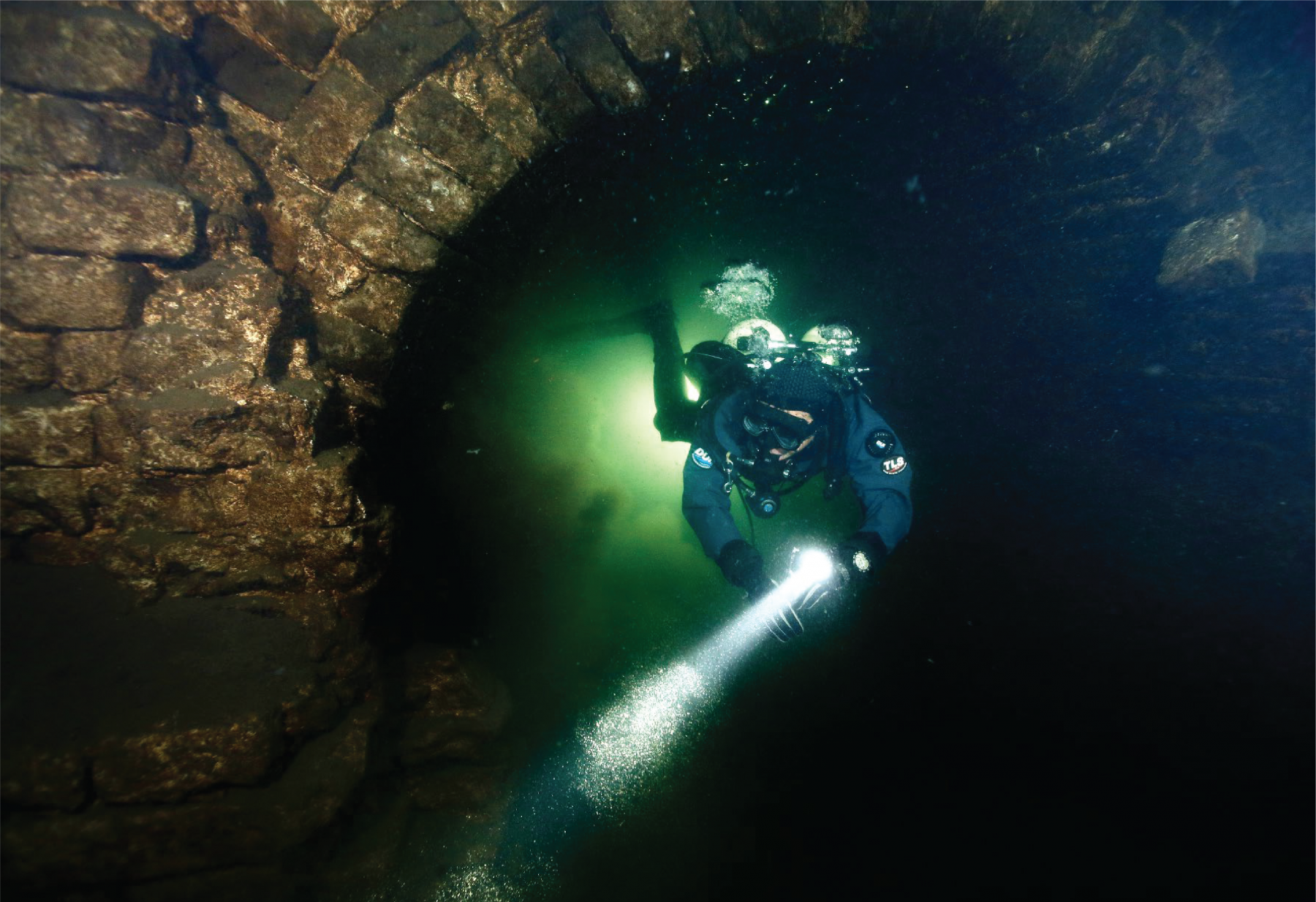
China Wall
Moreton Island, QLD
A dive site featuring kelp beds and unique rock formations on the eastern side of Moreton Island.
View dive site →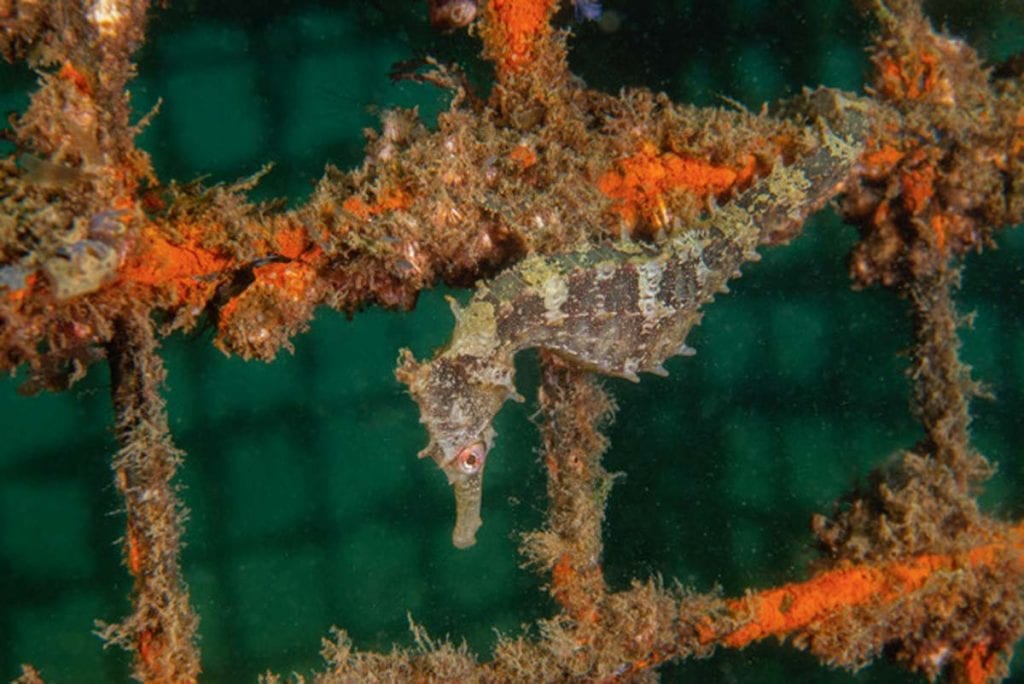
Chowder Bay
Mosman, NSW
A sheltered Sydney Harbour shore dive at Clifton Gardens: pygmy pipehorses, octopus and weedy pylons in 2-6 metres of training-friendly water.
View dive site →
Christmas Island
Christmas Island, Indian Ocean
An oceanic island in the Indian Ocean where coral walls plunge thousands of metres just off the shore and whale sharks visit each wet season.
View dive site →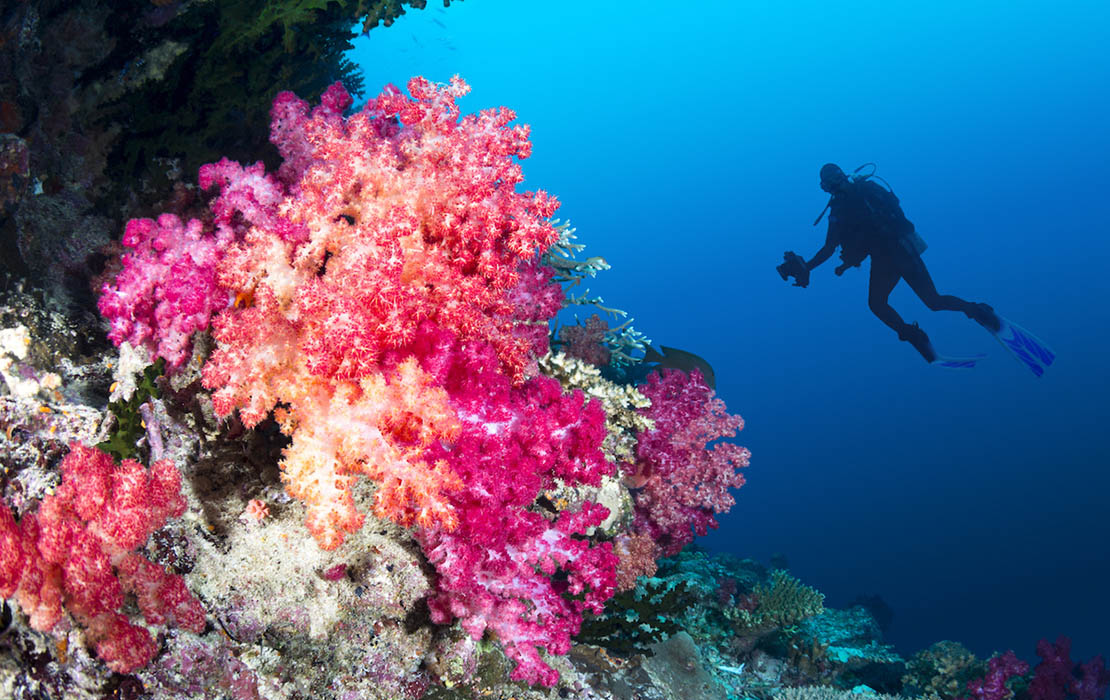
Clerke Reef
Offshore Broome, WA
If you were to design the perfect coral atoll in a laboratory, it would look exactly like Clerke Reef.
View dive site →
Clovelly
Clovelly, NSW
Calm, sheltered pool area with resident blue gropers and schooling fish.
View dive site →
Cockermouth Island Reef
Mackay Islands, QLD
Coral gardens with moderate current and soft coral fans.
View dive site →
Cocklebiddy Cave
Nullarbor Plain, WA
Cocklebiddy Caves: dive one of the world's most extreme Nullarbor cave systems, an advanced subterranean labyrinth beneath Western Australia.
View dive site →