Portsea Pier
Mornington Peninsula, VIC
Portsea Pier Dive Site Guide | Mornington Peninsula, VIC, Australia
By ScubaDownUnder Team · 2025-05-01
A torch beam sweeps across a pylon and stops on the reflective flicker of a pot-bellied seahorse clinging by its tail to a cluster of orange sponge, indifferent to the light. Beside it, a rosy phyllidia nudibranch works its way across a patch of encrusting ascidian. A cuttlefish hovers in the middle of the pylon bay at eye level, cycling through a pattern of pulsing stripes that suggest, to anyone who has spent time with cephalopods, genuine curiosity rather than alarm. Portsea Pier at night is almost unreasonably generous with its residents, and it is the site where a significant proportion of Melbourne divers have taken their first nocturnal breaths underwater.
The pier sits at the ocean end of the Mornington Peninsula, where Port Phillip Bay meets the notorious Port Phillip Heads before the Bass Strait entrance opens to the Southern Ocean. Indigenous Bunurong people have long association with this stretch of coastline, and the harbour precinct grew from the quarantine and pilot station established in the 1850s to manage the vessel traffic moving through the Heads. The Queenscliff to Sorrento ferry still calls at the pier, and the structure's continued commercial use means it is maintained, accessible, and fringed by a sandy beach entry that every diver who visits uses. The surrounding waters sit within the Port Phillip Heads Marine National Park, a protection that underwrites the density of life divers find on the pylons.
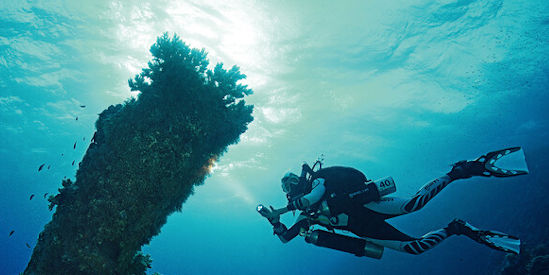
The dive environment unfolds in water that rarely exceeds eight metres. The sandy bottom beneath the pier is flat and gently textured with scattered kelp and seagrass, and the pylons rise in orderly rows from the sand to the pier deck above. The encrusting load on the pylons is remarkable. Sponges in orange, yellow, white, and purple colonise every available surface, with ascidians, hydroids, bryozoans, and soft corals filling the interstitial spaces into a layered, tangled mat of temperate marine growth. Between the pylons, ribbons of thin light filter down from the pier deck on sunny days, creating the characteristic cathedral lighting that photographers chase. Weedy sea dragons drift through the seagrass adjacent to the structure and, occasionally, among the mid-column pylon growth, their leafy appendages folding into the weedy camouflage that makes them invisible to any diver not moving slowly enough to resolve them.
The marine life highlights extend well beyond the headliners. Pot-bellied seahorses (*Hippocampus abdominalis*) are year-round residents and are the species most reliably photographed on night dives, when torch reflection off the eye makes the cryptic body visible against the encrusting background. The pier's nudibranch diversity is the site's defining feature for macro photographers; on a careful dive examining a single section of pylon, ten to fifteen species can be documented, including the common blue-ringed chromodorids and clown nudibranchs as well as the harder-to-find aeolids and phyllidias concentrated in the denser sponge zones. Striped catfish schools move through the pier in tight, shimmering groups, barbels trailing as they search the sand. Southern fiddler rays rest on the sand during daylight and become mobile after dark. Old wives appear in pairs with their distinctive black-and-white banding, and small cowfish navigate the pylon bays with rocking, deliberate swim cycles.
Conditions match the broader pattern for Mornington Peninsula jetty diving. Visibility ranges from three metres in stirred-up post-swell periods to twelve metres on settled summer days, with the best clarity arriving in autumn as the surface chop drops and the bay's suspended sediment settles. Water temperature traces a seasonal range of eleven to nineteen degrees Celsius, with June and July producing cold water that makes a drysuit a genuinely sensible investment for regular winter divers rather than a luxury. A seven millimetre wetsuit is the practical minimum for winter immersions. Current at the pier is generally weak, but the surrounding bay responds to strong tides and southerly weather, and entry conditions become uncomfortable when swell pushes into the sandy beach area. The site shuts down only in the most severe southerly weather; otherwise it remains consistently diveable through the full year.
Repeat divers at Portsea develop site-specific habits. The pylons on the western side of the pier are, by informal consensus, the most productive for nudibranchs. Night dives at the outer end of the pier produce the most reliable seahorse sightings. Cone shells in the sandy zones become active after dark and should be given a wide berth; their venom is serious and the shells are beautiful enough to tempt the unwary. Boat traffic requires ongoing awareness during the day, and surface marker buoys should be used on ascent. The pier becomes busy on summer weekend afternoons with multiple dive groups in the water, and early morning or weekday evening dives produce a more relaxed experience and, often, better animal encounters without the collective bubble column reducing visibility.
Portsea Pier is the Melbourne diver's training ground, macro studio, and regular evening retreat in a single location. Divers who started their nocturnal diving at these pylons return for decades, and the site continues to produce new sightings for them. That accumulation of minor discoveries across many dives, rather than any single dramatic encounter, is what defines the pier's standing in Victorian diving.
Site Access and Logistics
Portsea Pier is a shore dive with entry from the sandy beach on the western side of the pier structure. From Melbourne, take the Nepean Highway south through Frankston, Mornington, and Sorrento to Portsea, approximately 100 kilometres and ninety minutes of driving. Park at the Portsea Pier car park on Back Beach Road, with public toilets available at the foreshore reserve and the Portsea Hotel immediately adjacent for post-dive meals. Entry is a short walk from the car park to the beach at the base of the pier.
Open Water certification is appropriate for day dives. Night dives require a primary torch, a backup torch, and a buddy. A drysuit is the preferred winter choice; a seven millimetre wetsuit is the minimum from June through September. Bayplay Adventure Tours (bayplay.com.au) is based across the road from the pier and runs guided dives, equipment hire, and accommodation. Dive Victoria in Queenscliff (divevictoria.com.au) is another long-established Mornington Peninsula operator. Tank fills are available through Bayplay and from Sorrento-based operators. On busy summer weekends, arrive early or dive a weekday.
Sources
- Bayplay Adventure Tours, Portsea - PADI, Portsea Pier dive site - Parks Victoria, Port Phillip Heads Marine National Park - Museums Victoria, Pot-bellied seahorse species notes - Atlas of Living Australia, Weedy sea dragon distribution
Visibility at Portsea Pier
Visibility at Portsea Pier typically ranges from 5 to 15 metres, though it shifts with swell, wind and recent rainfall. November-March generally offers the best conditions for diving here.
Right now: approximately 3 m, 83% confidence (updated 13:50 AEDT).
Air, gear and guides near Portsea Pier
Browse dive shops in Melbourne for fills, hire gear, servicing and guided dives at this site.