Turquoise Bay
Exmouth, WA
Turquoise Bay Dive Site Guide | Exmouth, WA, Australia
By ScubaDownUnder Team · 2025-12-03
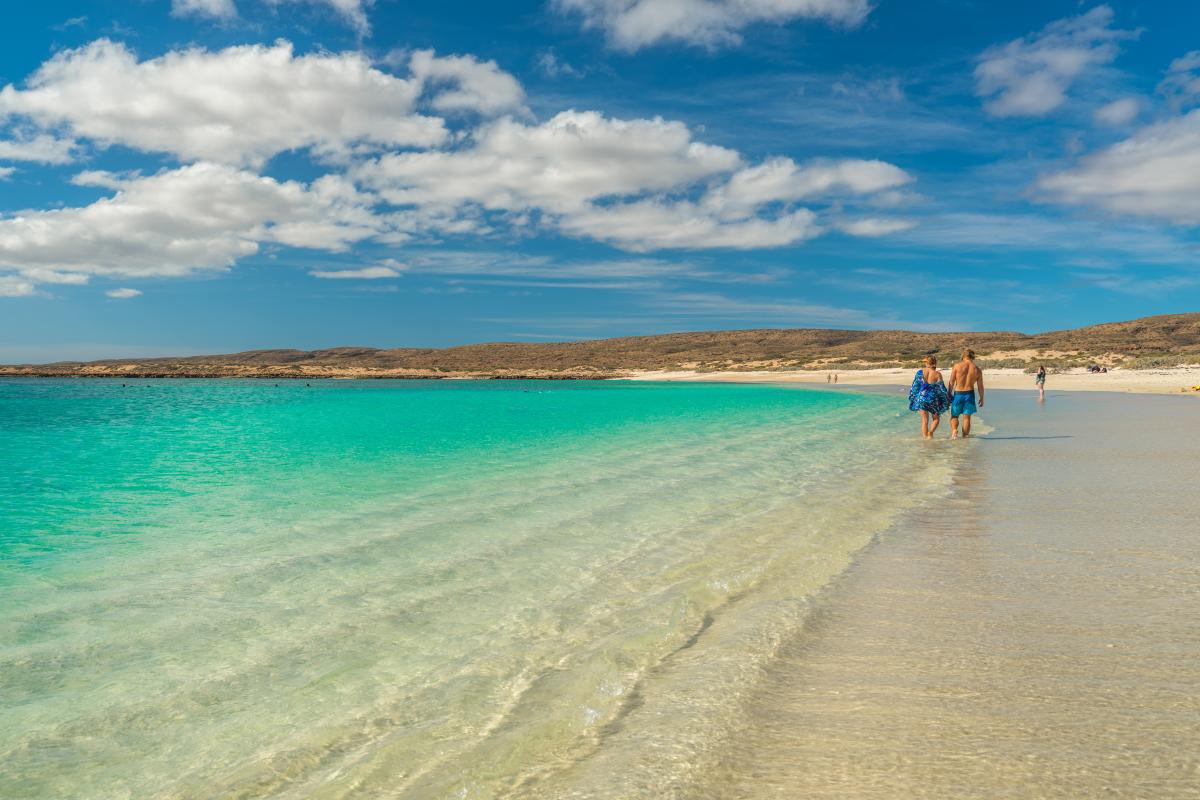
The colour gives the bay its name without argument. From the car park above the beach, the water grades from white sand through pale aquamarine to a deeper cobalt at the outer reef line, and the gradient looks like something a travel photographer has pushed in saturation until it stops being plausible. Below the surface, the fringing reef of the Ningaloo Marine Park runs along the bay with a coral coverage and fish diversity that make the hour-long drive from Exmouth straightforwardly worthwhile. What makes Turquoise Bay distinctive is not the colour, which any postcard can sell. It is the natural current that does the work while a diver or snorkeller floats the reef, a drift that covers three or four hundred metres of healthy coral in twenty minutes of effortless observation.
Turquoise Bay sits on the western coast of the Cape Range Peninsula within Cape Range National Park, within the Ningaloo Coast World Heritage Area gazetted in 2011. The broader reef extends for 260 kilometres along the coast and is the only large fringing reef in Australia that runs close enough to shore to be accessible by swim. Traditional Owners of this country are the Baiyungu, Yinikurtira, and Thalanyji peoples, and the park management framework incorporates their continuing connection. Unlike the sheltered inshore waters of the eastern peninsula, the western coast faces the Indian Ocean directly and receives the trade wind swell, but Turquoise Bay's geometry creates a partial shelter that produces the calm, clear conditions that have made it the most celebrated dive and snorkel site on the Ningaloo coast.
The drift is the site's signature. A natural southward current runs along the reef from the northern end of the bay, carrying snorkellers and divers past the fringing coral at a pace that delivers them to a defined sand channel at the southern end where the outer reef breaks and the current exits to open water. The walk north along the beach, entry at the northern end, and drift south back to the exit channel is the standard dive profile. The coral along the drift is in genuinely healthy condition, with hard coral coverage from one metre depth through to twelve or fifteen metres across the reef's main run. Branching staghorn, plate Acropora, and massive Porites formations dominate the structure, and soft corals and sea fans add texture in the deeper sections. Green turtles (Chelonia mydas) and hawksbill turtles feed undisturbed along the reef, their foraging behaviour easy to observe at close range. Blacktip reef sharks patrol the outer edge of the coral with the easy circuit of resident animals.
Reef fish diversity at Turquoise Bay is exceptional, with more than five hundred species recorded across the Ningaloo system and most major Indo-Pacific families represented on the drift. Parrotfish work the coral surfaces in rotating groups, their grazing audible as a soft crunch through the water. Schools of fusiliers sweep the mid-water column in silver-blue flashes, and snapper and trevally move through the deeper sections with the casual authority of apex reef predators. Tawny nurse sharks (Nebrius ferrugineus) rest on sandy patches adjacent to the coral in the characteristic immobility of a species that hunts at night and sleeps through the day. Blue-spotted rays flick across the shallow sand between coral heads, their electric-blue spots startling against white substrate. Anemonefish defend host anemones with the comic aggression the species is known for. Manta rays and reef sharks are more often observed on the outer boat sites, but sightings inside the drift zone are not unknown. Whale sharks pass along the outer reef from March through August, the window that makes the broader Ningaloo region internationally famous.
Visibility at Turquoise Bay is among the best in the park. In settled conditions from April through October, twenty-five to thirty-five metres of horizontal visibility transforms the reef into a landscape with genuine spatial depth. Even during the summer months, visibility rarely drops below fifteen metres. Water temperature runs 21°C in July and August, climbing to 28°C in February. A three millimetre wetsuit or rash vest is adequate for most of the year; a stinger suit is essential from October through May for the box jellyfish and Irukandji risk. The drift-current hazard is genuine and requires management. A gap in the outer reef at the northern end of the bay produces a strong pull that can carry swimmers out through the reef break if they fail to exit at the designated sand channel at the southern end. Life rings and signage mark the exit point; missing it means a difficult swim back against the current or a rescue call. April through October offers the best combination of stinger-free water, settled sea conditions, and peak clarity.
Repeat visitors to Turquoise Bay look for the finer detail that the first-time experience tends to overshadow. Early morning dives before the crowd arrives produce fish behaviour that the busy midday conditions suppress, and turtle sightings increase noticeably in the quieter hours. The northern end of the drift holds the deeper coral formations, while the southern end is shallower with more sand patches, and running the drift twice in a single day rewards attention to different sections. Photographers find the shallow depth and exceptional clarity ideal for wide-angle compositions, with sunball shots through the surface working particularly well in the first two hours of daylight. The broader Ningaloo coast holds dozens of additional shore and boat sites, and Turquoise Bay works well as an acclimatisation dive before moving to more committing offshore sites for manta and whale shark encounters.
Turquoise Bay delivers on its photographic promise in a way that most over-photographed destinations no longer manage. The drift rewards a relaxed pace and a slow look, and the reef has the healthy baseline that lets a single dive stand for what the Ningaloo coast can be at its best.
Site Access and Logistics
Turquoise Bay is within Cape Range National Park, approximately 55 to 65 kilometres northwest of Exmouth via Murat Road and Yardie Creek Road. National park entry fees apply and are collected at the park entry station. Two designated car parks serve the site, the Drift Loop and the Bay Loop, each with wheelchair-accessible unisex toilets and information signage. Arrive early on weekends and during school holidays as parking fills quickly; the bay has become one of the busiest snorkel sites in Western Australia.
Open Water certification is appropriate for the dive component, though the shallow depth and sheltered conditions also make the site suitable for beginners. Snorkellers outnumber divers on most days. Enter at the northern end and drift south; exit at the marked sand channel before the current pulls you through the outer reef break. Stinger suits are essential October through May and are available for hire from Exmouth operators. Dive Ningaloo (https://diveningaloo.com.au) operates locally and runs boat-based dive trips on the broader Ningaloo Reef; Exmouth Dive and Whalesharks Ningaloo (https://exmouthdiving.com.au) offers equipment hire and full-day trips including whale shark encounters in season.
Sources
- Dive Ningaloo, https://diveningaloo.com.au - Exmouth Dive and Whalesharks Ningaloo, https://exmouthdiving.com.au - Parks and Wildlife Service WA, Cape Range National Park - UNESCO, Ningaloo Coast World Heritage Area - Atlas of Living Australia, Chelonia mydas and Nebrius ferrugineus distribution records
Visibility at Turquoise Bay
Visibility at Turquoise Bay typically ranges from 10 to 20 metres, though it shifts with swell, wind and recent rainfall. April - October generally offers the best conditions for diving here.