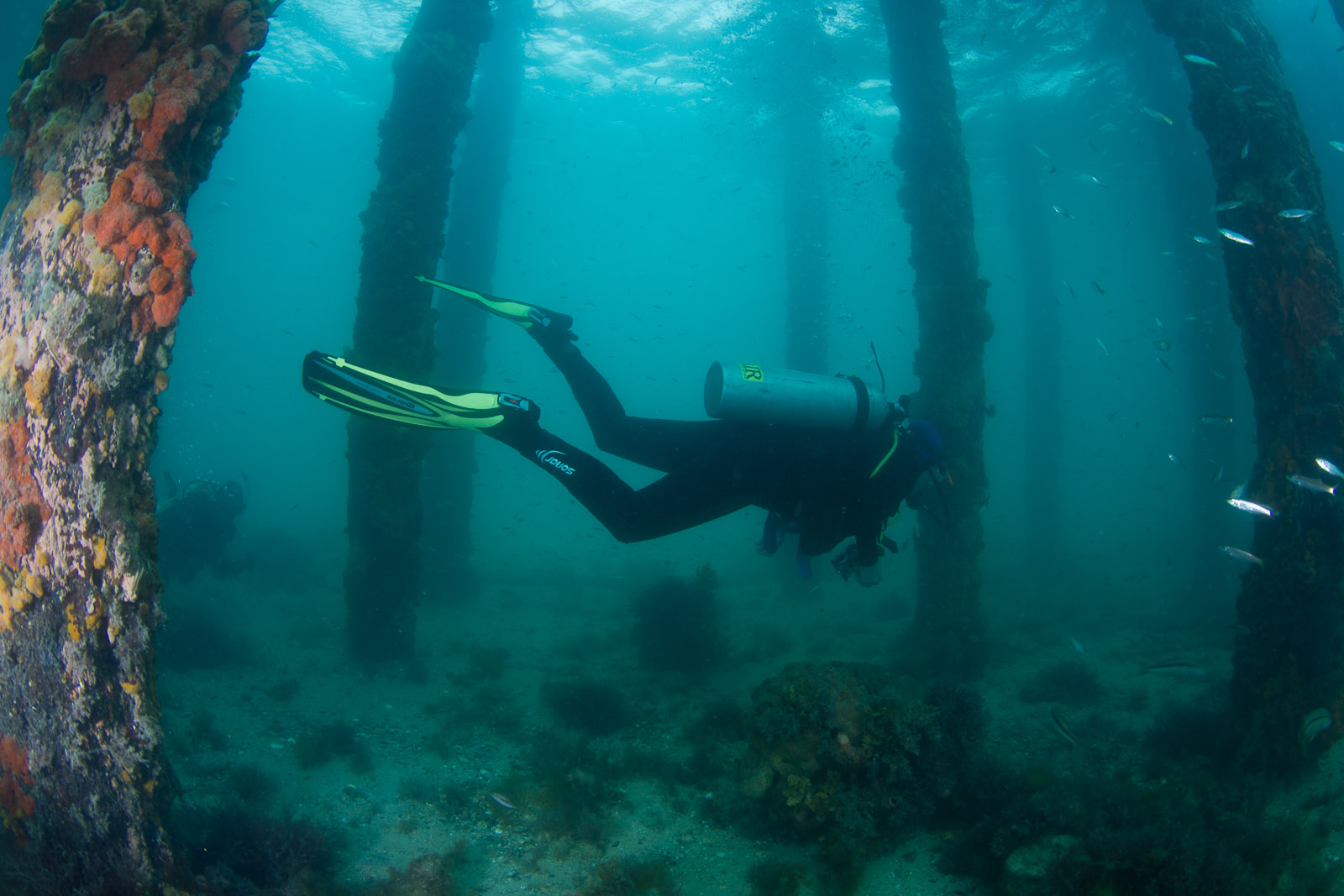
Blairgowrie Pier
Mornington Peninsula, VIC
Blairgowrie Pier, Mornington Peninsula
By ScubaDownUnder Team · 2026-07-12
At first glance Blairgowrie Pier is unremarkable, a working jetty beside a marina on the calm inner shore of Port Phillip Bay. Drop beneath it, though, and the pylons tell a different story. Every post is upholstered in sponge in pinks, oranges and yellows, and woven through that growth is some of the richest small-scale marine life in Victoria: seahorses curled around the timber, nudibranchs grazing the sponge, octopus folded into the shadows, and, in the cooler months, a gathering of spider crabs so vast it has to be seen to be believed. This is muck diving and macro diving at its Australian best, in waist-to-chest-deep water a few steps from the car.
Blairgowrie sits on the Mornington Peninsula, on the sheltered eastern side of Port Phillip Bay near its entrance, and the pier is one of a string of jetty dives that have made this stretch of coast a macro photographer's pilgrimage. The pier is relatively new and well protected by the adjacent marina wall, which is exactly why it has become such a reliable site: it stays diveable when the wind shuts down more exposed spots, and the structure itself provides the hard surface and shelter that concentrates the life. A purpose-built scuba and snorkel entry, with steps into the water about 150 metres along the jetty, makes getting in and out unusually easy.
This is shallow, sheltered shore diving, with depths running only from about two to seven metres along the pier and the adjacent sea wall. The appeal is not depth or terrain but density. The pylons march out from the shore in rows, each one a vertical garden of sponge, ascidian and weed, and the sandy bottom between them is scattered with shell, debris and structure that the macro life uses for cover. Divers work slowly along the pylons and the sea wall, torch in hand, reading the sponge for the small animals that make the site famous. Because it is so shallow and so protected, a single dive can stretch out for well over an hour, and the same patch of pier can be worked again and again without exhausting it.
Blairgowrie is a macro mecca. The sponge-covered pylons shelter big-bellied seahorses, a long list of nudibranchs, and the occasional prized tasselled anglerfish, while octopus, southern calamari and giant Australian cuttlefish hunt the structure and the sand. Stingrays and fiddler rays rest in the hollows, leatherjackets and magpie morwong drift the pylons, and weedfish and other small temperate species reward a patient eye. The site's most spectacular event, though, is seasonal: each year in the cooler months, giant spider crabs gather under and around the Mornington Peninsula piers in their tens of thousands to moult, piling into great mounds of armour and legs in one of the strangest wildlife spectacles in the country. Weedy seadragons are an occasional bonus, more reliably found at nearby Flinders and Portsea but turning up at Blairgowrie from time to time.
Being tucked behind the marina wall, Blairgowrie is one of the most forgiving sites on the bay, diveable in most conditions and a popular spot for training and night dives as a result. Visibility is variable, averaging around six to ten metres and occasionally opening past fifteen, and it tends to be best on a high tide after a run of calm weather. Water temperature is firmly temperate, ranging from the high teens to around twenty in summer down to single digits in the depths of winter, so a thick wetsuit or drysuit is the norm, with the most warmth wanted for the winter spider crab season. Summer and autumn bring the warmest water and the biggest influx of marine life, while late autumn and early winter bring the spider crabs. The site can be dived day or night, and many regulars rate the night dives highest for active octopus and hunting cuttlefish.
The pier is a photographer's site above all, and the combination of shallow depth, long bottom times and dependable macro subjects makes it ideal for learning underwater photography. Night dives transform the place, with octopus out hunting and cuttlefish hanging in the torchlight. The shallow, sheltered water also makes Blairgowrie a favourite for divers building confidence and for snorkellers, who can see much of the same life from the surface over the pylons. With several other piers nearby, a day on the peninsula can easily string together two or three very different macro dives.
Blairgowrie proves that great diving does not need depth, current or distance. A sheltered pier, a torch and a slow pace are enough to open a world of seahorses, cuttlefish and sponge gardens, and once a year that world is overrun by a tide of spider crabs that draws divers from across the state. It is the kind of site that turns divers into macro obsessives, and it does so in water shallow enough to stand up in.
## Site Access and Logistics
Blairgowrie Pier is a shore dive on the Mornington Peninsula, about 90 minutes by road from Melbourne, with parking at the foreshore and marina beside the pier. A purpose-built dive and snorkel entry with steps sits roughly 150 metres along the jetty, making access straightforward, and no boat or charter is needed. Air fills and gear are available from dive shops on the peninsula.
The shallow, sheltered water makes Blairgowrie an excellent site for Open Water divers, training and night dives, and it is one of the easiest serious macro dives in the state. Divers should carry a torch for the sponge life, use the dedicated entry steps, and stay aware of boat and marina traffic, deploying a surface marker or dive flag as appropriate. Good buoyancy matters more than usual here, since the best life is on delicate sponge-covered pylons that are easily damaged. A thick wetsuit or drysuit suits the cool water year-round.
Gear, air and local advice are available from peninsula dive shops including [The Scuba Doctor](https://www.scubadoctor.com.au/divesite.htm?site=Blairgowrie-Pier).
## Sources
- The Scuba Doctor, Blairgowrie Pier dive site: [https://www.scubadoctor.com.au/divesite.htm?site=Blairgowrie-Pier](https://www.scubadoctor.com.au/divesite.htm?site=Blairgowrie-Pier) - Ocean Divers, pier diving in Melbourne: [https://oceandivers.com.au/pier-diving-melbourne/](https://oceandivers.com.au/pier-diving-melbourne/) - Divernet, easy shore diving on Melbourne's Mornington Peninsula: [https://divernet.com/world-dives/australia-oceania/diving-mornington-peninsula/](https://divernet.com/world-dives/australia-oceania/diving-mornington-peninsula/) - Scuba Diver Life, diving Melbourne's piers: [https://scubadiverlife.com/diving-melbournes-piers/](https://scubadiverlife.com/diving-melbournes-piers/) - PADI, Blairgowrie Pier dive site: [https://www.padi.com/dive-site/australia/blairgowrie-pier-2/](https://www.padi.com/dive-site/australia/blairgowrie-pier-2/)
Visibility at Blairgowrie Pier
Visibility at Blairgowrie Pier typically ranges from 3 to 10 metres, though it shifts with swell, wind and recent rainfall. Year-round; weedy seadragons most reliable Oct to Apr generally offers the best conditions for diving here.
Right now: approximately 5 m, 98% confidence (updated 04:19 AEST).
View the live forecast and 7-day outlook for Blairgowrie Pier →