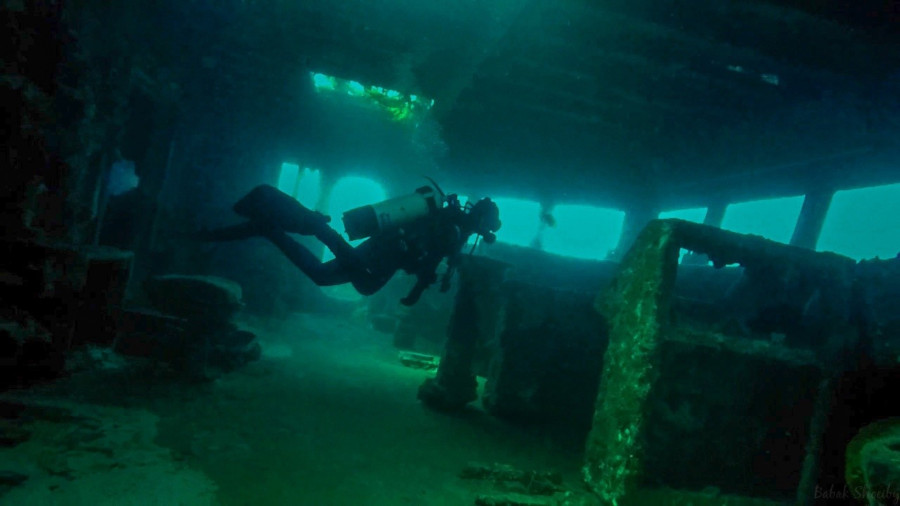
Lonsdale Wall
Port Phillip Heads, VIC
Lonsdale Wall, Port Phillip Heads
By ScubaDownUnder Team · 2026-06-21
The water at the entrance to Port Phillip Bay does not sit still. Twice a day, the entire bay drains and refills through a single narrow gap called the Rip, and the current that pours through it has wrecked ships and drowned sailors for two centuries. Time it wrong and Lonsdale Wall is undiveable, even deadly. Time it right, in the brief slack between the tides, and you drop onto one of the most spectacular walls in southern Australia: a near-vertical face plunging into the dark, every ledge and overhang upholstered in sponges and soft corals so vivid they shame the tropics.
Lonsdale Wall runs for about a kilometre along the western, Point Lonsdale side of the Heads, inside the Port Phillip Heads Marine National Park. Its richness is a direct product of the very current that makes it dangerous. Each tide forces a colossal volume of water through the Rip, and that constant flush of clean, nutrient-laden ocean is what feeds the dense invertebrate life that coats the wall. The Rip itself is a deep trench, scoured to around a hundred metres by the ancient course of the Yarra, and the wall is its shallower shoulder. This is temperate diving at its most dramatic, the colour and density of a coral reef rendered in the cool palette of Bass Strait.
The wall is essentially a vertical cliff underwater, starting as shallow as eight metres in places and dropping past thirty, forty and in spots well beyond sixty metres. It descends in a series of steps, with a slight shelf every six to nine metres and, behind each step, a massive overhang. Those undercuts are the heart of the dive, dark recesses crammed with crayfish, soft corals and fish sheltering from the flow. Most recreational diving works the top of the wall and the famous sponge gardens at around 18 to 20 metres, drifting the face as the last of the slack water moves. The deeper wall falls away into technical territory, but there is no need to chase it, because the shallow shelf holds as much colour and life as any diver can absorb in a single tank.
For all that Victoria's water is cold and often green elsewhere, Lonsdale Wall is a riot of life. The sponge gardens are the signature, sheets and fingers and fans of sponge in oranges, reds, yellows and purples, interwoven with soft corals, sea whips and jewel anemones, the whole face glowing under a torch. Among them the southern blue devil, one of the most beautiful temperate fish in the country, hangs in the shadows of the overhangs, alongside leatherjackets, dusky morwong, old wives and schooling southern hulafish. Southern rock lobster back into the recesses, giant Australian cuttlefish drift the wall in season, and Australian fur seals from the nearby colonies are regular and curious visitors, looping past divers with the easy confidence of animals entirely at home. It is a marine community that genuinely rivals a tropical reef for density and colour.
Everything at Lonsdale Wall revolves around the tide. The Rip runs hard enough to make diving impossible and dangerous on the flow, so the site is dived only in the short slack-water window at the turn of the tide, a timing that local operators plan to the minute. Visibility is usually good thanks to the constant flushing with clean Bass Strait water and is best on the incoming flood, when ocean water pours into the bay, while the outgoing ebb can drag bay water out and reduce it. Water temperature is firmly southern, ranging from around 11°C in winter to 19°C in late summer, which means a drysuit or heavy semi-dry for most divers. The site is also exposed to Bass Strait swell at its southern end, and it sits beside a major shipping channel, so the diving is tightly managed around tide, weather and boat traffic. None of this is casual, and all of it is why a Lonsdale Wall dive is something Victorian divers plan around rather than drop in on.
The wall is really a string of distinct dives along its length, from the sponge gardens to deeper sections favoured by technical divers, and regulars work different stretches depending on the conditions and the slack. The overhangs reward a slow, careful approach with a light, revealing crayfish, nudibranchs and the blue devils that make the site famous among photographers. On the right day the combination of clear water, vertical relief and saturated colour produces images that look nothing like most people's idea of Victorian diving. The nearby sites at the Heads, from [Pope's Eye](https://www.scubadownunder.com/dive-sites/popes-eye) to the other wall sections, mean a day trip can easily stitch together several very different dives.
Lonsdale Wall is a dive that has to be earned, not with depth or distance but with patience and respect for the tide. The reward is a wall that feels almost impossibly alive, lit up with sponge and soft coral and watched over by blue devils and fur seals, all of it fed by the same furious current that keeps the careless out. It is the clearest argument anywhere that cold water can be every bit as beautiful as warm.
## Site Access and Logistics
Lonsdale Wall is a boat dive only, run on charters out of Queenscliff and Portsea, the two harbours that flank the entrance to Port Phillip Bay. Because the site can only be dived in the brief slack-water window at the turn of the tide, trips are scheduled tightly around the tide tables, and a guided charter that knows the timing is effectively essential.
This is an advanced site. The depth, the cold, the proximity of deep water and above all the ferocity of the Rip mean Advanced Open Water certification with genuine experience in current, deeper water and cold conditions is the working minimum, and good buoyancy is not negotiable on a wall that drops past safe limits. Drysuit or heavy thermal protection, a delayed surface marker buoy and disciplined gas and depth management are all standard. Divers should follow their charter's briefing on the slack window and the shipping channel to the letter.
Charters to Lonsdale Wall and the other Heads sites run from Queenscliff and Portsea, including through [The Scuba Doctor](https://www.scubadoctor.com.au/divesite.htm?site=Lonsdale-Wall).
## Sources
- The Scuba Doctor, Lonsdale Wall dive site: [https://www.scubadoctor.com.au/divesite.htm?site=Lonsdale-Wall](https://www.scubadoctor.com.au/divesite.htm?site=Lonsdale-Wall) - Parks Victoria, Port Phillip Heads Marine National Park: [https://www.parks.vic.gov.au/places-to-see/parks/port-phillip-heads-marine-national-park](https://www.parks.vic.gov.au/places-to-see/parks/port-phillip-heads-marine-national-park) - SSI MyDiveGuide, Lonsdale Wall: [https://www.divessi.com/en/mydiveguide/divesite/lonsdale-wall-australia-106196](https://www.divessi.com/en/mydiveguide/divesite/lonsdale-wall-australia-106196) - Dive Gear Australia, Victorian wall dives: [https://divegearaustralia.com.au/victorian-wall-dives/](https://divegearaustralia.com.au/victorian-wall-dives/) - Travellerspoint, Victoria scuba diving guide: [https://www.travellerspoint.com/guide/Victoria_Scuba_Diving/](https://www.travellerspoint.com/guide/Victoria_Scuba_Diving/)
Visibility at Lonsdale Wall
Visibility at Lonsdale Wall typically ranges from 10 to 25 metres, though it shifts with swell, wind and recent rainfall. Year-round; best slack-water days October to April generally offers the best conditions for diving here.
Right now: approximately 7 m, 98% confidence (updated 23:14 AEST).
View the live forecast and 7-day outlook for Lonsdale Wall →