Pope's Eye
Port Phillip Bay, VIC
Pope's Eye, Port Phillip Bay
By ScubaDownUnder Team · 2026-07-23
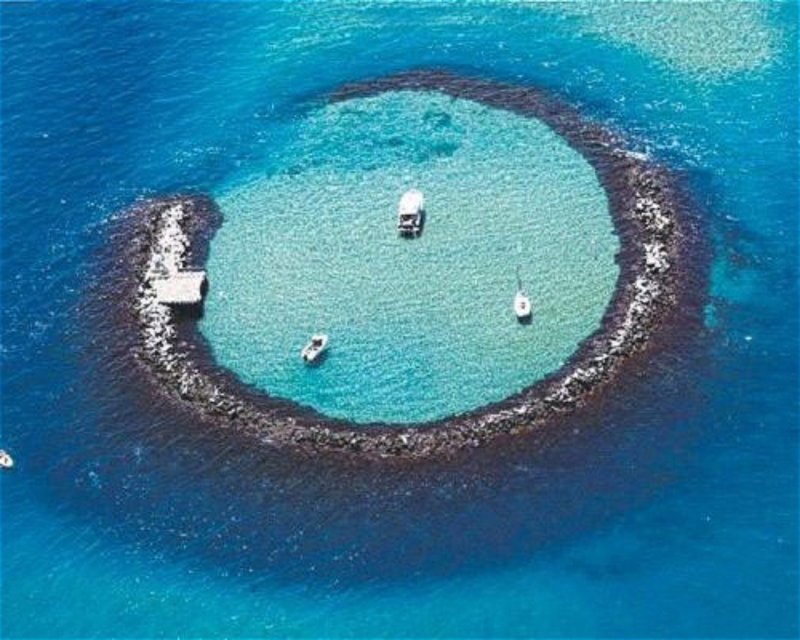
Pope's Eye is the dive that history forgot to finish. In the 1880s, engineers began building a ring-shaped island fort in the middle of Port Phillip Bay to guard the entrance, then abandoned it half-built, leaving a horseshoe of bluestone rubble standing just above the water. A century and a half later the sea has made far better use of it than any army could have. Above the surface it is one of Victoria's most important gannet colonies; below it, the rubble walls are a teeming artificial reef, sheltered, shallow and so full of fish that it ranks among the best beginner and snorkel dives in the state.
The structure sits about seven kilometres inside Port Phillip Heads, a short boat ride from Queenscliff, Portsea and Sorrento, and forms one of the six pieces of the Port Phillip Heads Marine National Park, protected as a reserve since 1979. The unfinished fort is a horseshoe, or annulus, of stacked rubble, its open toe facing the Heads, enclosing a shallow lagoon barely a metre and a half deep. Australasian gannets have nested here for decades, and platforms have been added to support the colony, so that divers and snorkellers work the water beneath a constant traffic of seabirds plunging for fish. It is a genuinely unusual place, equal parts ruin, reserve and rookery.
The diving is defined by the shape of the ring. Inside the horseshoe the water is only around a metre and a half deep, calm and protected, which makes it superb for snorkelling, training and first dives. Around the outside, the rubble walls slope away through kelp to a sand floor at about ten to fourteen metres, and this outer rim is where the diving proper happens. The bluestone has become a vertical reef, its crevices and ledges packed with life, and a circuit of the outer wall is a relaxed, fish-heavy dive. Because the structure breaks the current, Pope's Eye is far more sheltered than the nearby wall sites at the Heads, though the outside is more exposed than the lagoon and rewards a little more experience.
For its modest size, Pope's Eye is extraordinarily rich. The rubble walls are draped in giant and leathery kelp and gorgonian corals, and dense schools of reef fish hang around the structure in numbers that make the dive feel busy from the moment you descend. Big-bellied seahorses cling to the kelp, octopus and giant Australian cuttlefish work the ledges, and featherstars and sponges crust the stone. Australian fur seals use the north-west corner as a haul-out and frequently join divers in the water, and the gannets overhead turn the surface into a spectacle of their own, folding their wings and spearing down through the shallows after baitfish. Few sites pack so many different kinds of encounter into one small ring of rock.
Pope's Eye is one of the more forgiving sites in Port Phillip Bay, largely because the ring itself provides shelter from the tidal currents that make the nearby Heads so demanding. Visibility is variable and typically runs from around five to twelve metres, best after calm weather and on a clean tide. Water temperature is temperate, ranging from about 11°C in winter to 20°C in summer, so a thick wetsuit or drysuit is standard. The inner lagoon stays calm in almost any conditions, while the outer wall can pick up some current and surge, so timing and a check of the forecast still matter. Summer and autumn generally bring the warmest, clearest water and the most active marine life, and the gannet colony is busiest through the breeding season.
Pope's Eye is a favourite for underwater photographers, who come for the combination of dense fish life, seahorses and the chance of a seal encounter, all in shallow, accessible water. It is also a cornerstone of marine education in the bay, with school and research programs using the site precisely because so much life is concentrated in such a small, safe space. Many trips combine a Pope's Eye dive or snorkel with the bay's other attractions, and the gannet colony makes it as rewarding for the surface party as for the divers below.
Pope's Eye is proof of how completely the sea reclaims what people leave behind. An abandoned fort, never armed and never finished, has become a thriving reef and a seabird sanctuary, generous enough that a snorkeller in waist-deep water and a photographer working the outer wall can both come away delighted. It is one of the most charming dives in Victoria, and one of the easiest places anywhere to fall for cool-water diving.
## Site Access and Logistics
Pope's Eye is a boat dive, reached on a short run from Queenscliff, Portsea or Sorrento, and is a popular destination for licensed tour operators and private craft alike. There is no land access, and the structure sits within the marine national park, so divers use the moorings rather than anchoring on the reef. Snorkel and dive tours run regularly, and the site is a staple of the bay's operators.
The sheltered inner lagoon makes Pope's Eye one of the best beginner and snorkel sites in Port Phillip Bay, comfortable for Open Water divers and first-timers, while the outer wall, a little deeper and more exposed, suits divers with a bit more experience. A surface marker buoy is sensible given the boat traffic the site attracts, and a thick wetsuit or drysuit suits the cool water. As a marine national park, Pope's Eye is no-take, and divers are asked to keep clear of the nesting gannets and leave the reef and its animals undisturbed.
Dives, snorkel tours and gear are available from operators around the bay, including [The Scuba Doctor](https://www.scubadoctor.com.au/divesite.htm?site=Popes-Eye).
## Sources
- The Scuba Doctor, Popes Eye dive site: [https://www.scubadoctor.com.au/divesite.htm?site=Popes-Eye](https://www.scubadoctor.com.au/divesite.htm?site=Popes-Eye) - Parks Victoria, Popes Eye, Port Phillip Heads Marine National Park: [https://www.parks.vic.gov.au/places-to-see/sites/popes-eye---port-phillip-heads-marine-np](https://www.parks.vic.gov.au/places-to-see/sites/popes-eye---port-phillip-heads-marine-np) - PADI, Popes Eye Marine National Park dive site: [https://www.padi.com/dive-site/australia/popes-eye-marine-national-park/](https://www.padi.com/dive-site/australia/popes-eye-marine-national-park/) - Dolphin Research Institute, Popes Eye and Australasian gannets: [https://www.dolphinresearch.org.au/popes-eye-and-australasian-gannets/](https://www.dolphinresearch.org.au/popes-eye-and-australasian-gannets/) - Wikipedia, Pope's Eye: [Wikipedia, Pope's Eye](https://en.wikipedia.org/wiki/Pope%27s_Eye)
Visibility at Pope's Eye
Visibility at Pope's Eye typically ranges from 5 to 15 metres, though it shifts with swell, wind and recent rainfall. Year-round; clearest in winter generally offers the best conditions for diving here.
Right now: approximately 8 m, 98% confidence (updated 04:17 AEST).