Scottish Prince Shipwreck
Gold Coast, QLD
Scottish Prince Shipwreck
By ScubaDownUnder Team · 2026-05-07
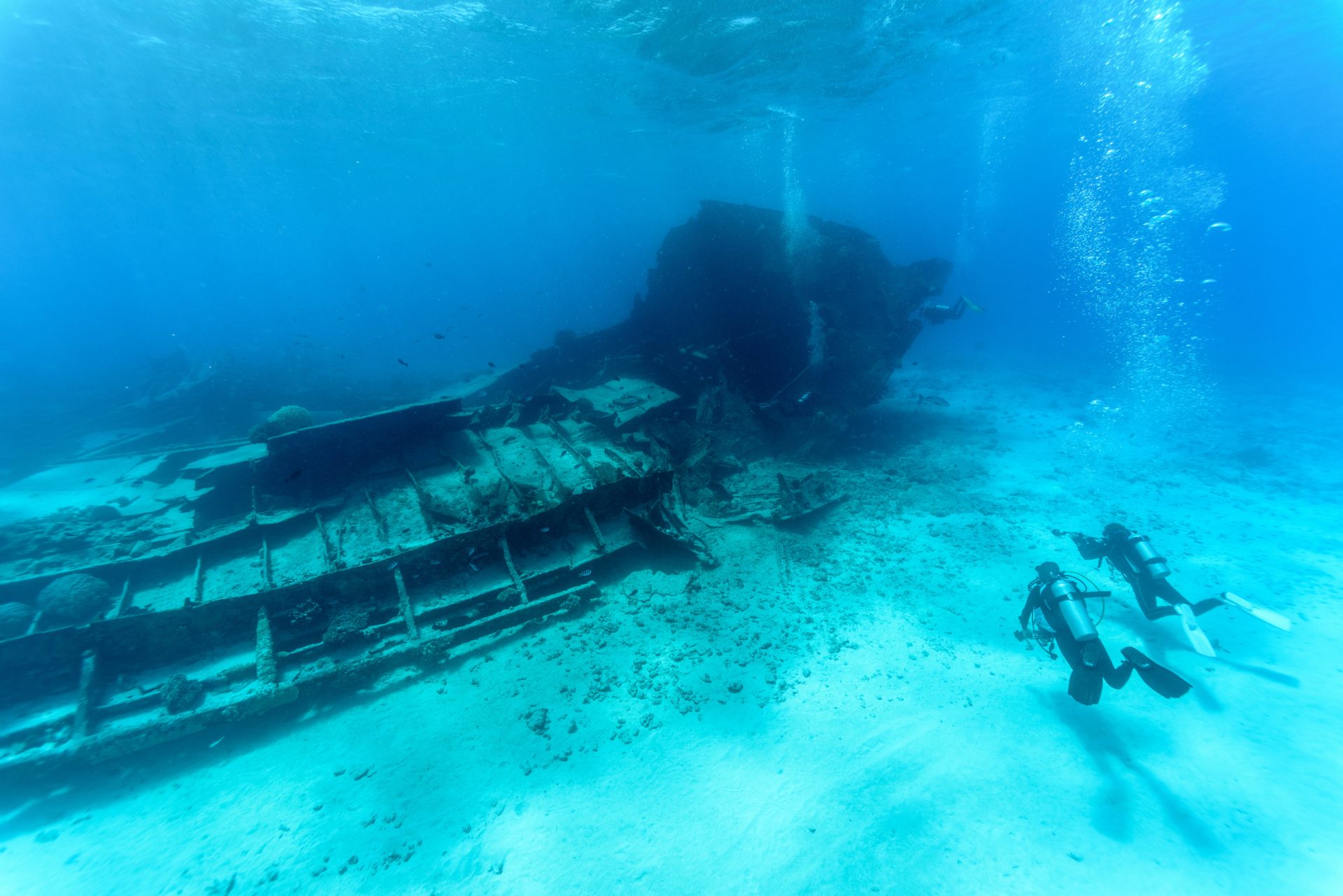
On a calm day off the southern end of Main Beach, a dark scattered shape lies in twelve metres of water about 1.5 kilometres from the surf line: the broken remains of an iron clipper that has been on the Gold Coast seafloor since 1887. The Scottish Prince is the oldest accessible recreational shipwreck on the Queensland coast and one of the most consistently dived historic wrecks in Australia. The hull is no longer intact, but the ribs, plating, anchor and windlass still read clearly through the encrustation, and the marine life that has colonised the iron over more than 130 years has turned a maritime disaster into a small, productive reef.
The Scottish Prince was a three-masted iron clipper, built in Glasgow in 1864 and operated on the Britain-to-Australia trade. On 3 May 1887, around four miles off Southport on the homeward leg of a Glasgow-to-Brisbane voyage, the ship struck a sandbar in heavy weather and broke up over the following days. All crew survived. The wreck has been listed on the Queensland Heritage Register and is protected under the Historic Shipwrecks Act 1976, meaning the site cannot be disturbed and no artefacts may be removed. The Yugambeh people are the traditional custodians of the Gold Coast coastal country. Recreational diving on the Scottish Prince became established in the 1970s, and the site has been continuously documented and photographed since.
The wreck sits in 10 to 12 metres of water on a sandy bottom, oriented roughly along the line of the swell. The most prominent structure is the central section: a fan of iron ribs rising from the sand, the windlass and anchor visible at the bow end, and lengths of hull plating scattered across an area of perhaps 30 by 60 metres. Soft corals, sponges, and pink lacy sea fans drape the upper edges of the ribs in colours that contrast hard with the rusted iron beneath. Schools of yellowtail and big-eye trevally orbit the central structure, parting around divers and reforming behind. The standard dive plan is a slow circuit of the main wreck field, swimming the perimeter once at depth and a second pass higher to inspect the rib tops, with a swim across the sand at the end to check for stingrays and turtles bedded down between the dive site and the natural reef nearby.
The Scottish Prince has been a reef long enough that the resident species behave like reef fish, not shipwreck visitors. Wobbegongs, banded and tasselled, sleep along the iron edges where the ribs meet the sand, the largest individuals over a metre. Schooling fish are the visual headline: dense walls of yellowtail through the central rib field, big-eye trevally working the perimeter, and Spanish mackerel passing in summer. Lionfish hold along the more sheltered ribs, hovering with their familiar fan-spread, and moray eels live in the pipework and inside larger plate sections. Eagle rays cruise the open sand on the southern edge of the site, and green and loggerhead turtles work the wreck periphery, occasionally resting under the larger hull plates. Octopus and cuttlefish hold in the smaller cavities, and macro divers find ghost pipefish and a long list of nudibranch species along the encrusted iron in summer. The combination of dense fish life and historic structure makes the Scottish Prince the most photogenic shallow wreck in southeast Queensland.
Visibility on the Scottish Prince typically runs 5 to 15 metres, and the variability is dictated almost entirely by surf swell. Calm days produce 10 to 15 metres of clear water; days with a metre of east swell drop visibility to 5 metres or less, and days over 1.5 metres of swell typically close the site to dive boats. Water temperature ranges from around 19°C in August to 26°C in February, with a 5mm wetsuit comfortable through most of the year and a 3mm shortie sufficient in midsummer. Current at the site is usually mild but can run on strong tide changes, and operators time entries to slack water where possible. Surge is the more relevant variable: at 12 metres, swell from offshore translates into significant horizontal water movement that can push divers across the wreck in awkward ways and stir bottom sediment. October to May, the calm Queensland summer-autumn window, is the working dive season for the Scottish Prince.
The wreck rewards divers willing to look for artefacts in the structure rather than the marine life on it. The windlass at the bow end is the most identifiable feature, intact enough to read clearly more than a century after the wreck. Hull plates with rivet patterns are visible at the edges. The anchor lies forward of the windlass, partially buried but still recognisable. Smaller iron components, pulley fragments and pipework lie scattered across the wreck field. Photographers find that the late-afternoon sun produces the most usable light through the surface, and that the same coral-encrusted ribs appear differently each season as the dominant species cycle. Night dives on the wreck are rare but reveal feeding moray eels, basket stars on the upper structure, and bobtail squid on the sand around the perimeter.
The Scottish Prince is a small site by the measure of major Australian wrecks but a long site by the measure of accessibility: it has been on the seafloor since 1887, and it has been dived continuously by Gold Coast operators since recreational scuba arrived in the region. The hull is rusting back into the sand, the marine life keeps colonising what remains, and the wreck reads a little differently every decade. For divers who want to combine a historic wreck experience with a shallow, photogenic dive that does not require deep certifications or technical training, the Scottish Prince is the Queensland answer.
Site Access and Logistics
The Scottish Prince is a boat dive only. The standard departure point is Marina Mirage or Mariners Cove on The Spit, with a short transit of around 15 to 20 minutes to the wreck. Several Gold Coast operators run regular trips to the wreck, often combined with a second dive on the Gold Coast Seaway in a two-tank booking.
Entry is a backward roll or giant stride from the dive boat at the wreck mooring or onto a reference line dropped at the site. Exit is a controlled ascent on the line and re-board over the boat tubes, with safety stops conducted in clear water near the mooring. The wreck is shallow enough that gas planning rarely limits the dive, but most operators run dives of 35 to 50 minutes to manage cold-water comfort and surge fatigue.
Minimum certification is PADI Open Water. The site is well-suited to early post-certification divers comfortable with mild current and surge, and it sees regular use as an Advanced Open Water training dive for the wreck adventure component. Divers must not handle, lift or move any wreck material, in line with Historic Shipwrecks Act protections.
Bookings and trips run through Aquanauts Dive Centre on Mariners Cove Drive and Gold Coast Dive Adventures.
Sources
- Dev Ocean Dive, Gold Coast charter notes: https://devoceandive.com - Gold Coast Dive Adventures, Scottish Prince shipwreck charters: https://goldcoastdiveadventures.com.au - Queensland Heritage Register, Scottish Prince Shipwreck listing: https://www.qld.gov.au/environment/land/heritage - Australian National Shipwreck Database, Scottish Prince entry: https://www.environment.gov.au/heritage/historic-shipwrecks - Queensland Museum, maritime archaeology references on Scottish Prince - Michael McFadyen's Scuba Diving, Scottish Prince reference: http://www.michaelmcfadyenscuba.info
Visibility at Scottish Prince Shipwreck
Visibility at Scottish Prince Shipwreck typically ranges from 5 to 15 metres, though it shifts with swell, wind and recent rainfall. Year-round generally offers the best conditions for diving here.
Right now: approximately 8 m, 83% confidence (updated 10:36 AEDT).
View the live forecast and 7-day outlook for Scottish Prince Shipwreck →
Air, gear and guides near Scottish Prince Shipwreck
Browse dive shops in Gold Coast for fills, hire gear, servicing and guided dives at this site.