Waterfall Bay
Tasman Peninsula, TAS
Waterfall Bay
By ScubaDownUnder Team · 2026-05-13
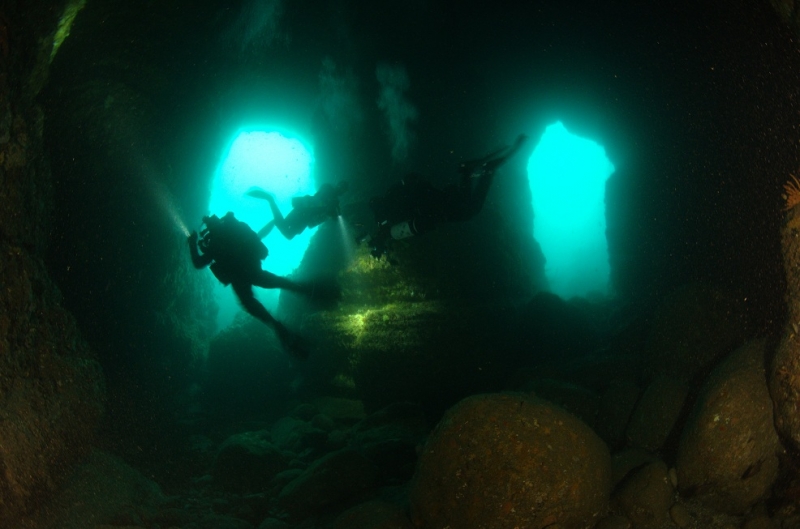
Below the tallest sea cliffs in Australia, where the dolerite columns of the Tasman Peninsula rise three hundred metres above the southern Tasman Sea, a series of sea caves cuts back into the rock at the waterline and continues underwater into a network of arches, swim-throughs and vertical walls. Waterfall Bay is the dive that puts the geological character of the peninsula directly underwater. The cliffs above are the headline tourist view of the Tasman National Park; the diving below is the temperate-water equivalent, all dolerite, kelp and cold green light.
The Tasman Peninsula's dolerite cliffs were formed by Jurassic basalt intrusions that cooled into the columnar geometry that dominates the coastline. Where the peninsula's south-eastern face meets the open ocean, the cliffs reach over 300 metres in height, the tallest sea cliffs in Australia, and the waterline below has been carved by wave action into a series of caves, sea stacks and arches. Waterfall Bay sits at the eastern end of this system, just south of Eaglehawk Neck, and is named for the small waterfall that spills from the clifftop into the bay during heavy rain. The Tasman National Park covers the surrounding land and waters, and the broader marine boundary applies restrictions on disturbance. The palawa people of lutruwita are the traditional custodians of this coast.
The dive at Waterfall Bay starts from the boat near the bay entrance and follows a series of vertical walls and sea caves along the cliff base. Depth at the cliff base ranges from 5 metres at the upper entries to over 25 metres on the seaward face of the deeper walls. The terrain is bare dolerite, fluted in the same vertical column geometry visible in the cliffs above, encrusted with sponges and red sea fans through the deeper sections. Bull kelp covers the upper reaches in the calmer months. The headline structural feature is a series of caves and arches: short swim-throughs that open into the bay's southern wall and continue back into the rock for ten or fifteen metres before turning blind. The standard dive plan runs along the wall in one direction at depth and returns higher on the rock, with the caves sampled in passing rather than penetrated deep.
Waterfall Bay's marine life is the temperate Tasmanian assemblage in concentrated form. Crayfish, the southern rock lobster, wedge into the deeper crevices and emerge during quieter slack water. Draughtboard sharks, the small bottom-dwelling Tasmanian species named for the chequerboard pattern on their backs, lie still on the sand at the cave entries and inside the sheltered overhangs. Giant Maori octopuses hold dens in the deeper rock and are the largest octopus species in Australian waters; encounters at Waterfall Bay regularly produce animals over a metre in span. Long-snout boarfish hover along the deeper walls in their characteristic vertical posture, and large schools of jackass morwong and butterfly perch work the mid-water along the wall. Splendid perch hold close to the dolerite. Australian fur seals from the Hippolyte colony pass through occasionally on transit, and weedy seadragons are recorded along the kelp lines on the calmer days. The cold green water itself adds the visual signature of Tasmanian temperate diving.
Visibility at Waterfall Bay typically runs 10 to 20 metres and can reach 25 metres on the best days, when the water column has settled and there is no plankton bloom. Tasmanian water carries the particulate and green tint that mainland divers learn to recognise as the signature of southern reef diving. Water temperature ranges from around 11°C in August to 18°C in February. A drysuit is the comfortable choice across the year; experienced divers run 7mm semi-dry through the warmer months. Currents along the cliff base vary by tide and offshore movement, with the bay itself moderately sheltered and the seaward face of the walls catching more flow. Surge inside the caves can become severe on swelly days and is the single most relevant variable for dive planning. Surface swell over 2 metres typically closes the site to boats. November to April is the working season, with the calmest seas and warmest water. Winter offers the clearest water but is constrained by weather windows.
Beyond the headline caves and the temperate species list, Waterfall Bay rewards divers prepared to read the dolerite carefully. The sponge gardens on the deeper walls hold large basket stars that emerge after dark and a long list of nudibranchs across the year. The cave entrances catch swell-driven light shafts on bright afternoons that produce the distinctive cathedral lighting that photographers chase on this coast. Crayfish numbers fluctuate seasonally with the timing of the recreational fishing season inside the marine park; the bay's protections concentrate animals during the closed season. The seaward face of the cliffs is rarely dived but occasionally produces unexpected encounters: short-tailed shearwaters in summer, gannets working the surface above, and seals on transit between Hippolyte and the mainland.
Waterfall Bay is the dive that translates the surface geology of the Tasman Peninsula into something a diver can actually swim through. The cliffs above are the most famous landform on the southeast Tasmanian coast. The diving below is what those cliffs look like when the water comes up to them and the temperate species have moved in, three hundred metres of dolerite continuing seamlessly past the waterline into the cold green dark.
## Site Access and Logistics
Waterfall Bay is a boat dive only. The standard departure point is Pirates Bay at Eaglehawk Neck, with a transit of around 15 to 25 minutes depending on sea state. Charters run almost exclusively through Eaglehawk Dive Centre, the established operator on the peninsula.
Entry is a backward roll from the dive boat near the bay entrance. Exit is a controlled ascent to the boat with safety stops conducted in clear water near the hull. Conditions on the day determine which walls and caves the operator dives and whether the dive is run as a circuit or out-and-back.
Minimum certification is PADI Advanced Open Water with cold-water and drysuit experience. Forty logged dives is a sensible working minimum, and divers should be confident with surge management before entering any of the cave structures. Drysuits are widely hired through the operator and are recommended even in the warmest months. A primary torch and backup are standard issue.
Bookings, gear hire and accommodation packages run through [Eaglehawk Dive Centre](https://www.eaglehawkdive.com.au) at Pirates Bay.
## Sources
- Eaglehawk Dive Centre, Waterfall Bay site notes: [https://www.eaglehawkdive.com.au](https://www.eaglehawkdive.com.au) - Parks Tasmania, Tasman National Park information: [https://parks.tas.gov.au](https://parks.tas.gov.au) - Department of Natural Resources and Environment Tasmania, marine reserves and protected areas - Michael McFadyen's Scuba Diving, Tasman Peninsula references: [http://www.michaelmcfadyenscuba.info](http://www.michaelmcfadyenscuba.info) - Geological Survey Tasmania, Tasman Peninsula dolerite formations - Australian Museum, southern temperate species pages
Visibility at Waterfall Bay
Visibility at Waterfall Bay typically ranges from 10 to 20 metres, though it shifts with swell, wind and recent rainfall. December to April generally offers the best conditions for diving here.
Right now: approximately 12 m, 98% confidence (updated 23:17 AEST).
View the live forecast and 7-day outlook for Waterfall Bay →