Shearwater Peregrine vs Garmin Descent G1
Shearwater Peregrine vs Garmin Descent G1: the best pure dive screen against the dive watch you will actually wear every day. Which is the smarter buy for Australian divers.
Where to Buy
Affiliate links: we may earn from qualified purchases
For most divers who want a computer they will also wear every day, the Garmin Descent G1 is the better all-rounder and the better value at around AU$599. The Shearwater Peregrine is the better pure dive computer, with a bigger, clearer colour screen. Neither offers air integration, so this really comes down to one question: do you want a dive instrument or a dive watch you live in.
At a glance
- Best dive screen: Peregrine, big and full colour; best daily watch: G1, a full smartwatch with GPS - Air integration: neither (look at the Suunto D5 or a Garmin Mk2S if you need it) - Algorithm: both run Buhlmann gradient factors, a genuine tie - Battery and daily wear: G1 runs for weeks and tracks your life off the boat; the Peregrine is charge-before-the-trip - Price: G1 around AU$599 and does more; Peregrine around AU$735 with the better dive screen
The two contenders
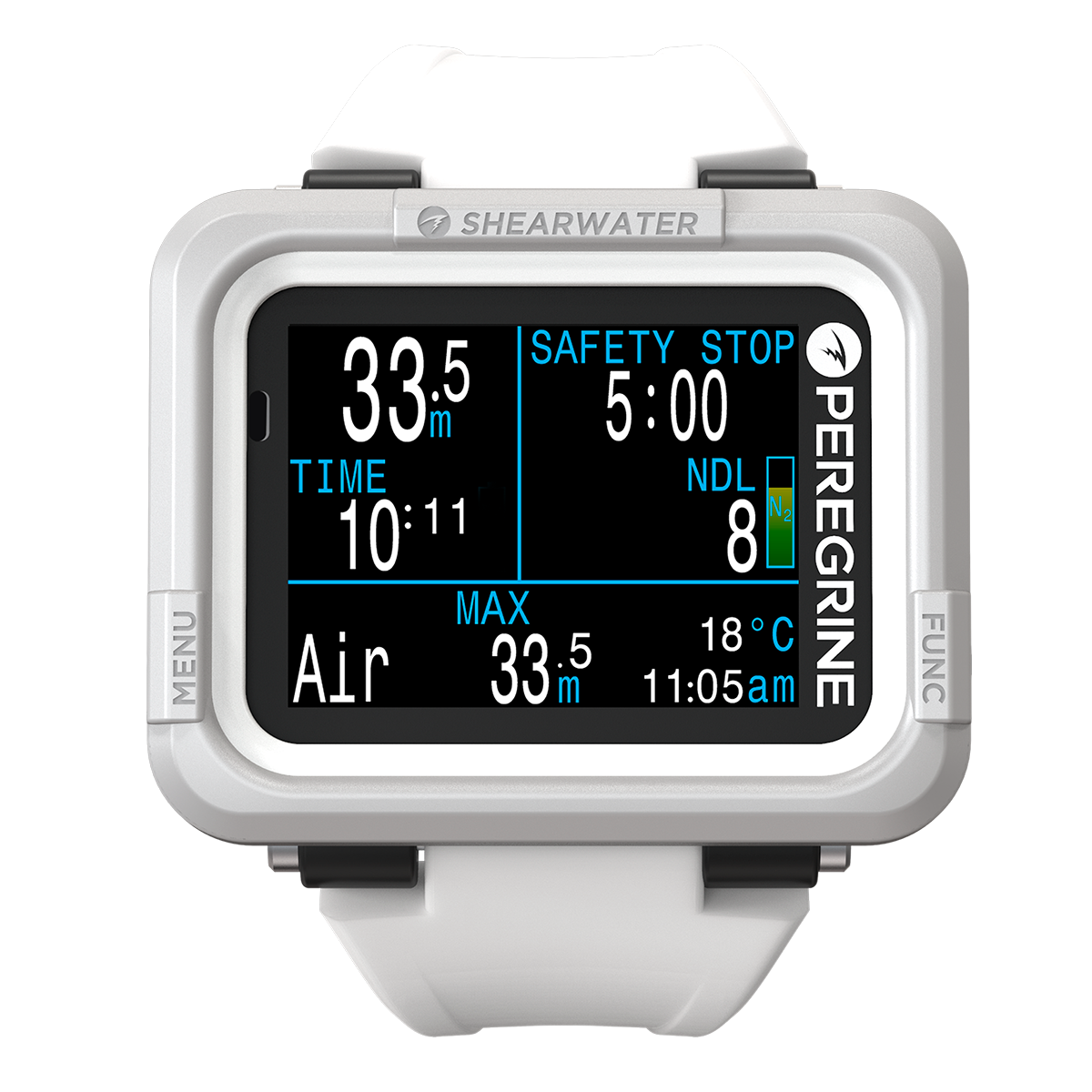
The Shearwater Peregrine is a puck-style dive computer with a 2.2 inch full-colour display and the well-loved Shearwater interface, running Buhlmann ZHL-16C with gradient factors. Around AU$735.
The Garmin Descent G1 is a rugged dive watch with a monochrome, always-on display, full smartwatch features and GPS, also running Buhlmann with gradient factors. Around AU$599, and our reviewer rated it highly as a do-everything wrist unit.
Display and readability
Different tools, different screens. The Peregrine's large colour LCD is the easier to read at depth: big, bright and high contrast. The G1 uses a smaller monochrome memory-in-pixel display, which is not as eye-catching but is superbly sunlight-readable, always on, and sips power. Underwater the Peregrine is clearer; topside in bright Australian sun the G1 holds its own and never needs waking.
Algorithm
This one is a tie. Both run Buhlmann ZHL-16C with adjustable gradient factors, so both give you the same trusted decompression model and the same ability to set your own conservatism. Neither has a meaningful edge here.
Dive features and air
The G1 covers more dive modes (single and multi-gas nitrox, gauge, apnea and closed-circuit options) and adds GPS so you can mark and navigate back to entry and exit points, genuinely useful on a shore dive at an unfamiliar site. The Peregrine keeps things deliberately simple and does the core recreational and tec modes cleanly. Neither the standard Peregrine nor the G1 supports air integration, so if tank pressure on the wrist is a must, both are out and you should look at the Suunto D5 or a Garmin Mk2S.
Everyday wear and smart features
This is where the G1 runs away with it. It is a true smartwatch: heart rate, sleep and activity tracking, phone notifications, GPS workouts and weeks of standby battery. You wear it from the dive boat to the office. The Peregrine is not a watch and is not pretending to be one. If you want a single device for diving and daily life, the G1 is the obvious pick.
Battery
Both are strong, but the G1's monochrome display and watch architecture give it exceptional life, easily a week or more of normal use plus diving. The Peregrine's wireless Qi charging and long dive run time are excellent too, but it is a charge-before-the-trip device rather than a wear-for-a-week one.
Build and size
The G1 is a lightweight, fibre-reinforced polymer watch built to take knocks, comfortable for all-day wear. The Peregrine is a larger puck that clips into your kit. For travel, the G1 doubles as your watch and saves a device; the Peregrine is one more thing in the bag, but a thing with a better dive screen.
Price and value
At around AU$599 the G1 is both cheaper than the AU$735 Peregrine and does far more off the boat, which makes it the stronger value for anyone who wants daily wear. The Peregrine's premium is justified only by its superior dive display and simplicity. You are choosing what to optimise: screen and focus, or versatility and value.
Common ground
Both run the same trusted Buhlmann decompression model with adjustable gradient factors, both handle the dive modes a recreational and early-tec diver needs, and both sync logs to a phone app. Neither supports air integration, so on pure diving they are closer than the very different shapes suggest. The decision is about the package around the dive computer, not the diving itself.
Which should you buy?
Buy the Garmin Descent G1 if you want one rugged device for diving and daily life, GPS and smartwatch features, and the best value. Check the G1 price on Amazon AU.
Buy the Shearwater Peregrine if your priority is the clearest, biggest dive screen and the simplest dive-focused interface, and you do not need a daily watch. Check the Peregrine price on Amazon AU.
Want air integration in the mix? Compare the two Garmins in our Garmin Descent G1 vs Mk2S guide, or see the Shearwater Peregrine vs Suunto D5 comparison.
Where to Buy
Get the Shearwater Peregrine vs Garmin Descent G1 and experience the difference quality gear makes underwater.
Best price for Australian shipping