Shearwater Peregrine vs Suunto D5
Shearwater Peregrine vs Suunto D5: the big-screen, value Buhlmann puck against the watch-style Suunto with built-in air integration. Which suits Australian recreational divers.
Where to Buy
Affiliate links: we may earn from qualified purchases
If you want the most readable, best-value computer of the two, the Shearwater Peregrine wins for most Australian recreational divers. If you want a dive computer you can wear as an everyday watch, with built-in air integration, the Suunto D5 makes more sense. Both are excellent, they just solve the same problem in very different shapes, so the right answer depends on how you dive and what you want on your wrist between dives.
At a glance
- Best screen: Peregrine, with a larger 2.2 inch full-colour display - Air integration and compass: Suunto D5 only - Daily-wear watch: D5; the Peregrine is a dive-only puck - Algorithm: Peregrine runs tunable Buhlmann gradient factors; the D5 runs the more fixed, conservative Fused RGBM 2 - Battery: Peregrine runs longer on a charge; the D5 needs topping up more often - Price: Peregrine around AU$735; D5 around AU$899
The two contenders
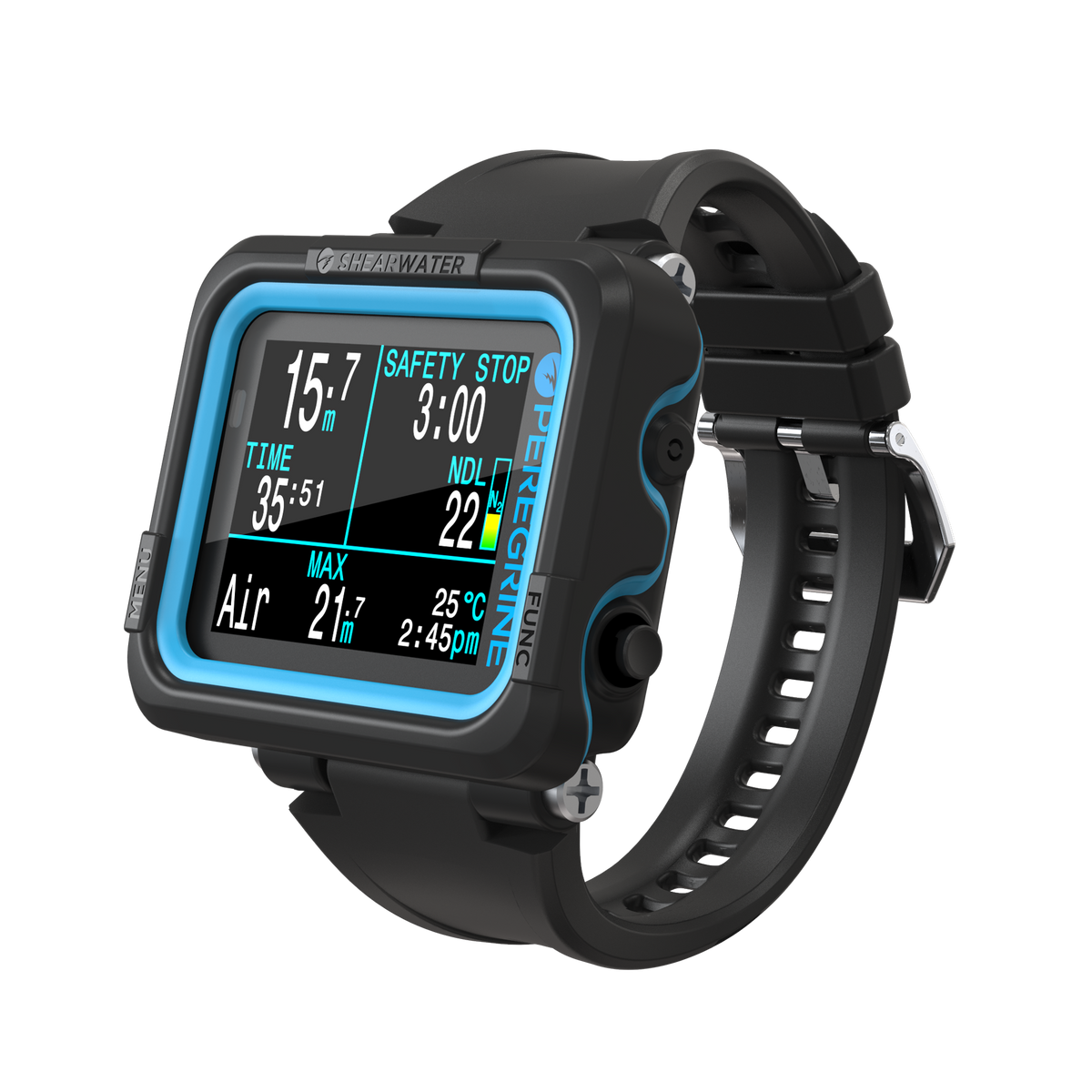
The Shearwater Peregrine is a puck-style dive computer with a large 2.2 inch full-colour screen, built around the Buhlmann ZHL-16C algorithm with adjustable gradient factors. It has earned a reputation as one of the easiest computers on the market to read and use. At around AU$735 it sits in the mid range.
The Suunto D5 is a watch-style computer with a colour display, wireless air integration and a digital compass built in. At around AU$899 it costs more, but it is designed to double as a daily watch once you swap to one of the interchangeable straps.
Display and readability
This is the Peregrine's strongest card. The 2.2 inch screen is large, bright and high contrast, with big digits you can read at a glance in the low visibility many of our temperate sites serve up, or behind a fogging mask. The D5's round watch face is clear and colourful, but it is physically smaller, so there is simply less screen to work with at depth. For divers who value reading their no-deco time without squinting, the Peregrine is hard to beat.
Algorithm and conservatism
Both are sound but differ in philosophy. The Peregrine runs Buhlmann ZHL-16C with gradient factors you can tune, giving experienced divers real control over how conservative the computer is. The D5 uses Suunto's Fused RGBM 2, a more fixed, conservative model with less fine-grained adjustment. New divers will not notice the difference; divers who like to dial in their own gradient factors will prefer the Peregrine.
Air integration and compass
Here the D5 pulls ahead. It supports wireless air integration with a transmitter, so you can read tank pressure on your wrist, and it has a digital compass. The standard Peregrine has neither: it shows depth, time and deco but not gas pressure, and it carries no compass (the pricier Peregrine TX adds both). If real-time air and an electronic compass matter to you, the D5 is the simpler single-device answer.
Battery and charging
The Peregrine charges wirelessly on a Qi pad and delivers a long run time, comfortably a full day or a weekend of diving between charges. The D5 charges over a cable and has a shorter battery life, so you will top it up more often, especially if you wear it daily. Neither uses user-replaceable batteries, so both need looking after before a remote trip.
Size, build and daily wear
The D5 is the one you will actually wear off the boat. It looks like a watch and swaps to a casual strap. The Peregrine is a dive instrument, not a watch, so it lives in your dive bag. If you want one device for diving and daily life, that is a clear point for the D5. If you only care about diving, the Peregrine's larger screen is the better trade.
Price and value
At around AU$735 the Peregrine delivers premium readability and the trusted Shearwater interface for noticeably less than the AU$899 D5. The D5 earns its higher price with air integration, a compass and watch-style wearability. So the value question is really about features: if you do not need air integration or daily wear, you are paying more for the D5 to get things you will not use.
Common ground
It is worth saying that you will dive safely and happily with either. Both are colour-screen recreational computers from trusted brands, both do air, nitrox and gauge modes, both log dives and sync to a phone app over Bluetooth, and both are backed by service support in Australia. There is no wrong choice here on safety or capability, only a difference in shape, screen and whether you want air integration on the wrist.
Which should you buy?
Buy the Shearwater Peregrine if you want the clearest screen, the most configurable algorithm and the best value, and you are happy to run a separate compass and skip air integration. Check the Peregrine price on Amazon AU.
Buy the Suunto D5 if you want one device that works as a daily watch, with built-in air integration and a compass, and you do not mind charging it more often. Check the Suunto D5 price on Amazon AU.
If you are weighing the Peregrine against a full smartwatch instead, see our Shearwater Peregrine vs Garmin Descent G1 comparison.
Where to Buy
Get the Shearwater Peregrine vs Suunto D5 and experience the difference quality gear makes underwater.
Best price for Australian shipping