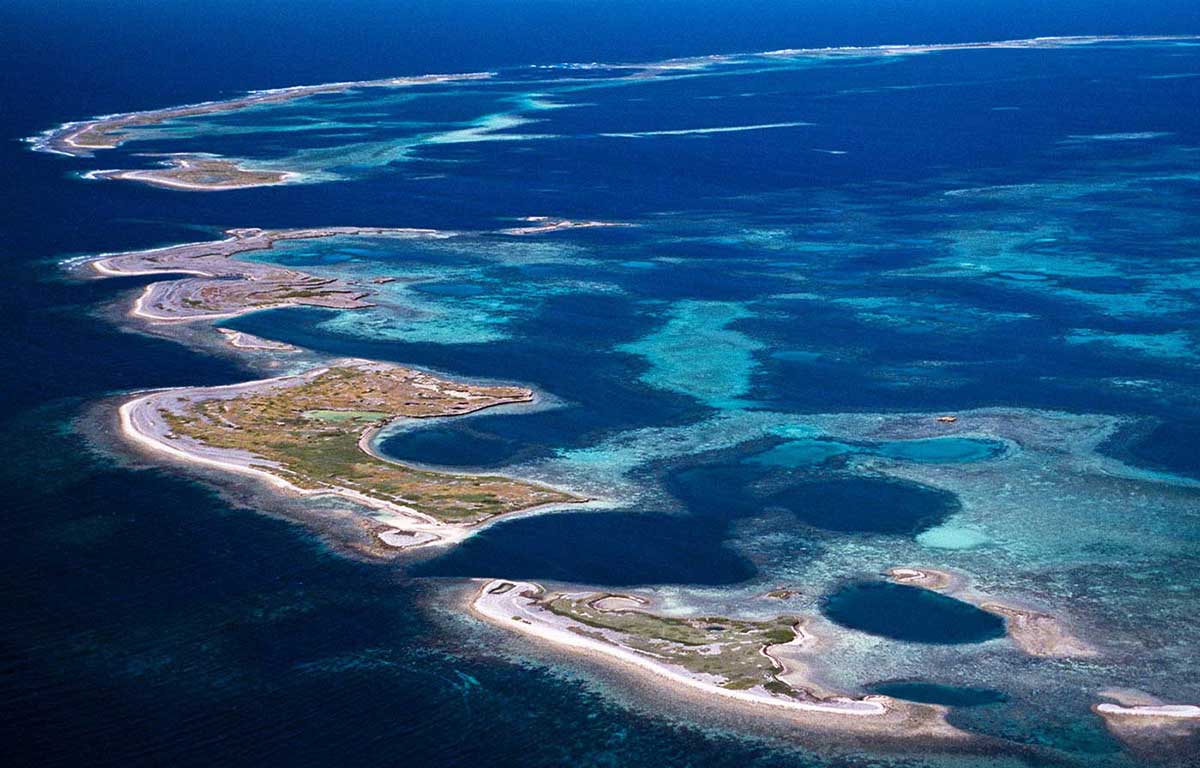
Houtman Abrolhos Islands
Offshore Geraldton, WA
Houtman Abrolhos Islands Dive Guide
By ScubaDownUnder Team · 2026-08-01
# Houtman Abrolhos Islands Dive Site Guide
The first morning at the Abrolhos opens with a sound rather than a view: the bark of Australian sea lions echoing across the lagoon as the liveaboard's anchor settles into the sand. The islands themselves appear gradually in the dawn light, low and white and ringed with coral, scattered across a hundred kilometres of open water 60 kilometres off the Mid-West coast. This is a coral atoll system at the southern edge of where corals grow, accessible only by multi-day boat and known to most Australian divers only by reputation. The reputation is earned. The Abrolhos hold one of the country's last large Australian sea lion colonies, a 1629 Dutch shipwreck, and reef structure that mixes tropical and temperate species in a combination found nowhere else on the continent.
The Houtman Abrolhos comprise three island groups (Wallabi, Easter, and Pelsaert) running roughly 100 kilometres from north to south across the continental shelf off Geraldton. The Yamatji peoples are the traditional custodians of the adjacent mainland coast. The Abrolhos themselves were uninhabited until 1629, when the Dutch East India Company vessel Batavia struck Morning Reef in the Wallabi Group on her maiden voyage from Texel, becoming the oldest European wreck in Australian waters and the site of one of the country's most documented colonial massacres. The islands were later worked seasonally for guano and bird harvesting, and today host a strictly regulated rock lobster fishery alongside the marine park established in 2019 under State management. The Department of Primary Industries and Regional Development administers the islands' commercial leases; recreational access is permitted but unsupported.
The diving here is shaped by the Leeuwin Current, a warm southward flow that pushes tropical species past the latitude where temperate cold-water species would otherwise dominate. The result is an unusually diverse fish assemblage on coral reef structure that should not, by latitude alone, exist. Outer reef edges drop in walls past 40 metres into deep blue water, with the upper reef sitting between 8 and 20 metres in clear, sheltered lagoon conditions. Sites vary substantially across the three groups: northern sites at Wallabi feature large coral bommies and sea lion haul-outs, central Easter Group sites concentrate the wreck dives and the dense fish action, and the southern Pelsaert Group offers the deepest wall diving and the highest chance of pelagic encounters. Liveaboards reposition between groups daily based on weather and dive plan, with most multi-day trips covering at least two of the three groups across a typical itinerary.
The Australian sea lions are the headline. Colonies at Wallabi and Easter Group islands haul out on white sand beaches in the morning, and once curious individuals enter the water they spend extended periods interacting with divers, mouthing fins and approaching face masks at close range. Australian sea lions are listed as Endangered on the IUCN Red List, with fewer than 12,000 individuals remaining, and the Abrolhos colony is one of the largest accessible to recreational divers. Beyond the sea lions, the reef holds two iconic WA endemic species: baldchin groper, large and territorial, working the reef edge in pairs or small groups, and the Western Australian dhufish, the slow-moving deepwater fish that is the state's most prized recreational catch. Schools of samson fish, yellowtail kingfish, and pink snapper move through at depth. Whale sharks have been recorded passing through the outer reef during their southern transit from [Ningaloo](https://www.scubadownunder.com/dive-sites/ningaloo-reef), peaking in May and June. Reef sharks (whitetip and grey reef) patrol the deeper walls. The coral cover itself is biologically significant: hard plate corals, soft coral colonies, and gorgonian fans growing at a latitude that elsewhere on the planet would support only temperate algal reef.
Visibility runs 15 to 30 metres across the diving season, with the clearest water from March through May before winter storms shift the patterns. Water temperature ranges from 19°C in winter to 24°C in late summer, putting the Abrolhos firmly in 5mm full-suit territory year-round and warranting a 7mm for divers who chill quickly. The trade winds from the south-east are the dominant weather factor: when they blow, outer reef diving on the eastern side of the islands shuts down within hours and liveaboards reposition to lee sites on the western side. The classic dive window runs March to June when wind patterns are most predictable, surface conditions are calmest, and visibility windows are largest. Trips outside this period run successfully but with more weather-modified itineraries.
The Batavia wreck on Morning Reef is the most historically significant dive site in Australia and rewards divers prepared to put depth and structure aside for a moment of context. The wreck sits in 5 to 8 metres of water, with cannons, ballast piles, and anchor remains still visible on the reef, marked but not closed off to divers under WA's historic shipwreck legislation. The Western Australian Museum has recovered most of the artefact material across multiple campaigns, but the structural remains and the rock-cut survivors' fort on West Wallabi Island combine into one of the most evocative archaeological sites accessible to recreational divers anywhere. Two further historic wrecks (the Zeewijk, lost 1727, and the Ocean Queen, lost 1842) lie within the island group and are accessed by trained guides on specialist trips. For photographers, the sea lion interactions deliver some of the most expressive marine mammal images possible from a recreational dive, with light conditions in the shallow lagoons supporting wide-angle work at minimal depth.
The Abrolhos repay the effort it takes to reach them. The overnight passage from Geraldton, the multi-day commitment, the weather dependence, and the absence of any alternative if the trip is cut short all combine into a destination that filters its visitors toward divers willing to plan around the conditions rather than the calendar. The reward is access to species, structure, and history that no Australian shore dive or day-charter can offer.
## Site Access and Logistics
The Abrolhos are accessible only by boat from Geraldton or Kalbarri, with no shore option and no day-charter alternative. Geraldton is reached by sealed road from Perth (420 kilometres, five hours driving) or by domestic flight to Geraldton Airport. Trips run as multi-day liveaboard charters typically lasting four to seven nights, with cabin accommodation, all meals, and dive gas included. Eco Abrolhos and Abrolhos Adventures are the two operators running structured dive itineraries; Geraldton Air Charter operates fixed-wing transfers for shorter resort-style trips that combine flying in to an island camp with day boat diving. Bookings open six to twelve months ahead and the prime March-to-June windows fill earliest. Advanced Open Water certification is the practical minimum given the wall dives past 25 metres; Deep Diver and Nitrox certifications are recommended for divers wanting access to the full outer-reef site list. Charters carry compressors, nitrox, and rescue kit, and operate under strict marine park rules including no-take protocols and minimum distances from sea lion haul-out sites.
## Sources
- [Eco Abrolhos Cruises — Abrolhos Islands liveaboard charters](https://www.ecoabrolhoscruises.com.au) - [Abrolhos Adventures — liveaboard dive trips](https://www.abrolhosadventures.com.au) - [WA Museum — Batavia wreck research and recovery](https://museum.wa.gov.au/explore/shipwrecks/batavia) - [Department of Primary Industries and Regional Development WA — Abrolhos Islands](https://www.dpird.wa.gov.au) - [WA Marine Parks — Houtman Abrolhos Islands Marine Park](https://www.dbca.wa.gov.au) - [Michael McFadyen's Scuba Diving — Abrolhos Islands dive notes](http://www.michaelmcfadyenscuba.info)
Visibility at Houtman Abrolhos Islands
Visibility at Houtman Abrolhos Islands typically ranges from 15 to 30 metres, though it shifts with swell, wind and recent rainfall. March to June generally offers the best conditions for diving here.