Osprey Reef
Coral Sea, QLD
Osprey Reef, Coral Sea
By ScubaDownUnder Team · 2026-06-30
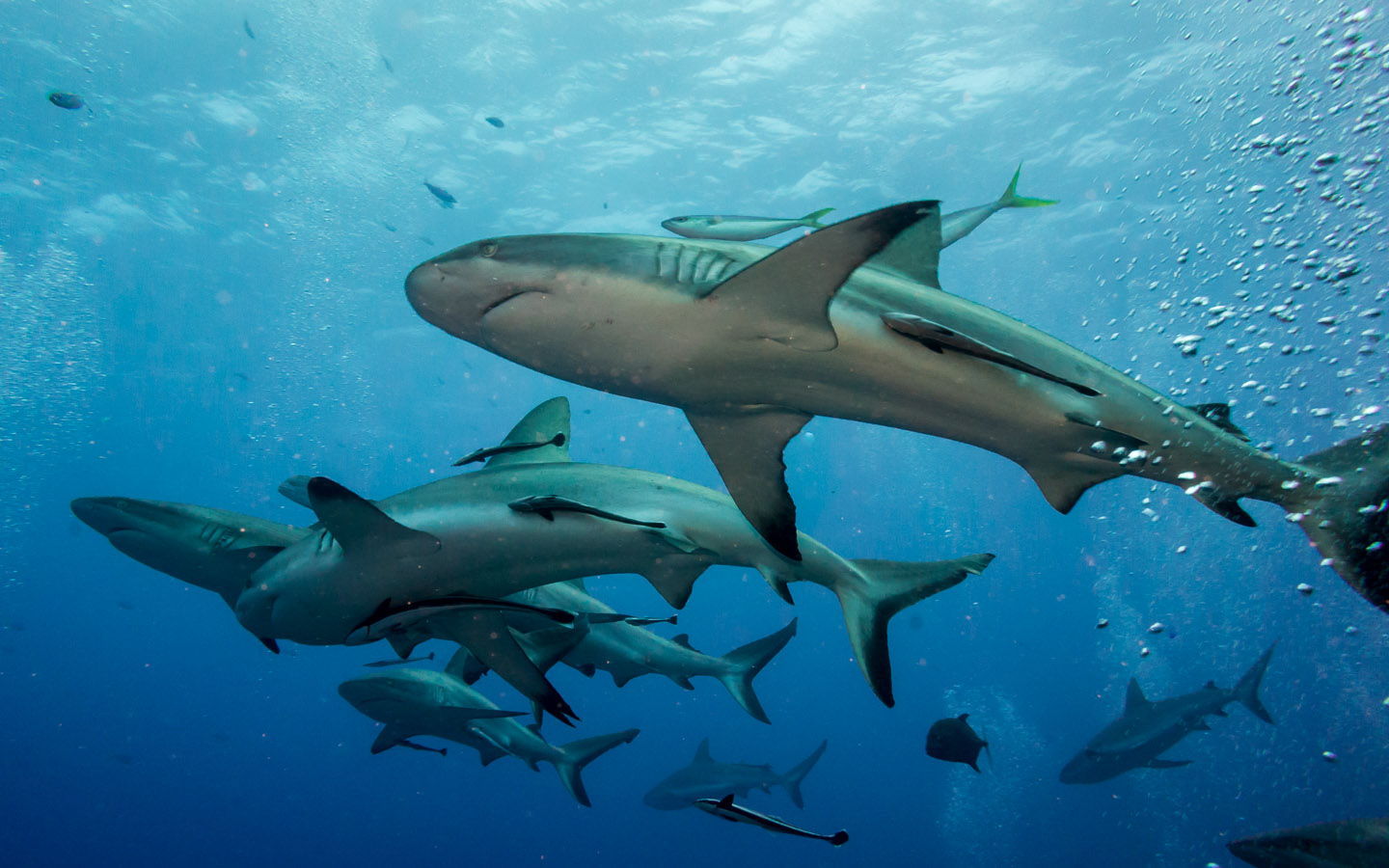
There is a moment at North Horn that divers describe the same way years later. You drop down the reef to the lip of the wall, settle onto a natural amphitheatre of coral, and below your fins the seabed simply stops. Beyond it is a kilometre of open blue, and out of that blue come the sharks: grey reef sharks in twenties and thirties, silvertips with their pale-edged fins, the occasional hammerhead cruising the deeper water. Osprey Reef is one of the most remote dive sites in Australia, a lone atoll standing in the open Coral Sea more than 300 kilometres from Cairns, and it is the kind of place divers plan their trips around for years.
Osprey is a classic oceanic atoll, a roughly oval ring of reef about 25 kilometres long and 12 wide, enclosing a shallow lagoon and rising sheer from the abyssal floor of the Coral Sea. It sits within the Coral Sea Marine Park, a vast Commonwealth reserve well beyond the outer edge of the Great Barrier Reef, and its isolation is the whole point. There is no land, no river runoff, no fishing pressure and no day-boat traffic, just an island of reef in deep ocean, fed by the clearest water and the richest pelagic life in the region. The only way to dive it is by liveaboard, and that filter, the days at sea it takes to reach it, is part of what keeps the place as wild as it is.
The diving here is wall diving in its purest form. At North Horn the reef begins barely five metres down and slopes to around 40 metres before the wall falls vertically toward a thousand metres and more. That geometry is exhilarating and unforgiving in equal measure, because there is no bottom to catch a careless diver, and good buoyancy and strict depth discipline are non-negotiable. The atoll holds a string of named sites around its rim, among them North Horn and North Horn Wall, Around the Bend, False Entrance, Admiralty, Silver City and the aptly named Secret Caves. The walls are dressed in enormous soft corals and gorgonian sea fans, cut by caves, grottoes and overhangs, and on the sites where current runs they make superb drift dives along faces that glow with colour in the clear light.
The sharks define Osprey, and North Horn is their stage. Grey reef sharks patrol the wall in densities that would be extraordinary anywhere else, and on the site's organised shark feed, run by the liveaboards when conditions allow, fifty or more reef sharks can gather in a natural coral amphitheatre while divers watch from the tiers above. Silvertip sharks, larger and bolder, work the edges, whitetip reef sharks rest on the ledges, and scalloped hammerheads patrol the cooler, deeper water off the points. The cast does not stop at sharks. Dogtooth tuna and giant trevally hunt the drop-offs, barracuda hang in silver curtains, manta rays and turtles pass along the walls, and the deep water hides the nautilus that the boats famously bring up in baited traps for a rare look at a living fossil. The water is warm, between about 24 and 29°C, and so clear, routinely 40 metres and sometimes close to 100, that the animals seem to hang in air.
Osprey rewards divers who can handle open-ocean conditions and the discipline of bottomless walls. Visibility is among the best on the planet, typically 30 to 40 metres and on the clearest days far beyond that, because the atoll sits in deep oceanic water with nothing to cloud it. Water temperature stays warm year-round, in the mid to high twenties, so a 3mm to 5mm wetsuit is plenty. Current varies by site and tide, ranging from still to a brisk drift, and where it runs it concentrates the fish life that makes the place famous. The limiting factor is the sea state of the crossing rather than the diving itself: the Coral Sea is open water, and trips run seasonally with the calmest and most reliable conditions generally falling between September and January. Once on the reef, the diving is sheltered by the atoll's own structure, but the depth and the remoteness mean conservative profiles are the rule, not the exception.
Beyond the headline shark dives, Osprey offers some of the best wall and cave diving in Australia. The soft coral gardens and gorgonian fans are spectacular subjects for wide-angle photography, the grottoes and swim-throughs reward careful exploration, and the sheer scale of the drop-offs gives the diving a genuine sense of edge. Many itineraries pair Osprey with other Coral Sea reefs and with the Ribbon Reefs of the outer Great Barrier Reef, so a single trip can stitch together the Cod Hole, the Ribbon Reef pinnacles and the Coral Sea walls. For divers chasing big animals in clear water, there are few richer weeks of diving anywhere.
Osprey Reef is not a casual dive, and that is exactly its appeal. It takes time, money and a tolerance for open water to reach, and in return it offers something that has become genuinely rare: a place where the ocean still behaves as it did before people arrived, where sharks gather in numbers and the wall falls away into water no one has ever stood at the bottom of. Divers come home from North Horn changed, a little, by the scale of it.
Site Access and Logistics
Osprey Reef is accessible only by liveaboard, on multi-day Coral Sea expeditions departing from Cairns and Port Douglas. The established operators are Mike Ball Dive Expeditions, whose vessel Spoilsport runs Coral Sea and fly-dive itineraries, and Spirit of Freedom, which combines Osprey with the Ribbon Reefs. Trips range from shorter fly-in, fly-out expeditions to seven-night voyages, and the reef sits more than 300 kilometres offshore, so there is no shore access and no facilities beyond the boat.
The diving suits experienced divers. Advanced Open Water certification with solid buoyancy, deeper-water experience and comfort in current and open water is the practical standard, and the bottomless walls and remote setting reward divers who plan conservatively and watch their depth and gas closely. Nitrox is standard on the liveaboards and well worth using across a week of repetitive diving. Because the nearest recompression facilities are far away on the mainland, sensible profiles and good surface intervals are essential.
Trips and the famous North Horn shark dive are run through operators including Mike Ball Dive Expeditions.
Sources
- Mike Ball Dive Expeditions, Osprey Reef liveaboard: https://www.mikeball.com/great-barrier-reef-liveaboard/osprey-reef-liveaboard/ - Parks Australia, Coral Sea Marine Park, Osprey Reef: https://australianmarineparks.gov.au/parks/coral-sea-marine-park/explore-coral-sea-marine-park/osprey-reef/ - Spirit of Freedom, Coral Sea reef dive sites: https://www.spiritoffreedom.com.au/diving/coral-sea-reefs/dive-sites - Dive The World, Osprey Reef diving: https://www.dive-the-world.com/diving-sites-australia-great-barrier-reef-osprey-reef.php - Cairns Dive Adventures, Osprey Reef and Coral Sea liveaboard diving: https://cairnsdiveadventures.com.au/liveaboard-diving-cairns/osprey-reef-coral-sea-liveaboard-diving/
Visibility at Osprey Reef
Visibility at Osprey Reef typically ranges from 30 to 60 metres, though it shifts with swell, wind and recent rainfall. June-November generally offers the best conditions for diving here.
Right now: approximately 8 m, 98% confidence (updated 10:34 AEDT).
Air, gear and guides near Osprey Reef
For fills, hire gear, servicing and guided dives, browse dive shops in Cairns, Gold Coast, Brisbane and Townsville.