DJI Osmo 360 II First Look
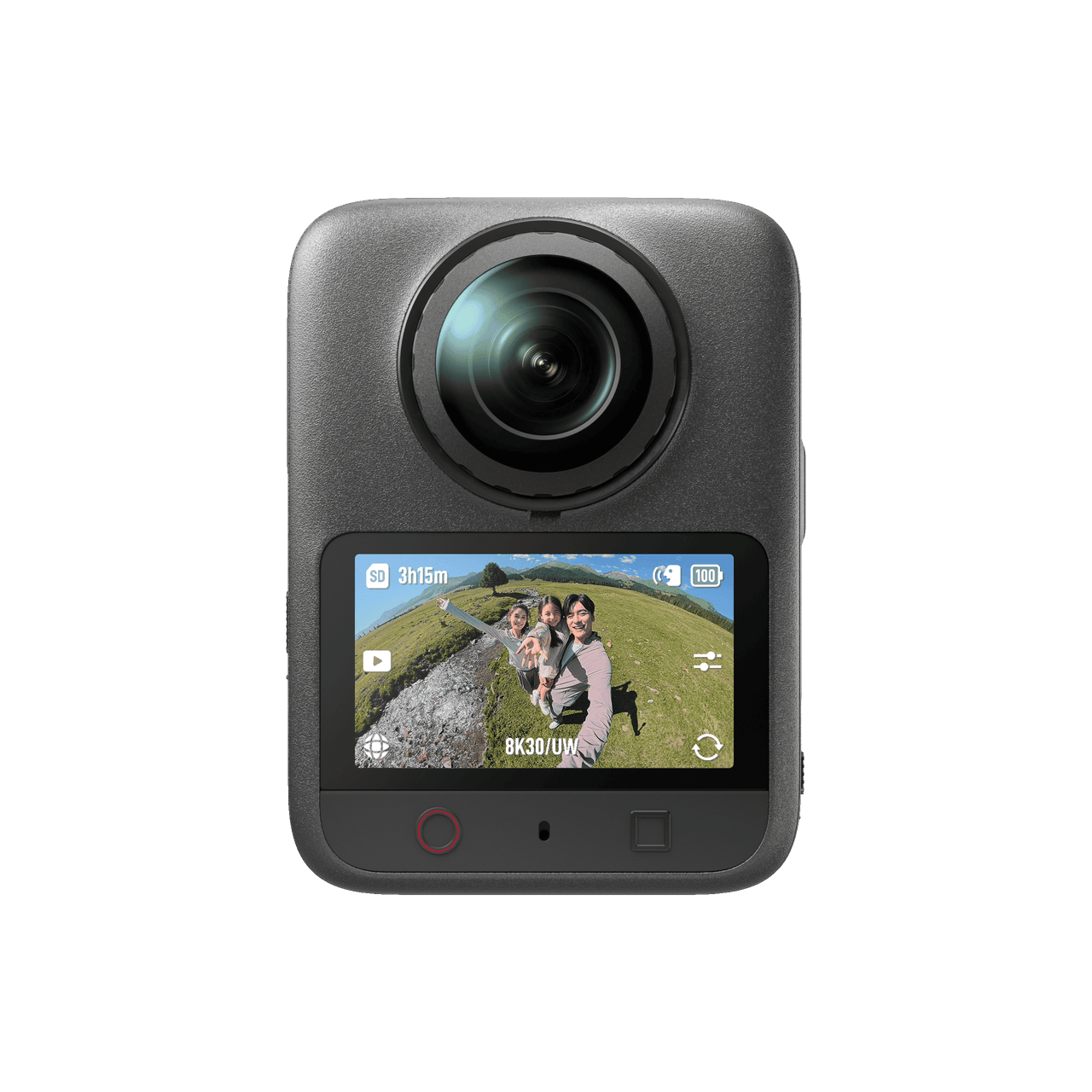
DJI's Osmo 360 II brings native 8K/60 360-degree video and replaceable lenses, rated to 10 m bare and 50 m in its separately sold dive case.
Where to Buy
Affiliate links: we may earn from qualified purchases
*First look based on manufacturer specifications and published reports. Hands-on review to follow.*
Point a normal action camera at a manta and there is a decent chance the best moment happens just out of frame. A 360 camera solves that by recording everything around it, so the framing is chosen afterwards on a laptop or phone instead of in the water. The DJI Osmo 360 II, launched globally on 3 September 2026, is DJI's second 360 camera. Its headline upgrades are native 8K video at 60 fps, a new square HDR sensor, a claimed 14.5 stops of dynamic range and lenses the owner can replace.
It isn't a dive camera first. It is an all-round adventure camera that is waterproof to 10 m on its own and rated to 50 m inside DJI's Osmo 360 Invisible Waterproof Case, which is sold separately. DJI itself does not recommend shooting underwater without the case, because the domed fisheye lenses cause distortion and stitching errors in water. For snorkellers on Ningaloo or Great Barrier Reef day trips, as well as scuba divers, the case is effectively part of the purchase. For travellers, the camera weighs 183 g and has 105 GB of usable storage built in, which is one less memory card to lose on a liveaboard.
Sensor and Image Quality
DJI's specification sheet lists dual 1/1.1-inch square CMOS sensors, which DJI says give each lens the 360-degree imaging area of a 1-inch sensor, with 2.4 μm pixels and an f/1.9 aperture. Dynamic range is rated at 14.5 stops, up from 13.5 stops on the original Osmo 360 according to iTWire and DIVE Magazine. Underwater, dynamic range matters more than resolution. Shooting up towards the surface with a dark reef below is exactly the high-contrast scene that blows out highlights or crushes shadows on smaller sensors. DJI also offers 10-bit colour in every video format and its D-Log M flat profile, which leave more room to correct the blue-green cast in editing.
For murky temperate sites and dusk dives, DJI lists AI SuperNight 2.0, a low-light noise-reduction mode available up to 8K/60. DJI also quotes 120 MP HDR 360 photos and a 16K 360 timelapse mode.
Video Modes
The main mode is 8K at 60 fps in full 360. DJI says this gives smoother motion and more room to crop when a single flat frame is pulled from the sphere afterwards. There is also an 8K/120 fps Vortex mode, plus up to 64x pano slow motion created by AI frame interpolation in DJI Studio rather than captured natively. A four-microphone array with wind noise reduction handles audio on land, though like any camera underwater it will mostly record bubbles.
Waterproofing and the Dive Case
Unhoused, the Osmo 360 II is rated to 10 m, but DJI's own guidance is to use the Invisible Waterproof Case for underwater shooting. The case is rated to 50 m, past the 40 m recreational limit, and DJI says its custom optical design corrects underwater distortion. DIVE Magazine and Seavu both report that the same case fits the original Osmo 360. DJI gives a safe stitching distance of 1 m when the case is used underwater, against 75 cm on land, so subjects need to stay at least that far from the camera for clean stitching.
Seavu reports that the case comes with anti-fog inserts and that the Osmo 360 II has a Waterproof Case mode, which moves control to the power button because the touchscreen can't be used inside the case. Seavu also points out that Wi-Fi and Bluetooth don't travel through water, so there's no live phone preview once the camera is submerged. In practice, that means choosing the mode and starting recording before the descent, then relying on the 360 field of view to catch the action.
Battery, Lenses and Build
DJI claims up to 100 minutes of continuous 8K/30 recording and an 80% charge in 22 minutes from the 2,150 mAh Extreme Battery Plus, up from 1,950 mAh on the first model, according to TechRadar and Seavu. TechRadar's testing on land backed up the 100-minute figure, and it notes the batteries are interchangeable with recent Osmo Action cameras. That runtime comfortably covers a single dive. On a two-dive boat morning, though, a top-up between dives or a spare battery is sensible.
The replaceable lens elements are a significant change for divers, because the protruding lenses on 360 cameras are easy to scratch on a dive deck or a rocky shore entry. DJI's Australian store sells lens replacement kits at A$39 for one lens and A$49 for both. The camera is rated to operate from -20°C to 45°C and measures 61 x 36.3 x 81 mm.
Key Specifications
| Specification | Detail | |---|---| | Sensor | Dual 1/1.1-inch square CMOS (1-inch-equivalent 360 imaging, per DJI); 2.4 μm pixels; f/1.9 | | Max video | 8K/60 fps (360); 8K/120 fps Vortex mode | | Photo | 120 MP HDR 360 | | Dynamic range | 14.5 stops (manufacturer claim) | | Colour | 10-bit, D-Log M | | Waterproof rating | 10 m unhoused; 50 m in Osmo 360 Invisible Waterproof Case (sold separately) | | Underwater stitching distance | 1 m (in the case) | | Battery | 2,150 mAh; up to 100 min at 8K/30; 80% in 22 min | | Storage | 128 GB built in (105 GB usable) plus microSD | | Weight | 183 g | | Dimensions | 61 x 36.3 x 81 mm | | Lenses | User-replaceable (kits A$39 single, A$49 dual) | | Price (AU) | A$899 Standard Combo; A$1,079 Adventure Combo; A$1,178 Diving Combo (DJI Australia store) |
Drawbacks
- Scuba means the case, and the case is scarce. The Invisible Waterproof Case is sold separately (A$145 at DJI's Australian store), and both it and the A$1,178 Diving Combo that includes it showed as out of stock there in mid-October 2026. Seavu reports the case sold out quickly after release. - No live view underwater. With no wireless link through water, framing and settings have to be sorted on the surface. - Heat at the top setting. TechRadar reports the camera shutting down after about 19 minutes of 8K/60 recording indoors at room temperature. How it behaves in water hasn't been reported yet. - Fogging and stitching are unproven. Seavu says fogging in the new case still needs proving in real conditions, after fogging problems with the original Osmo 360, and underwater stitch quality will need hands-on footage to judge. - Editing workload. 8K 360 files are large, and reframing every clip takes time and a capable computer or phone.
Verdict
On paper, the Osmo 360 II is the most dive-relevant 360 camera DJI has made. The larger sensor, 10-bit colour and replaceable lenses target the exact weaknesses that show up underwater and on boat decks, and at A$899 the Standard Combo undercuts the Insta360 X6, which iTWire and TechRadar list at A$1,049.99. It suits snorkellers and recreational divers who want immersive footage of big-animal encounters, don't mind buying the case separately and are happy to reframe in editing. Divers chasing macro, or anyone who wants to frame each shot deliberately, should skip it in favour of a conventional action camera such as the GoPro Hero 13 in a housing.
Sources
- DJI: Osmo 360 II launch announcement (3 Sep 2026) - DJI: Osmo 360 II specifications - DJI Store Australia: Osmo 360 II - iTWire: Osmo 360 II Australian pricing and specifications - DIVE Magazine: DJI launches Osmo 360 II - TechRadar: DJI Osmo 360 II review - Seavu: DJI Osmo 360 II underwater
Where to Buy
Get the DJI Osmo 360 II First Look and experience the difference quality gear makes underwater.
Standard Combo A$899 at DJI's Australian store and Amazon AU; the 50 m Invisible Waterproof Case is extra (A$145).