Fourth Element Argonaut 3.0 Flex Review
A buy-once drysuit built to your measurements rather than a size chart. Better trim, less lead and field-serviceable throughout, at around $4,100 in Australia.
Where to Buy
Affiliate links: we may earn from qualified purchases
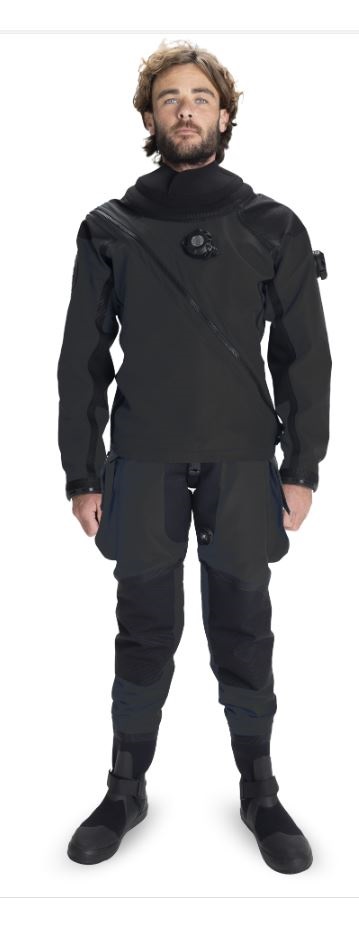
The Fourth Element Argonaut 3.0 Flex is a buy-once drysuit, and at around $4,100 in Australia it is priced like one. What separates it from every other suit on this list is that it is not sold in sizes: it is built to your measurements. On a drysuit, where a badly fitting shell is the direct cause of poor trim and cold dives, that is worth more than any material or valve specification.
Overview: Fourth Element Argonaut 3.0 Flex
Every drysuit problem a recreational diver complains about traces back to fit. Too much fabric around the legs traps air that migrates to your feet and inverts you. Too little across the shoulders and you cannot reach your valves. A suit that is right in the torso but long in the arms floods a wrist seal every time you turn your head. Off-the-rack suits solve this for the divers who happen to match the pattern and compromise for everyone else.
Fourth Element builds the Argonaut using its BIOMAP measurement process, generating a suit cut to your body rather than to a size chart. In practice this means a shell that holds a smaller, more predictable air bubble, which translates directly into easier trim, less weight on your belt and a suit that does not fight you when you reach behind for an isolator.
The 3.0 is the current generation. The Flex designation refers to the laminate: a more supple material than the harder-wearing Stealth version, which sits around $4,690. Flex suits recreational and lighter technical diving where comfort and mobility matter more than surviving cave abrasion. If you are squeezing through restrictions in a Mount Gambier sinkhole, buy the Stealth. For everything else in Australian diving, the Flex is the right pick.
Fourth Element's serviceability record is a real part of the value. Seals, zips and valves are all field-replaceable items rather than a return-to-manufacturer exercise, which is what makes a $4,100 suit a twenty year purchase rather than a five year one.
Key Features
- Custom built to individual measurements using Fourth Element's BIOMAP process - Membrane construction using the supple Flex laminate, tuned for mobility over abrasion resistance - Composite YKK dry zipper, lighter and more flexible than traditional brass - Field-replaceable seals, zip and valves for long-term serviceability - Available with a choice of seal and boot or sock configurations - Fully compatible with the Fourth Element Halo and Arctic undergarment range - Australian dealer pricing around $4,100 for the Flex, around $4,690 for the harder-wearing Stealth
The Good
- A tailored fit fixes problems most divers wrongly blame on themselves. Foot-first ascents, difficulty reaching valves and constant fiddling with trim are usually a fit issue, not a skill issue. A suit cut to your measurements removes the cause rather than teaching you to compensate for it. - Less trapped air means less lead and better trim. A shell that follows your body holds a smaller bubble. Divers routinely drop weight moving from an off-the-rack membrane suit to a tailored one, and the whole rig becomes easier to hold horizontal. - The Flex laminate is the correct choice for Australian recreational diving. Suppleness matters far more than armour for pier dives, wrecks and reef. Choosing Flex over Stealth is choosing comfort on the ninety percent of dives that never touch a rock. - Everything that wears out can be replaced in the field. Seals, zip and valves are all serviceable items. This is the difference between a suit you own for two decades and one you replace when the first expensive component fails. - The undergarment ecosystem is genuinely well matched. Pairing the Argonaut with the Halo or Arctic range gives a properly integrated system, and Fourth Element's undergarments are the best-regarded part of a very well-regarded product line.
The Bad
- The price is a serious commitment, and it is not the whole cost. At around $4,100 before undergarments, you should plan on close to $5,000 for a complete system. That is more than many divers spend on every other piece of gear combined. - Custom sizing means a lead time and no try-before-you-buy. You cannot walk into a shop, pull one off the rack and dive it that weekend. You are measured, you wait, and you trust the process. For divers who like to handle gear before committing, that is uncomfortable. - A tailored suit tolerates body changes poorly. A suit cut precisely to you in 2026 is cut precisely to the 2026 version of you. Significant weight change is a much bigger problem on a custom shell than on a generously sized off-the-rack one. - The Flex laminate is deliberately not the tough option. Choosing mobility means accepting less abrasion resistance. Divers heading into caves, heavy wreck penetration or regular rock work should pay the extra for the Stealth rather than wearing the Flex out early.
Verdict
The Argonaut 3.0 Flex is the best drysuit an Australian recreational diver can realistically buy, and the tailored fit is the reason rather than any single specification. Trim, weighting and comfort all improve when the shell actually matches your body, and the field-serviceable construction means the cost amortises over a very long time.
Buy it if you dive most weekends, you intend to dive for years, and off-the-rack suits have never quite fitted you. Look at the Bare Aqua Trek 1 if you want most of the capability for a good deal less money, or the Fourth Element Hydra if you are still finding out whether drysuit diving is for you.
Star Rating: ⭐⭐⭐⭐⭐ (5/5)
Where to Buy
Get the Fourth Element Argonaut 3.0 Flex Review and experience the difference quality gear makes underwater.