Governor Island Marine Reserve
Bicheno, TAS
Governor Island Marine Reserve, Bicheno
By ScubaDownUnder Team · 2026-08-28
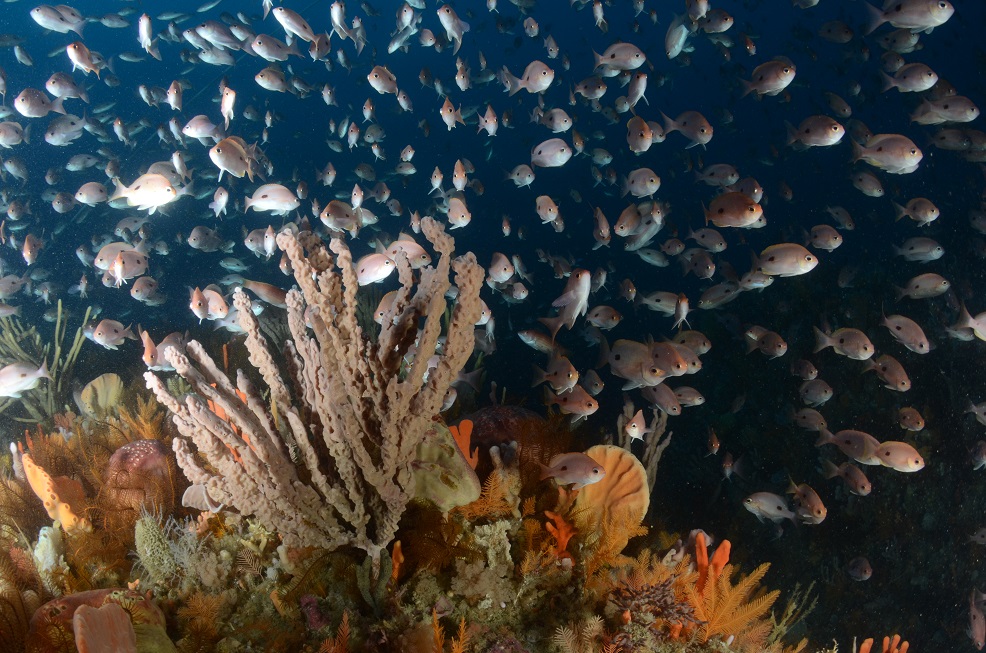
Tasmania's east coast keeps its best diving in cold, clear water, and nowhere more so than off Bicheno. A few minutes by boat from the town, the granite mass of Governor Island drops into a marine reserve that ranks among the finest temperate dives in the country. The walls here fall away in tiers, every surface carpeted in jewel anemones and sponge in colours that seem to belong to the tropics, and Australian fur seals torpedo past divers working the kelp. It is cold-water diving at its most spectacular, and Tasmanians have long known it as the jewel of the state's underwater world.
Governor Island was declared one of Tasmania's first marine reserves, protecting the waters off Bicheno on the island's east coast. The granite geology gives the diving its character: huge boulders, sheer walls and deep gutters, scoured clean by the cold, nutrient-rich water of the Tasman Sea and clothed in invertebrate life. More than thirty-five named dive sites lie within the reserve, from shallow kelp gardens to deep sponge walls, and the protection means the marine life is dense and undisturbed. This is temperate diving with the colour and structure people normally associate with the reef, rendered in Tasmania's cool, green-blue water.
The reserve's sites range from gentle to genuinely demanding. The signature dive, the Golden Bommies, is a pair of pinnacles smothered in sponges, crinoids and sea whips, widely considered the island's finest sponge garden, bottoming out around forty metres. Magic Garden runs down a series of vertical walls from the shallows to about thirty-eight metres, and the Hairy Wall and other sites add caves, gutters and swim-throughs. Most dives work the walls and boulders, dropping along faces lit up with anemones and sponge, with the deeper bommies reserved for experienced divers. The terrain is dramatic and three-dimensional, all granite architecture and overhangs, and the cold water brings species shallower than they would be further north, so even mid-depth dives feel rich.
The colour is the first thing divers notice. The walls are carpeted in jewel anemones and zoanthids in pinks, purples and golds, and the deeper sponge gardens add the reds and oranges of the Golden Bommies. Schools of butterfly perch and bastard trumpeter hang over the reef, boarfish, banded morwong and leatherjackets work the boulders, and southern rock lobster and octopus tuck into the cracks. Bull kelp sways in the shallows. The headline animals, though, are the Australian fur seals, which haul out on Alligator Rock and regularly join divers in the water, looping and twisting around them with the curiosity the species is famous for. It is a marine community that rewards both the wide-angle photographer chasing the walls and the macro diver working the sponge.
This is cold-water diving and it asks for the right preparation. Water temperature ranges from around 12°C in winter to 18°C in summer, firmly drysuit or heavy semi-dry territory year-round. Counterintuitively, winter often brings the best visibility, with the cold, clear water opening to twenty or thirty metres, while summer can be a little greener. The reserve sits on an exposed coast, so swell and wind govern access, and some of the outer sites carry current, which is why local operators recommend that visiting divers go guided and that the deeper sites be left to the experienced. The diving runs year-round for those equipped for the cold, and the reserve's range of sites means there is usually somewhere sheltered to dive whatever the conditions.
Governor Island rewards repeat diving, because thirty-five sites cannot be learned in a single trip. The deep sponge gardens are a draw for photographers, the seal encounters are unpredictable and thrilling, and the granite architecture, with its caves and swim-throughs, gives the diving a real sense of exploration. For divers used to the warm-water reefs of the mainland, the reserve is a revelation, proof that Australia's best diving is not all in the tropics. The cold keeps the crowds away, and a day on the reserve often feels like having one of the country's great dive sites to yourself.
Governor Island is the argument for cold-water diving made in full colour. Sponge walls and jewel anemones, deep golden bommies and the rush of a curious fur seal, all in clear Tasmanian water a few minutes off Bicheno. It asks for a drysuit and a tolerance for the cold, and it gives back some of the most beautiful temperate diving anywhere in the world.
## Site Access and Logistics
Governor Island Marine Reserve is a boat dive, reached on a short run from Bicheno, on Tasmania's east coast about two and a half hours from both Hobart and Launceston. The local dive operator runs charters into the reserve, supplies gear and air and guides visiting divers, which is the recommended way to dive a cold-water, current-prone site with so many options.
This is best treated as an advanced cold-water destination. The walls and bommies reach beyond thirty metres, the water is cold enough to demand a drysuit or heavy semi-dry, and some sites carry current and swell, so Advanced Open Water certification with cold-water experience and good buoyancy is the sensible standard, with the shallower walls accessible to capable intermediate divers under guidance. A surface marker buoy is standard, and conservative profiles matter on the deeper sponge gardens. As a marine reserve, the area is protected, so divers take only photographs.
Charters, gear and guiding into the reserve are run by the local operator, [Bicheno Dive Centre](https://www.myguidetasmania.com/things-to-do/bicheno-dive-centre).
## Sources
- Indo Pacific Images, diving Tasmania guide: [https://indopacificimages.com/diving-tasmania/](https://indopacificimages.com/diving-tasmania/) - Scuba Diving magazine, a scuba diver's guide to Tasmania: [https://www.scubadiving.com/scuba-divers-guide-to-tasmania](https://www.scubadiving.com/scuba-divers-guide-to-tasmania) - Parks and Wildlife Service Tasmania, marine reserves: [https://parks.tas.gov.au/explore-our-parks/marine-reserves](https://parks.tas.gov.au/explore-our-parks/marine-reserves) - 50 Great Dives, Bicheno: [https://50greatdives.com/50gtdives/entry/47/](https://50greatdives.com/50gtdives/entry/47/) - Discover Tasmania, diving and snorkelling: [https://www.discovertasmania.com.au/things-to-do/outdoor-and-adventure/diving-and-snorkelling/](https://www.discovertasmania.com.au/things-to-do/outdoor-and-adventure/diving-and-snorkelling/)
Visibility at Governor Island Marine Reserve
Visibility at Governor Island Marine Reserve typically ranges from 10 to 20 metres, though it shifts with swell, wind and recent rainfall. April to October generally offers the best conditions for diving here.
Right now: approximately 15 m, 98% confidence (updated 03:26 AEST).
View the live forecast and 7-day outlook for Governor Island Marine Reserve →