Tinderbox Marine Reserve
Hobart, TAS
Tinderbox Marine Reserve, Hobart
By ScubaDownUnder Team · 2026-09-09
Half an hour south of Hobart, a small beach at Tinderbox hides one of Tasmania's most accessible underwater experiences. Just offshore, a sandstone reef runs parallel to the shore, and a marked trail leads divers and snorkellers along it past submerged plaques that name the life around them. The water is clear, shallow and famously cold, and it shelters bigbelly seahorses, weedy seadragons and crayfish in a marine reserve that has been protected since 1991. It is the dive that introduces southern Tasmania to its own underwater world.
The Tinderbox Marine Reserve lies off the Tinderbox Peninsula, near Blackmans Bay about twenty-three kilometres south of Hobart, on the sheltered water where the Derwent estuary meets the D'Entrecasteaux Channel. The reserve stretches more than a kilometre along the shore and reaches a couple of hundred metres out, and an underwater interpretive trail, marked with information plates, guides visitors along the sandstone reef. Decades of protection have paid off: the numbers of fish, crayfish and octopus have risen markedly since the reserve was declared, and the site is now both a beloved local dive and a place to learn about a temperate marine ecosystem.
This is shallow, sheltered, easy diving. Most of it happens in six to ten metres of water along the sandstone reef just off the beach, with the marked trail giving snorkellers and divers a route to follow. The reef is low and broken, with ledges, kelp and sponge that shelter the marine life, and the gentle depth and protected position make it ideal for beginners, training and snorkelling. Divers work slowly along the reef, reading the plaques and the ledges, and because the water is so shallow a single tank lasts a long time. The trail makes navigation simple, and the whole site is a short swim from the sand.
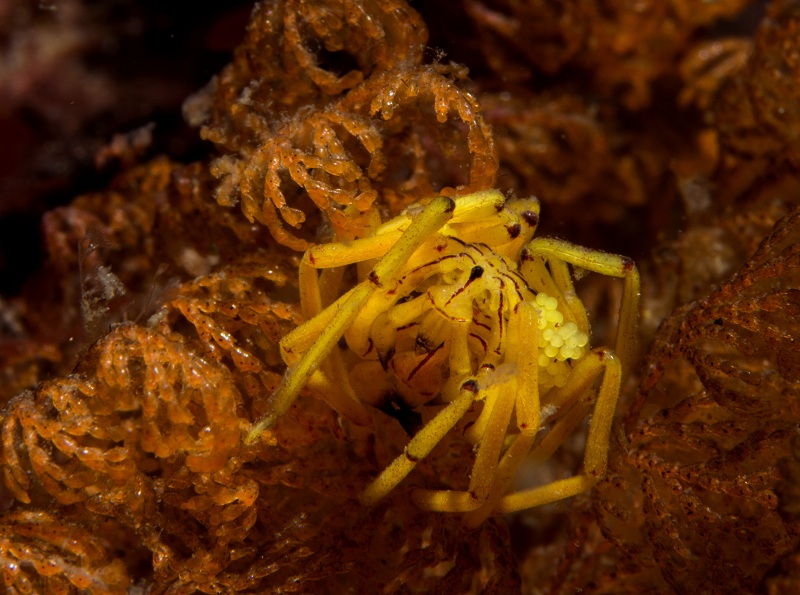
For a shallow shore dive, Tinderbox is rich. Bigbelly seahorses cling to the weed, weedy seadragons drift along the reef, and southern rock lobster back into the ledges. Wrasse and banded morwong work the reef, southern calamari squid hunt the edges, and octopus, shrimp and crabs fill the cracks. The reserve's protection means all of this is more abundant than on comparable unprotected reefs, and the clear water makes it easy to watch. It is a temperate community rather than a tropical one, all the more rewarding for the patience it asks, and the interpretive trail helps newcomers make sense of what they are seeing.
The defining feature of Tinderbox is the cold. The water here is famously freezing, even on a hot summer day, so a drysuit or heavy semi-dry is the rule year-round. In exchange, the sheltered position keeps the site diveable in a wide range of weather, and the water is generally clear, often in the five to fifteen metre range and best in calm conditions and the cooler months. There is little current, and the shallow, protected water makes for about as benign a dive as Tasmania offers. The reserve dives year-round, with the main variable being the wind, since the shallow water churns up in a blow.
Tinderbox is above all a learning and snorkelling site, and the interpretive trail makes it one of the best places in the state to introduce someone to temperate diving. The seahorses and seadragons are a draw for photographers, and the shallow, sheltered water suits long, relaxed dives and families. It sits within easy reach of Hobart, so it is a popular club and training site, and pairs naturally with the city's other shore dives. For all its gentleness, it is a genuine slice of Tasmania's rich cold-water marine life, close to the capital.
Tinderbox Marine Reserve proves that you do not need depth or distance to find Tasmania's underwater riches. A sheltered sandstone reef a short swim from a small beach, marked by a trail and alive with seahorses, seadragons and crayfish, it asks only that a diver dress for the cold. It is the friendliest introduction to southern Tasmania's marine life, and a quiet reward for anyone who makes the short trip south of Hobart.
## Site Access and Logistics
Tinderbox Marine Reserve is a shore dive about thirty minutes south of Hobart, reached from the small beach at Tinderbox Bay, with parking nearby. No boat is needed; divers and snorkellers enter from the beach and follow the marked underwater trail along the reef. Hobart dive shops provide air, gear and advice.
The shallow, sheltered water, mostly six to ten metres, makes Tinderbox one of the best beginner, training and snorkelling sites in southern Tasmania. The one thing not to underestimate is the cold: the water is freezing year-round, so a drysuit or heavy semi-dry is essential, even in summer. There is little current, and the site is best dived in calm weather for the clearest water. As a marine reserve, Tinderbox is no-take, so divers leave the seahorses, crayfish and their habitat undisturbed.
The reserve is managed by [Parks and Wildlife Service Tasmania](https://parks.tas.gov.au/things-to-do/snorkelling), and Hobart dive shops support trips with air and gear.
## Sources
- Parks and Wildlife Service Tasmania, snorkelling and scuba diving: [https://parks.tas.gov.au/things-to-do/snorkelling](https://parks.tas.gov.au/things-to-do/snorkelling) - TChange, Tasmania underwater diving: [http://www.tchange.com.au/recreation/diving.html](http://www.tchange.com.au/recreation/diving.html) - Lonely Planet, Tinderbox Marine Reserve: [https://www.lonelyplanet.com/australia/tasmania/hobart/kingston/attractions/tinderbox-marine-reserve/a/poi-sig/1449061/1338037](https://www.lonelyplanet.com/australia/tasmania/hobart/kingston/attractions/tinderbox-marine-reserve/a/poi-sig/1449061/1338037)
Visibility at Tinderbox Marine Reserve
Visibility at Tinderbox Marine Reserve typically ranges from 5 to 12 metres, though it shifts with swell, wind and recent rainfall. All year generally offers the best conditions for diving here.