Cressi Donatello Dive Computer Review
A tough, genuinely readable first dive computer for around $459, with four dive modes, a user-replaceable battery and a single button interface that divides opinion.
Where to Buy
Affiliate links — we may earn from qualified purchases
The Cressi Donatello is a genuinely good first dive computer for around $459, and its single-button interface is either its best feature or its most annoying depending on how patient you are. It sits alongside the Cressi Leonardo and the Suunto Zoop Novo as the sensible entry-level choice for Australian divers, with a large backlit display, four dive modes including freediving, and a battery you change yourself.
## Overview: Cressi Donatello
Cressi has spent years refining the same idea: a rugged, no-nonsense computer that a newly certified diver can operate without reading a manual twice. The Donatello is that philosophy in its most distilled form. There is one button. You press it, hold it, and cycle through air, nitrox, gauge and free modes. There are no submenus to get lost in and nothing to accidentally misconfigure at 18 metres.
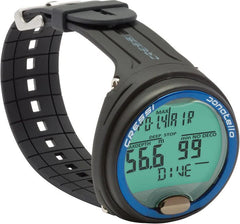
The display is Cressi's UFDS layout, and it is the reason to buy this computer over its price rivals. The numbers are genuinely large and high contrast, which matters more than any other single factor for a diver still task loading through buoyancy, navigation and gas checks. In the variable, often green visibility of NSW and Victorian shore dives, a display you read instantly beats one with more features you cannot see.
It runs Cressi's RGBM algorithm with deep stop, rated to 150 metres of water resistance, with a logbook holding up to 50 dives per category and an optional PC interface for downloading profiles. The battery is user-replaceable, and there is a replaceable protective screen over the display, which is a thoughtful touch for a computer that will spend its life being dragged across boat decks and rocky shore entries at places like Shelly Beach or Portsea Pier.
Against the Suunto Zoop Novo at a similar price, the Donatello adds a freediving mode and a slightly clearer display. Against the Cressi Leonardo, it is essentially the same computer in a different case.
## Key Features
- Wide UFDS display with extra large high-contrast digits and a high-power backlight - Four dive modes: air, nitrox, gauge and free - Cressi RGBM algorithm with deep stop - Complete nitrox management with adjustable settings and a reset option - Single button interface for all mode and parameter changes - User-replaceable battery, no dealer service required - Replaceable protective screen over the display - Logbook storing up to 50 dives per category, with optional PC interface for profile download - Water resistant to 150 metres - Surface interval, desaturation and no-fly time calculators, 12 or 24 hour clock with calendar
## The Good
- **The display is the best thing about it, and it is the thing that matters most.** Extra large digits with strong contrast and an effective backlight mean a new diver reads depth and no-decompression time without hesitation. That confidence at 15 metres is worth more to a beginner than air integration or a compass they would not use. - **The user-replaceable battery removes an ongoing cost and an inconvenience.** No sending it away, no service fee, no three week wait before a trip. A standard cell and a coin gets you back in the water, which is exactly right for a computer at this price. - **The replaceable protective screen is a genuinely smart piece of design.** Entry-level computers get thrashed. Being able to swap a scratched cover for a few dollars, rather than living with a scarred display or replacing the unit, meaningfully extends its usable life. - **Freediving mode adds real value at this price.** Plenty of Australian divers spearfish or freedive between scuba trips, and having one wrist unit that logs both is a practical saving over buying a second computer. - **The reset function is a genuine convenience for dive schools and shared gear.** Being able to clear tissue loading for a new user is a feature entry-level competitors often lock away.
## The Bad
- **The single button is slow once you know what you are doing.** Cycling through settings with one control is fine for the first ten dives and tedious by the fiftieth. Changing nitrox mix or checking a logged dive takes more presses than it should, and there is a learning curve to the press-and-hold timings. - **The RGBM algorithm has fixed conservatism.** There are no gradient factors and no user-set conservatism levels of the kind the Mares Quad Ci or any Shearwater offers. You get Cressi's interpretation of your nitrogen loading and no say in it, which is fine for recreational profiles and limiting the moment you start diving seriously. - **No compass, no air integration, no Bluetooth.** Log download needs the optional interface rather than a wireless connection to your phone, which feels dated in 2026 when even mid-range computers sync to an app. - **It is a beginner computer and you may outgrow it in two years.** If you dive frequently and progress toward deeper or multi-gas profiles, this will become your backup rather than your primary. That is not a flaw so much as a budget reality, but plan for it.
## Verdict
The Donatello does the important things well: it shows you depth and remaining bottom time in numbers you can actually read, it handles nitrox properly, and it does not require a dealer visit or a charging cable to keep working. For a diver in their first fifty dives who wants a reliable instrument rather than a gadget, around $459 is well spent.
Buy it if you are newly certified, diving recreationally, and want a computer that is simple, tough and cheap to keep running. Look at the Mares Quad Ci or a Shearwater Peregrine if you already know you want air integration, a compass, or control over your own conservatism settings, because the Donatello offers none of those and never pretends to.
Star Rating: ⭐⭐⭐⭐☆ (4/5)
Where to Buy
Get the Cressi Donatello Dive Computer Review and experience the difference quality gear makes underwater.