Tips
How to Choose a Dive Computer: A Buyer's Guide for Australian Divers
By ScubaDownUnder Team · Published 31 July 2026
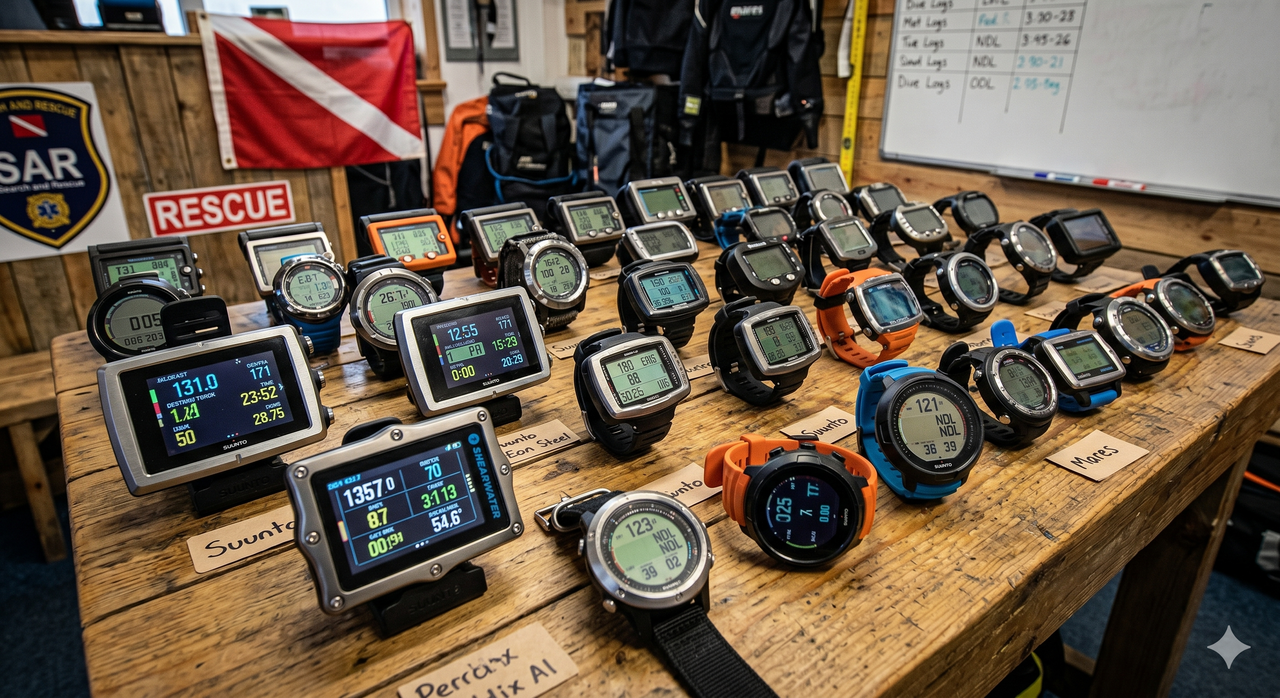
The dive computer is the single most important piece of recreational diving equipment after the regulator and the BCD, and it is the one piece of gear most likely to last across decades of diving if chosen well. The market is now mature enough that there are no genuinely bad dive computers, but there is a wide spread between the entry-level wrist computer that handles a Sydney shore dive and the advanced trimix-capable console that supports a Tasmanian wreck trip. This guide covers what a dive computer actually does, what features matter at each diving level, the brands available in Australia, and realistic 2026 price ranges.
## What a dive computer does
A dive computer continuously tracks depth and time underwater, calculates nitrogen loading in the diver's tissues, and displays the remaining no-decompression time at the current depth. It also tracks ascent rate, manages safety stops, alerts the diver to violations of safe profiles, logs the dive electronically, and provides surface interval calculations for planning repetitive dives. Modern computers do all of this dynamically: as the dive profile changes, the computer recalculates in real time, providing accurate guidance throughout rather than the static planning that dive tables offered.
Beyond the core function, dive computers vary in features that matter for specific diving styles: air integration (showing tank pressure on the computer face), nitrox compatibility (handling enriched air mixtures), trimix compatibility (handling helium-blended gases for technical diving), gas switching (managing multi-tank profiles), free-diving mode, compass functions, and connectivity (Bluetooth or USB for log download).
## What matters at each diving level
**Open Water and recreational divers (1 to 50 dives):** The basic requirement is reliable depth and time tracking, dynamic NDL calculation, ascent rate alerts, and clear display readability underwater. Air integration is genuinely useful but not essential. Nitrox capability is recommended even for divers not yet certified for nitrox, because nitrox is the most-likely first specialty most active divers add. Battery should be either user-replaceable or with a minimum 3-year service life.
**Advanced and frequent divers (50 to 500 dives):** Air integration starts to matter, especially for divers running multi-tank profiles or wanting cleaner gas-management. Compass function is useful at sites requiring navigation. Larger display, multiple gas mixes, and the ability to switch algorithms (conservative to liberal) become relevant. Logbook capacity for several hundred dives matters.
**Technical and serious diving (500+ dives, deeper or longer profiles):** Trimix support, multiple gas switches, advanced algorithms (VPM-B, ZH-L16-GF, RGBM), surface marker integration, and full data logging are the working requirements. The computer becomes a serious tool rather than a recreational accessory.
## The brands available in Australia
**Suunto** dominates the Australian market for entry-level and intermediate computers. The [Zoop Novo](https://www.scubadownunder.com/gear-reviews/suunto-zoop-novo-wrist-scuba-diving-computer) is the standard first computer for Australian divers ($350 to $500), reliable, simple, and stocked at every dive shop. The [D-series wrist computers](https://www.scubadownunder.com/gear-reviews/suunto-d5-dive-computer) ($600 to $1,200) are the intermediate option. Suunto's algorithms are widely considered conservative.
**Cressi** sells a strong entry and mid-range line. The [Cressi Leonardo](https://www.scubadownunder.com/gear-reviews/cressi-leonardo-underwater-diving-computer) ($300 to $400) is the most budget-friendly recreational computer in the Australian market and is widely used as a first computer. The Cressi Donatello and Newton ($500 to $800) are reliable mid-range options.
**Shearwater** is the high-end choice. The [Shearwater Peregrine](https://www.scubadownunder.com/gear-reviews/shearwater-peregrine-dive-computer-review) ($800 to $1,000) and Teric ($1,200 to $1,600) are widely regarded as the best wrist-mounted computers available, with clear displays, robust algorithms, and excellent build quality. Shearwater's reputation in technical diving has carried into recreational use, and many advanced recreational divers buy a Shearwater as their second computer.
**Mares** sells the Quad and [Quad Ci](https://www.scubadownunder.com/gear-reviews/mares-quad-ci-dive-computer) (around $500 to $700), which is a popular budget-conscious computer with clear display and reliable performance.
**Garmin** has entered the dive computer market with the [Descent series](https://www.scubadownunder.com/gear-reviews/garmin-descent-mk3i-dive-computer-review) ($1,500 to $3,000), combining dive computing with full smartwatch functionality. Useful for divers who want a single device for diving and daily use.
**Aqualung** sells the [i200](https://www.scubadownunder.com/gear-reviews/aqualung-i200c-dive-computer) and i300 ($300 to $500), reliable entry-level options often paired with their broader equipment lines.
## What to buy
For a side by side comparison of current models, see our [best dive computers in Australia round-up](https://www.scubadownunder.com/gear-reviews/best-dive-computers-australia-2026).
**For divers with their first 1-50 dives:** A Suunto Zoop Novo, Cressi Leonardo, or Aqualung i200. Budget $350 to $500. Skip air integration at this level. Choose a unit with a user-replaceable battery and a clear display readable in low-visibility conditions. Check current pricing: [Suunto Zoop Novo](https://scubadownunder.com/go/primary/23?surface=how-to-choose-dive-computer), [Cressi Leonardo](https://scubadownunder.com/go/primary/21?surface=how-to-choose-dive-computer), [Aqualung i200C](https://scubadownunder.com/go/primary/132?surface=how-to-choose-dive-computer).
**For divers with 50-200 dives, looking to upgrade:** A Suunto D5, Mares Quad CI (with air integration), or Shearwater Peregrine. Budget $700 to $1,200. Air integration is the single most useful upgrade. Larger display and better algorithm flexibility are the secondary considerations. Check current pricing: [Suunto D5](https://scubadownunder.com/go/primary/36?surface=how-to-choose-dive-computer), [Mares Quad Ci](https://scubadownunder.com/go/primary/121?surface=how-to-choose-dive-computer), [Shearwater Peregrine](https://scubadownunder.com/go/primary/134?surface=how-to-choose-dive-computer).
**For divers planning technical or trimix work:** A Shearwater Teric or Perdix AI. Budget $1,200 to $2,000. Multiple gas mixes, full trimix support, robust algorithms, and the most reliable display in the market.
## Features worth paying for
- **Air integration:** Reduces console clutter, shows remaining tank pressure on the wrist, calculates remaining bottom time based on consumption rate. Adds $300 to $500 over the non-integrated equivalent.
- **Compass:** Useful at sites requiring navigation, drift dives where return-bearing matters, and any site where visibility limits visual landmarks.
- **Bluetooth log download:** Essential for divers who want to review dive profiles, share trips, or maintain digital logbooks. Most modern computers support this; older models still on the market often do not.
- **User-replaceable battery:** A small saving in service costs over the computer's lifetime, but more importantly avoids the inconvenience of sending the computer away for service every 2 to 3 years.
- **Multi-gas support:** Worth paying for only if you actually plan to dive nitrox, trimix or multi-mix profiles. The basic recreational diver doesn't need this.
## Features that don't matter as much as marketing suggests
- **Smartwatch crossover features:** Heart rate, GPS, music control. Useful for divers who want a single device, but they don't improve diving safety or capability.
- **Color displays vs monochrome:** Color is nice. Monochrome readability is often better in cold or low-light conditions. Don't pay extra for color alone.
- **Customisable algorithms:** Most divers run the default conservative settings their entire careers. The ability to switch to liberal or custom algorithms matters for technical divers, not for the recreational baseline.
- **Built-in logbooks beyond a few hundred dives:** Modern divers move log data to phone or computer apps after each dive. The on-computer log is for emergency reference, not long-term storage.
## Where to buy in Australia
**Local dive shops** are the recommended first option for new divers. They handle warranty, gear setup, instruction, and the kind of after-sales support that online shops cannot match. Brand availability varies by shop; Suunto and Cressi are universal, Shearwater is more specialist.
**Online retailers** including Adreno, Diversion Scuba and the manufacturer-direct stores (cressi.com.au, shearwater.com) often run lower prices than physical shops. Worth considering for divers who know what they want and don't need shop support.
**Used market** (eBay, Facebook dive groups) offers significant savings on intermediate and advanced computers. Verify the unit has been properly serviced and check battery state before buying.
## Final advice
For most divers who are not sure where to start: **a Suunto Zoop Novo or Cressi Leonardo at $350 to $400 is the right first purchase**, paired with a year or two of regular diving to develop preferences. Many divers stay with their first computer for the entire recreational career. Those who progress to advanced and technical diving generally upgrade to a Shearwater later, but the entry-level computer continues serving as a backup or for casual recreational dives.
The best dive computer is the one you actually wear and trust on every dive. Spend enough to get a unit you will use, not so much that you put off the purchase. The computer is the single most reliable piece of dive safety equipment after the regulator, and any decent modern computer is worth more than no computer.