Cressi Newton Titanium: Dive Watch Review
A titanium-cased dive watch computer with a big readable display and four-button navigation, held back by dated connectivity and thin Australian availability.
Where to Buy
Affiliate links — we may earn from qualified purchases
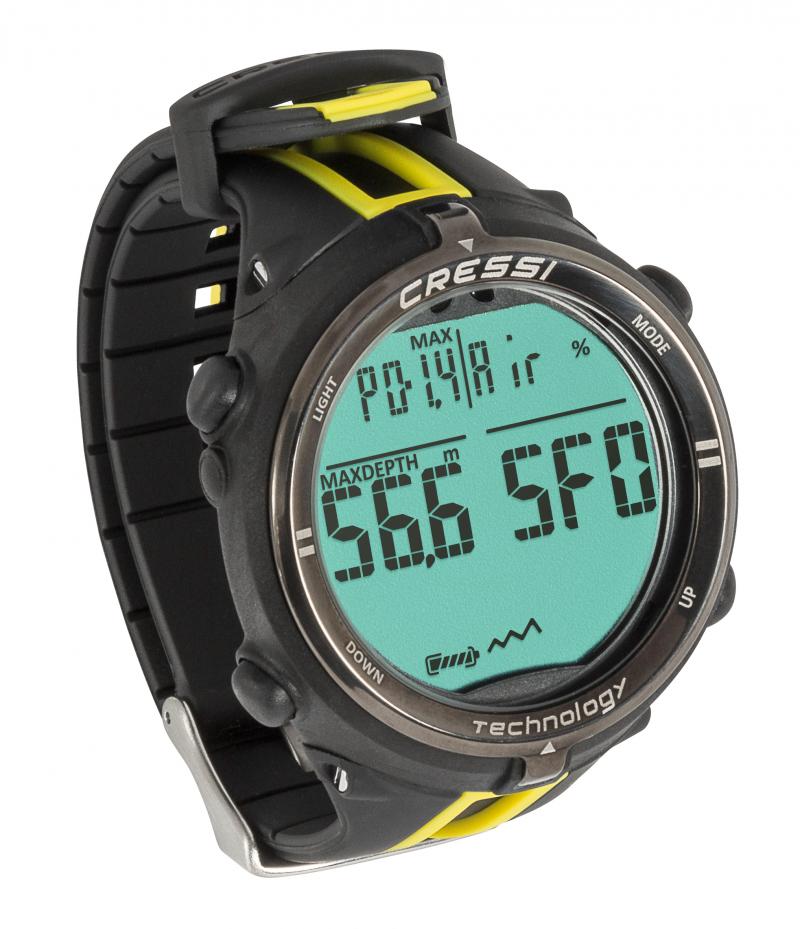
The Cressi Newton Titanium is a watch-style dive computer built like a tank, with a titanium and stainless case, four-button navigation and a display large enough to read without squinting. It is also showing its age, and Australian stock has become genuinely hard to find, so check availability before you set your heart on one. For divers who want a robust analogue-looking computer they can wear daily and do not need Bluetooth or air integration, it still makes sense.
## Overview: Cressi Newton Titanium
The Newton is Cressi's answer to a specific question: what if a dive computer looked and felt like a proper wristwatch, but did not compromise on display size? The case mixes stainless steel, titanium and ABS impact material at 48 mm across, which keeps the weight down while surviving the knocks that end lesser computers. The face is mineral glass rather than sapphire, and it is rated to 150 metres.
Where the Newton separates itself from most watch-format computers is the display. Cressi's UFDS layout runs 35 mm across, which is a large readable area for a 48 mm case, and it avoids the cramped, multi-press interfaces that plague dive watches. Four buttons handle navigation, so unlike the single-button Cressi Donatello you can move through settings and logbook entries directly rather than cycling through everything.
It runs the dual-mixture Cressi-Wienke RGBM algorithm, meaning it handles two nitrox mixes and gas switching, which puts it a step above pure single-gas entry computers. The logbook holds 70 hours or 60 dives with full profiles, and there is a clock, chronograph and calendar for topside use. The backlight activates on a button press and automatically during an alarm.
The honest context in 2026: this is a mature design. There is no Bluetooth, no colour display, no air integration and no compass. Against a Mares Quad Ci at around $679 you are giving up a great deal of capability, and Australian distribution has thinned to the point where only a handful of retailers list it.
## Key Features
- Mixed case of stainless steel, titanium and ABS anti-impact material, 48 mm diameter - Wide UFDS display measuring 35 mm across, with push-button backlight that also triggers on alarms - Mineral glass face, water resistant to 150 metres - Dual-mixture Cressi-Wienke RGBM algorithm with gas switching between two nitrox mixes - Four-button navigation for direct access to settings and logbook - Logbook holding 70 hours or 60 dives complete with dive profiles - Clock, chronograph and calendar functions for daily wear - Rubber strap with stainless steel buckle
## The Good
- **The case genuinely earns the titanium name.** The stainless, titanium and ABS mix survives shore entries over rock platforms and the general abuse of boat diving without the cosmetic ageing that plagues coated computers. This is a unit that still looks respectable after five years. - **Four buttons make it far more usable than single-button rivals.** Direct navigation to a setting or a logbook entry, rather than press-and-hold cycling, is the difference between checking your last dive on the boat and giving up. Anyone who has fought a one-button computer will appreciate it immediately. - **A 35 mm display in a 48 mm case is a genuinely good ratio.** Most dive watches sacrifice readable area for wearability. The Newton keeps the numbers large enough to read at depth in ordinary Australian visibility without needing to bring your wrist to your mask. - **Two-mix gas switching is more than most entry computers offer.** If you are diving nitrox and switching between mixes across a day of charter diving, the Newton handles it, where cheaper single-gas units simply do not.
## The Bad
- **Australian availability is genuinely limited.** Only a small number of local retailers still list it, and stock is intermittent. Buying grey import or overseas creates warranty problems that are not worth the saving on a safety-critical instrument. - **The technology is dated for 2026.** No Bluetooth means no phone syncing, and log download depends on an optional interface. Mineral glass scratches where sapphire would not. Competing computers at a similar or slightly higher price now include colour displays, compasses and app connectivity as standard. - **The RGBM algorithm gives you no say in conservatism.** No gradient factors, no adjustable levels beyond the basics. For recreational nitrox diving that is perfectly safe, but it is a fixed interpretation you cannot tune as your experience grows. - **No compass and no air integration.** For a computer aimed at the advanced recreational diver, both omissions push you toward a separate compass and a console gauge, which is exactly the clutter a wrist computer is meant to remove.
## Verdict
The Cressi Newton Titanium is a well-built, highly readable dive watch computer that does the recreational fundamentals properly, handles two nitrox mixes, and survives hard use. Its four-button interface is a real advantage over cheaper Cressi units, and the case quality is better than the price suggests.
The problem is the calendar. In 2026 it competes against computers with colour screens, app syncing and air integration at similar money, and Australian stock has become scarce enough that servicing and warranty support are a fair question. Buy it if you find one at a good price, want a genuinely tough watch-format computer, and have no interest in connectivity. Look at the Mares Quad Ci or a Shearwater Peregrine if you want a computer that will still feel current in five years.
Star Rating: ⭐⭐⭐½☆ (3.5/5)
Where to Buy
Get the Cressi Newton Titanium: Dive Watch Review and experience the difference quality gear makes underwater.