Shearwater Perdix 2: Australian Diver Review
Runs on a single AA battery you can buy anywhere, with the most readable screen in the category and 260 metres of depth rating. The default serious technical computer.
Where to Buy
Affiliate links — we may earn from qualified purchases
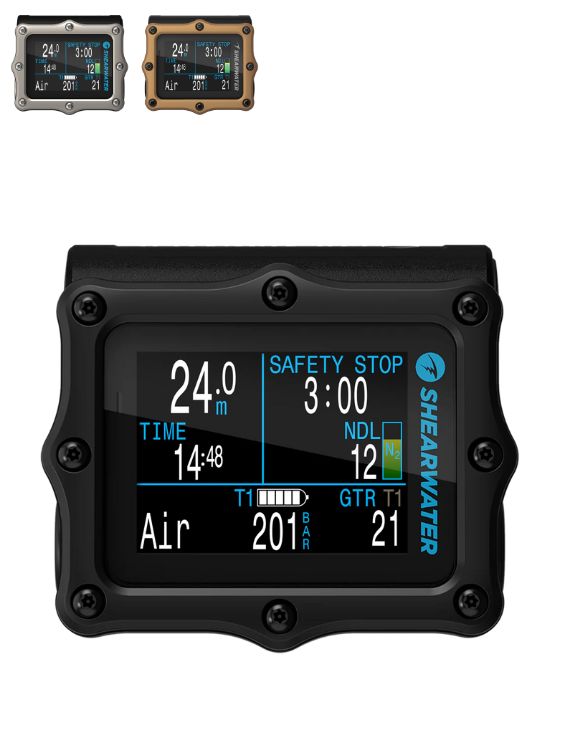
The Shearwater Perdix 2 runs on a single AA battery you can buy at any servo in Australia, and for expedition diving that one design decision matters more than every spec on the box. At around $1,548 for the titanium version it is not cheap, but it is the computer serious technical divers keep buying, because the 2.2 inch screen is the most readable in the water and nothing about it is fragile or fussy.
## Overview: Shearwater Perdix 2
The Perdix 2 is the successor to the Perdix AI, and the naming is worth clearing up: there is no non-integrated Perdix 2, air integration is standard, so the old AI suffix has quietly retired. Compared to the outgoing model you get a tougher aluminosilicate glass lens, a titanium bezel with piezo buttons on the Ti version, and vibration alerts, which were the single most requested feature on the old unit.
Everything else is deliberately unchanged, and that is the point. The 2.2 inch 320 x 240 LCD is not as vivid as the AMOLED on the Teric, but it is bigger, and for a diver running four gases through a decompression schedule at 40 metres, size and contrast beat saturation. The LED backlight is adjustable and the screen stays legible in the low-visibility green water typical of southern Australian sites.
It runs Bühlmann ZHL-16C with Gradient Factors as standard, with VPM-B and DCIEM available by unlock code if you want them. Depth rating is 260 metres, it supports up to four transmitters, and it handles open circuit trimix and closed circuit with bailout.
The AA battery deserves its own paragraph. Sixty hours from a lithium AA, one hundred from a Saft LS14500, and when it dies you swap it on the boat in thirty seconds with a spare from your save-a-dive kit. For a week at the Rowley Shoals or a Coral Sea liveaboard where shore power is rationed and a proprietary charging dock is a single point of failure, that is the whole argument.
## Key Features
- 2.2 inch LCD at 320 x 240 with adjustable LED backlight, behind an aluminosilicate glass lens - Single AA battery: up to 60 hours on lithium, 40 on alkaline, 100 on a Saft LS14500 - Bühlmann ZHL-16C with Gradient Factors as standard, VPM-B and DCIEM by unlock code - Depth rated to 260 metres - Optional wireless air integration for up to 4 transmitters - Dive modes: air, nitrox, 3 gas nitrox, OC Tec multi-gas trimix, closed circuit and bailout, gauge - 3 axis tilt compensated digital compass - Customisable vibration alerts - 190 grams, 81 x 71 x 38 mm, titanium bezel with piezo buttons on the Ti model
## The Good
- **The AA battery is the best feature on any dive computer at any price.** No dock, no cable, no service interval, no anxiety. A spare AA lives in your save-a-dive kit and weighs nothing. On remote Australian trips where the nearest dive shop is several hundred kilometres away, this converts a trip-ending failure into a thirty second fix. - **The screen is the most readable in the category.** At 2.2 inches it shows a full deco schedule, gas list and tank pressures simultaneously without the button-cycling smaller computers force on you. Task loading is what kills divers in decompression, and a screen you read in one glance instead of three reduces it. - **Vibration alerts finally arrived, and they are properly implemented.** Configurable rather than all-or-nothing, so you can buzz on ceiling violations without being nagged about every minor ascent rate wobble. - **Bühlmann with Gradient Factors as standard, with alternatives available.** Most divers will run Bühlmann for life, but having VPM-B behind an unlock code means the computer grows with you into bubble-model territory without a hardware purchase. - **It is genuinely rugged.** The aluminosilicate lens and titanium bezel on the Ti version shrug off the knocks that come with doubles, stage bottles and boat ladders. This is a tool built to be used rather than protected.
## The Bad
- **It is bulky, and there is no pretending otherwise.** At 190 grams and 81 x 71 x 38 mm it is a brick compared to the Teric's 120 grams. Nobody wears a Perdix 2 to dinner. It is a dive instrument that lives in your gear bag. - **The LCD looks dated next to AMOLED.** It is bigger and perfectly legible, but put it beside a Teric or a Suunto Nautic on a night dive and the difference in vividness is obvious. You are choosing information density over visual appeal. - **Nitrox mode caps at three gases.** Full multi-gas trimix work needs OC Tec mode, which is a menu change rather than a limitation in practice, but it catches people out who expect five gases available everywhere the way the Teric offers. - **Recreational divers are paying for capability they will never use.** If you are diving no-decompression profiles on the reef, the Peregrine gives you the same screen quality and algorithm for far less. The Perdix 2 only makes financial sense once decompression, trimix or remote expedition diving is genuinely in your plans.
## Verdict
The Perdix 2 is the default serious technical dive computer in Australia for good reasons: the biggest readable screen in the category, Bühlmann with Gradient Factors, four transmitters, 260 metres of depth rating, and a battery you can replace on a rolling deck with cold hands. It is not elegant and it is not cheap, but it is close to unbreakable and it does not ask you to plan your trip around a charging cable.
Buy it if you are doing decompression, trimix, closed circuit or remote expedition diving, or if the idea of a sealed rechargeable battery on a two week liveaboard makes you uneasy. Look at the Teric if you want the same brain in something you can wear as a watch, or the Peregrine if you are recreational and want Shearwater quality without the technical overhead.
Star Rating: ⭐⭐⭐⭐½ (4.5/5)
Where to Buy
Get the Shearwater Perdix 2: Australian Diver Review and experience the difference quality gear makes underwater.